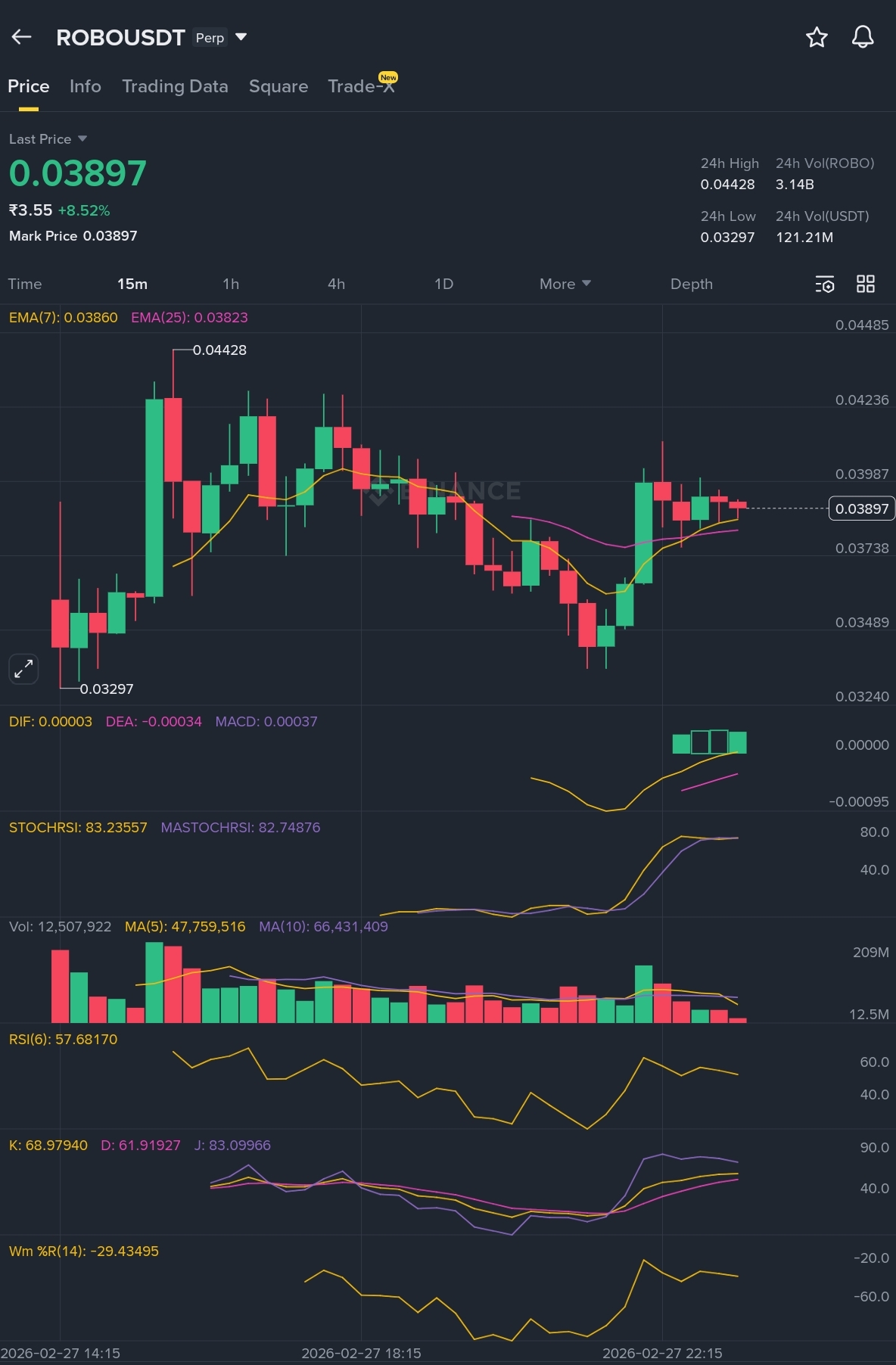
For years, the discourse surrounding blockchain technology has been dominated by Decentralized Finance (DeFi) and the digitization of human-centric assets. However, a new frontier is emerging—one that moves from the virtual realm into the physical world. The Fabric Protocol, supported by the @Fabric Foundation Fabric Foundation, is positioning itself as the essential infrastructure for a future where autonomous machines don't just perform tasks, but actively participate in a global, transparent economy.
✅From Automation to Autonomy: The Coordination Layer
The core realization behind Fabric is that the "real disruption" of robotics isn't just automation—it is the shift in who owns the execution and who gets paid. While traditional robotics focuses on hardware and motion, Fabric is building the coordination layer.
In the current landscape, robots are siloed within corporate servers, controlled by single entities that own the entire stack: hardware, software, and data. Fabric introduces a public ledger layer where physical actions become provable events. This "decentralized nervous system" allows industrial robots, humanoids, drones, and autonomous vehicles to operate independently of centralized platforms that typically extract significant value.
✅$ROBO : The Economic Engine of the Machine World
At the heart of this ecosystem lies ROBO the native utility and governance token. If robots are to operate independently, they face a fundamental hurdle: they cannot open bank accounts, hold passports, or sign traditional contracts. Fabric solves this by providing machines with an immutable on-chain identity.
✅Through ROBO, the protocol facilitates three critical functions:
✨Identity and Verification:
Robots use the token to register their capabilities and verify their work on the blockchain
✨ Machine-to-Machine (M2M) Payments:
Machines can pay one another for data or computing resources and receive payment for tasks completed, all via crypto-based rails.
✨ Network Security and Governance:
Participants stake ROBO to secure the network and vote on fee structures, operational policies, and the broader direction of the protocol.
✅Shifting the Liquidity Paradigm
One of the most compelling observations regarding the Fabric ecosystem is the behavioral shift in its participants. Historically, many crypto projects suffer from "mercenary liquidity," where tokens exist solely for rewards, leading to rapid exits.
In contrast, activity around the Fabric Protocol suggests a move toward operational use. On-chain patterns show repeated, low-size interactions rather than large post-distribution transfers. This indicates that wallets are testing processes and using tokens as "access keys" for machines rather than speculative assets. This "slow" activity is a bullish signal for long-term health, suggesting that the community is more interested in understanding and evolving the system than in mere price speculation.
✅Infrastructure Built to Last
Fabric’s roadmap is designed for scalability and real-world adoption. While the protocol is initially launching on Base to leverage the existing EVM (Ethereum Virtual Machine) ecosystem, the long-term vision involves migrating to its own Layer 1blockchain. This dedicated chain will be optimized for thousands of machine transactions per second, ensuring that the economic value generated by robots stays within the ecosystem rather than leaking outward to third-party providers.
The project is backed by significant intellectual and financial capital, including partnerships with OpenMind, the robotics team from Stanford, and early adoption by Pantera Capital. The tokenomics are further stabilized by a fixed supply and a rigorous vesting schedule for the team and investors, aligning all stakeholders with the goal of long-term utility.
✅Conclusion: A New Era of Trust
Fabric Protocol represents a move away from "voting power" toward "task coordination." It envisions a world where machines are buildable, governable, and evolvable through verifiable computing. By providing the economic and identity layer that robots lack, Fabric is not just building better robots; it is building a better agreement for how they exist in our world.
As machines begin to take on more complex roles in our physical infrastructure, the need for a transparent, decentralized coordination layer becomes undeniable. Fabric is providing the blueprint for that future—one where trust is built into the execution, and the machine economy is open to all.