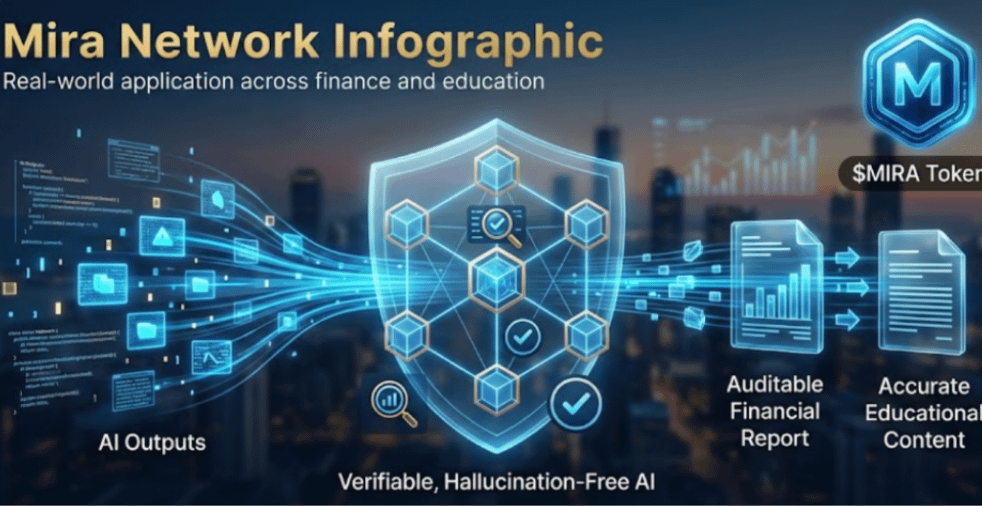
As we move deeper into the era of autonomous intelligence, the biggest hurdle isn't building more powerful AI—it's building verifiable AI. This is where @Mira - Trust Layer of AI _network is making its mark as a foundational "trust layer" for the decentralized world.
What is Mira?
Mira is a decentralized verification protocol designed to solve the "AI reliability gap." While current AI models are brilliant, they are prone to hallucinations and biases that make them risky for high-stakes industries like finance, healthcare, and legal services. Mira changes the game by breaking AI outputs into verifiable claims and using a distributed network of models to reach a consensus on their accuracy.
The Power of $MIRA
The native token, $MIRA, is the heartbeat of this ecosystem. Built on the Base network, it serves three critical functions:
Security & Staking: Node operators stake $MIRA to participate in the verification process. Honest behavior is rewarded, while malicious actors face slashing, ensuring the network's integrity.
Utility: Developers and enterprises use $MIRA to pay for verification services and access the Mira SDK (the "Vercel of Web3 rails").
Governance: Token holders have a direct say in protocol upgrades, helping steer the future of decentralized intelligence.
Ecosystem Momentum
With over 4 million users and 19 million weekly queries, Mira's impact is already visible. Partnerships with heavyweights like 0G Labs and Monad are integrating Mira’s verification layer into high-performance blockchains, while ecosystem apps like Klok (for crypto research) and Learnrite (for education) are proving that 95%+ AI accuracy is achievable.
As we look toward the future of DeAI, Mira isn't just another protocol; it’s the bridge that allows AI to transition from a "black box" into a transparent, auditable, and truly autonomous partner.