Mira Network is a decentralized verification protocol designed to solve one of the most critical challenges in artificial intelligence today: reliability. While AI systems have made massive progress in recent years, they still struggle with fundamental issues such as hallucinations, bias, and inconsistent reasoning. These limitations make AI unreliable in high-stakes environments where accuracy is not optional but essential.
In many real-world applications like finance, healthcare, law, and automation, even a small error can lead to serious consequences. Traditional AI models operate as black boxes, generating outputs without any built-in mechanism to verify whether the information is correct. This creates a gap between AI capability and trust. Mira Network aims to close that gap.
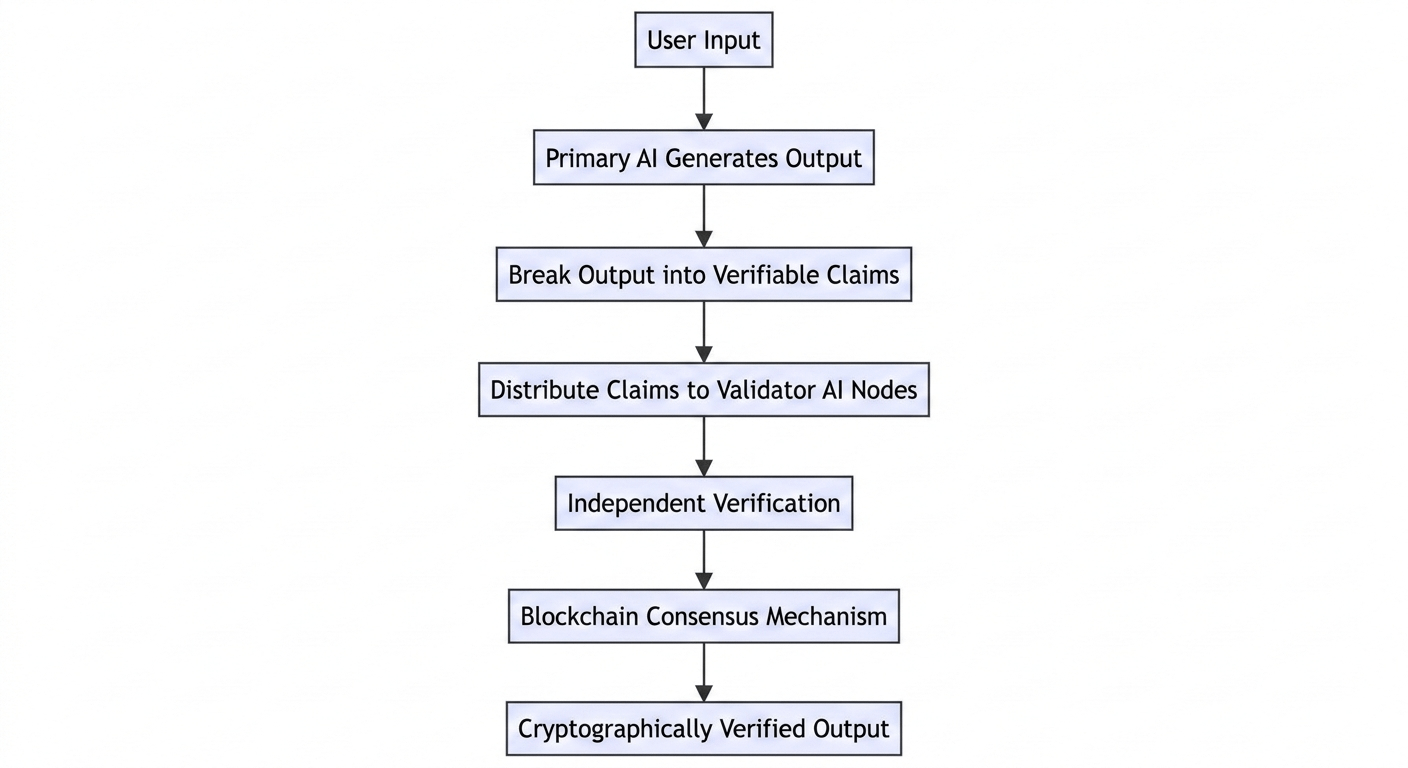
At its core, Mira introduces a new way of processing AI-generated information. Instead of accepting a single model’s output as truth, the system breaks down complex responses into smaller, verifiable claims. Each claim represents a specific piece of information that can be independently checked. This modular approach allows verification to happen at a granular level rather than relying on a single, potentially flawed result.
Once the claims are created, they are distributed across a decentralized network of independent AI validators. These validators analyze and verify each claim separately. Because multiple models are involved, the system reduces the risk of shared bias or repeated errors. The idea is simple: consensus from diverse, independent sources is more reliable than a single point of intelligence.
What makes Mira especially powerful is its integration with blockchain technology. The verification process is not just collaborative but also cryptographically secured. Each validated claim is recorded and confirmed through a consensus mechanism, ensuring transparency and immutability. This transforms AI outputs into verifiable, tamper-proof information that can be trusted.
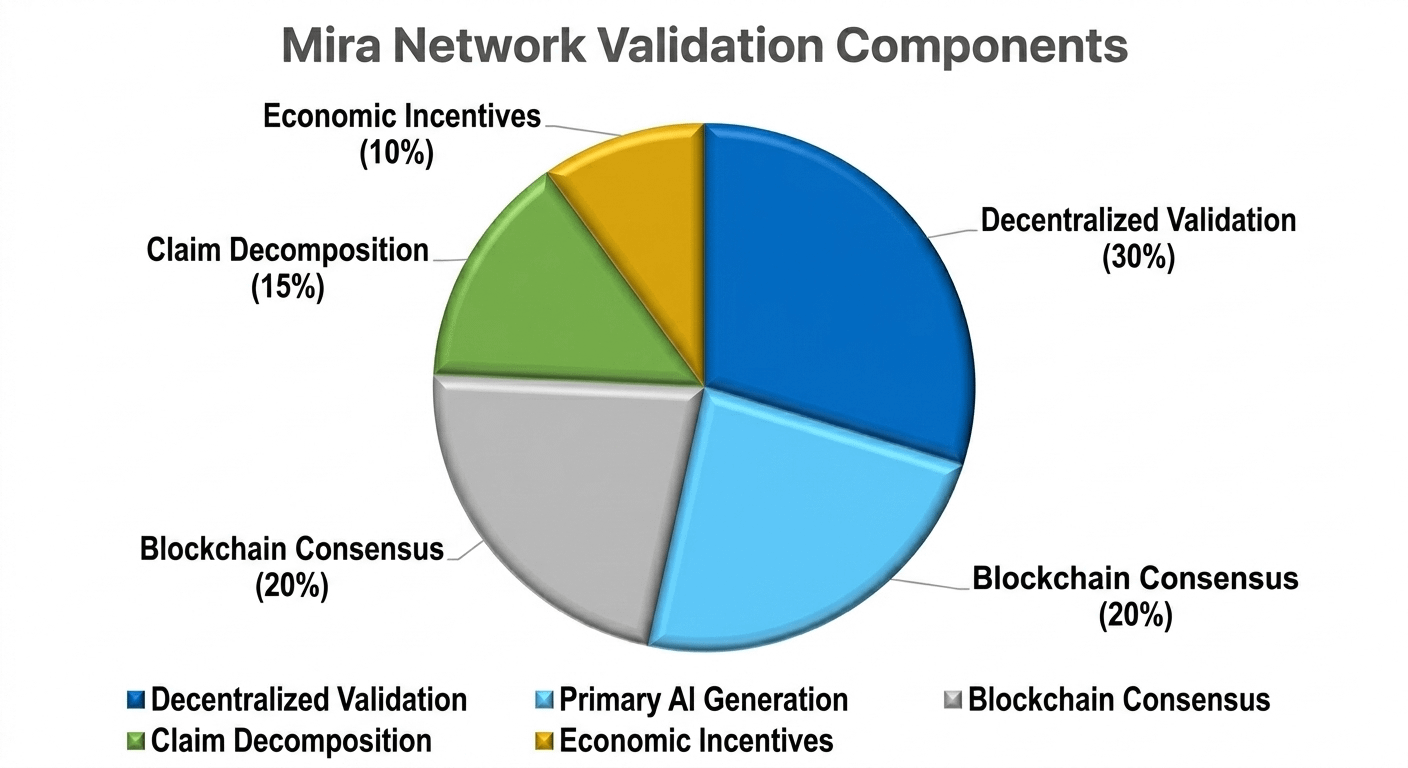
To maintain integrity within the network, Mira uses economic incentives. Participants who validate information accurately are rewarded, while those who provide incorrect or dishonest validations face penalties. This creates a self-regulating ecosystem where honest behavior is encouraged and enforced. Trust is no longer dependent on centralized authorities but emerges naturally from the system’s design.
This decentralized approach has major implications for the future of AI. It enables the development of systems that can operate autonomously with a higher degree of confidence. For example, in financial systems, verified AI outputs can support safer automated trading or fraud detection. In healthcare, they can assist in more reliable diagnostics. In governance and research, they can ensure that information is both transparent and accountable.
Mira Network is not just improving AI accuracy; it is redefining how trust is established in intelligent systems. By combining decentralized validation, cryptographic proof, and economic alignment, it creates a framework where AI outputs are no longer just generated but proven.
As artificial intelligence continues to shape the future, the need for trust will only grow stronger. Mira Network represents a shift from blind reliance on AI to a system where every output can be verified, validated, and trusted@Mira - Trust Layer of AI #Mira $MIRA