

Blockchains don't always play nice together MIRA Network wants to be the bridge that fixes all that It lets you move stuff like money and info between blockchains without the usual stress MIRA is a layer-1 blockchain which is code for it's built for speed, security and working with other chains Let's see what it's all about and why it could be a big deal for the future of web3 and DeFi.
The Techy Stuff How MIRA Does Its Thing
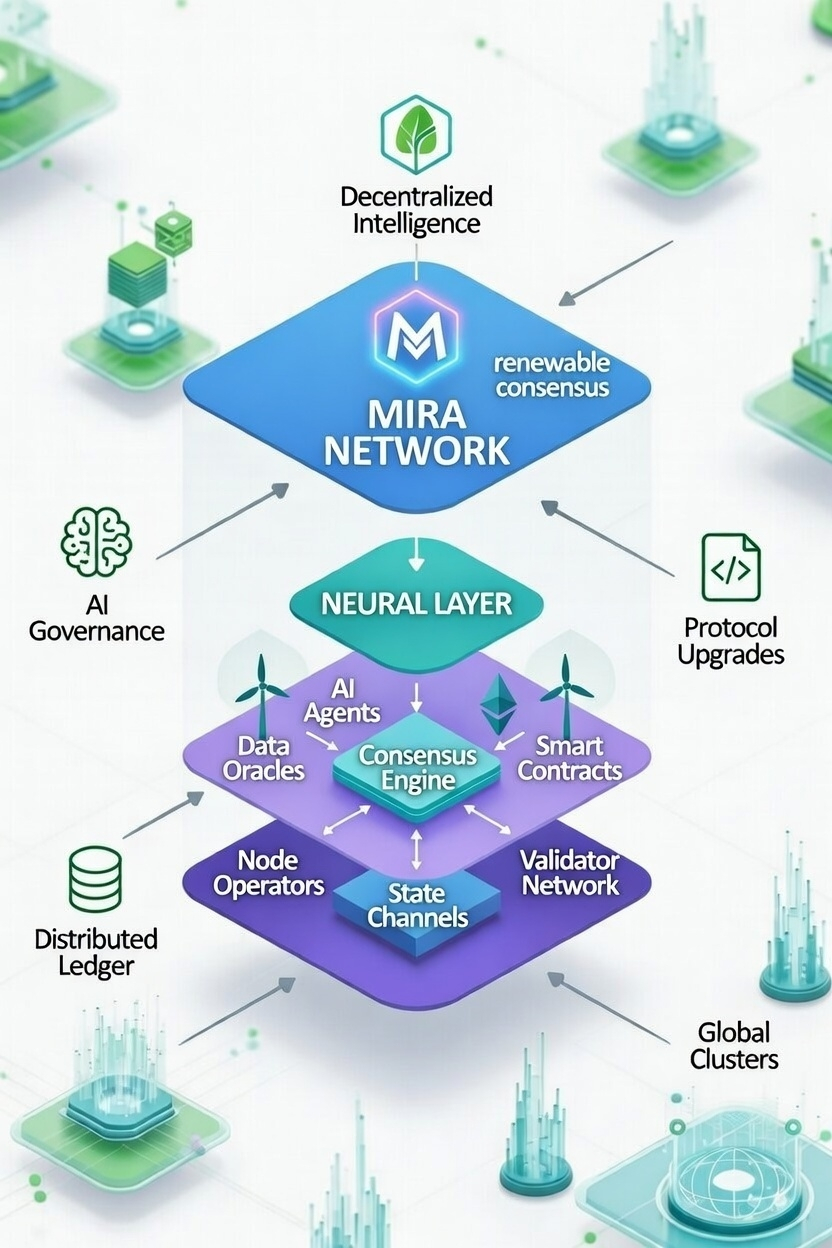
MIRA mixes some familiar ideas with some smart new tricks to fix everyday blockchain problems.
Fast Saf, and Works Well
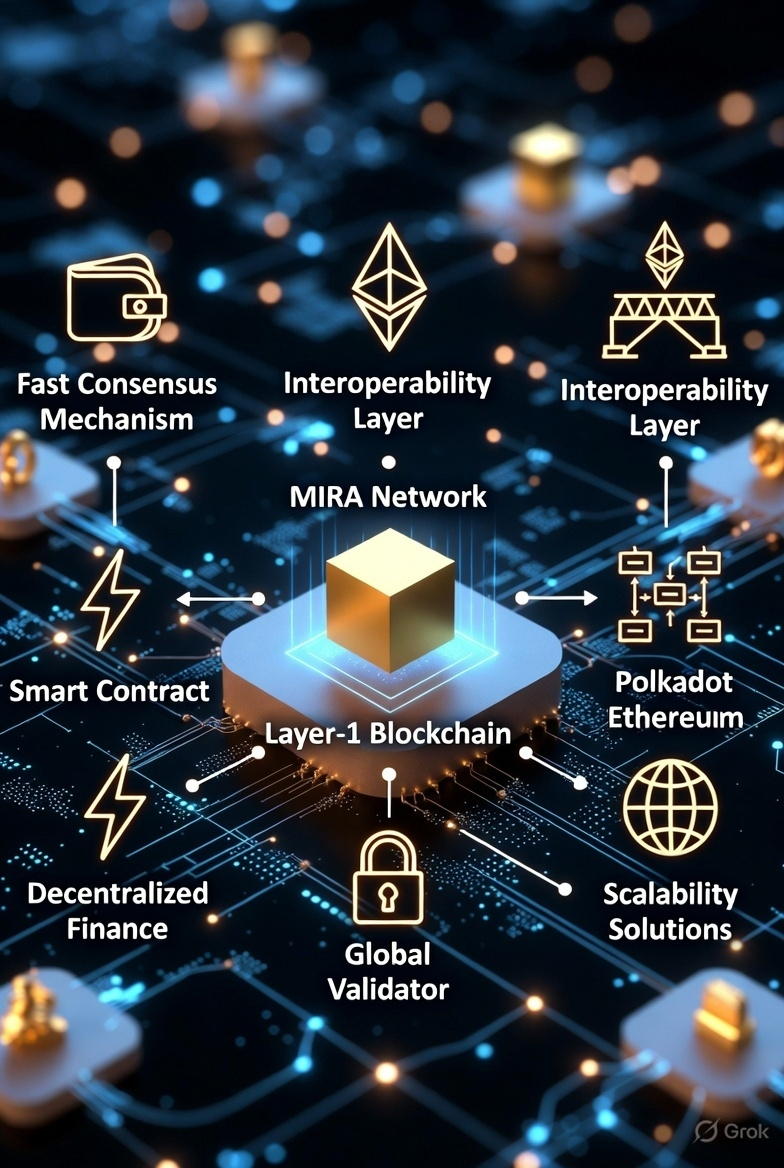
MIRA uses a mix of delegated proof-of-stake and proof-of-authority This helps validators finish transactions super fast – in less than two seconds!
That's way faster than some older networks Delegates do most of the voting to keep things speedy, but authority nodes add extra protection. And get this: it uses way less power than Bitcoin like 99% less! Plus, it's not as centralized as some other chains like Eth chain So, it's great for things that need to happen fast, like trading or payments.
Plays Well With Others
One of MIRA's best features is how well it works with other blockchains. It uses standards like IBC (Inter-Blockchain Communication) to connect with things like Ethereum and Polkadot. You can move your stuff around, like sending ETH to MIRA and swapping it for MIRA tokens, without using those risky centralized bridges. Everything is checked through safe channels, so there's less chance of hacks. Even smart contracts on different chains can share info in real-time. If you're tired of juggling wallets on different networks, this makes DeFi way easier.
Grows Without Issues
MIRA uses sharding to handle growth. Sharding splits the network into smaller pieces that work at the same time. Each piece takes care of its own transactions, so the whole system can handle around 10,000 transactions per second! That's way better than Ethereum's 15 TPS. Fees stay low, often less than a cent, even when things get busy. Unlike some fast chains where costs go crazy when things get crowded, MIRA keeps things steady and cheap. Sharding lets it grow as more people use it without slowing down. Early tests show it could easily handle millions of users every day.
Tools People Actually Use
Good tech is great, but the apps that use it are what really count. MIRA's ecosystem is starting to offer useful DeFi tools.
MIRA Token and DeFi Basics
The MIRA token is super important. You can stake it to earn stuff, vote on decisions, and help keep the network secure. There's also a system that burns tokens, which slowly reduces the supply and could help the value go up. Some cool apps include MiraSwap, a DEX for fast trades, and MiraVault, a lending platform where you can borrow money at good rates. These things bring in users and make the tech useful every day.
Easy for Devs
MIRA works with EVM, so Solidity developers can move their Ethereum apps over easily. It also works with Rust for building more secure contracts. The SDK comes with templates, APIs, and documentation for everyone. Gas costs for complex stuff are where it needs to be, making it cheaper to run dApps, like prediction markets or NFT platforms. Lots of contracts are being created every month, which means people are really using these tools.
Real-World Use Cases
Last year, a fintech company in Asia tested MIRA for payments across borders. They handled millions of dollars every day at a lower cost than banks. By 2026, they had around 200,000 active wallets, which is way more than before. Also, a gaming studio launched an NFT marketplace connected to Polygon. It hit 500 million in TVL quickly, thanks to those low fees. Plus, being listed on exchanges like Binance has made MIRA easier for regular traders to get.
Community Rules
Decentralization is important to avoid single points of failure. MIRA gives real control to the community.
Ideas start in community forums and then go to votes, where staked MIRA decides the weight. It's easy to submit ideas, and voting lasts about a week. They even use quadratic voting to give smaller holders more say. Recent changes, like adding privacy tools, came straight from community votes. Validators need good hardware and a good amount of MIRA to participate which keeps things serious. Bad behavior gets penalized, and rewards from fees plus some inflation are around 8% APY for good performers. With over 100 validators worldwide, it's hard for any one group to take over.
How It Compares
MIRA isn't the only layer-1 out there, but its speed and bridging give it an advantage. Compared to Cosmos, it has better EVM support and lower delay. Native sharding avoids some problems you see in layer-2 rollups like Optimism. The number of developers has been growing steadily with more people building DeFi apps.
Looking ahead, the plan is to add zero-knowledge proofs for private transactions by 2026, plus more integrations for things like trade finance. Mobile wallets are coming soon to make it easier for everyone to use. In the future, mixing AI with blockchain could lead to smarter contracts.
In a Nutshell
MIRA Network stands out by tackling DeFi's biggest issues: high costs, slow speeds, and isolated systems. It uses fast consensus, cross-chain tools, and a growing set of useful apps. Its design delivers quick, cheap, secure transactions; interoperability lets assets flow freely; community input is valued; and sharding sets it up for big growth.
If you're into DeFi and want something built for the future, it's worth checking out Stake some MIRA, try the apps, or even build on it. You might be ahead of the curve.
Don't forget to share your feedback with #nadyisom