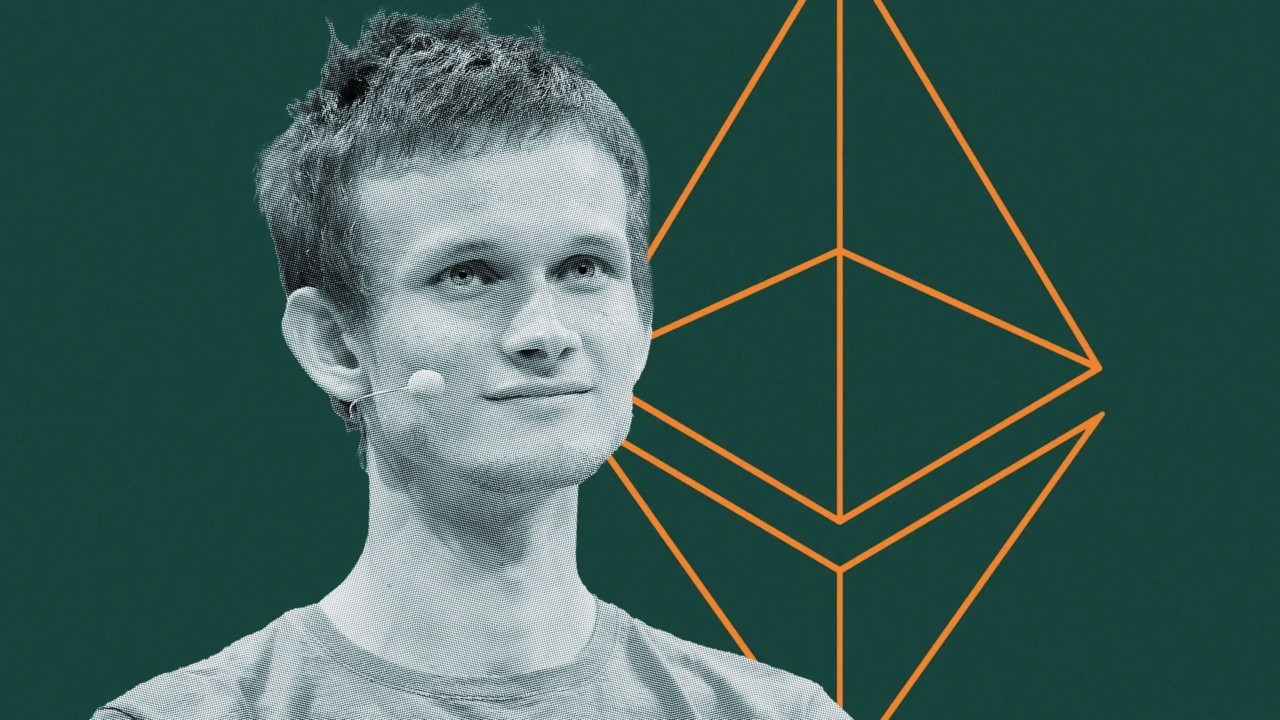
Vitalik Buterin, co-founder of Ethereum, has outlined a new framework for crypto asset security, offering practical strategies focused on redundancy, multi-faceted verification, and human-centered design.
He argues that the best way to protect users is to reduce the gap between user intentions and system behavior.
Vitalik Buterin Explains How to Close the Gap Between User Intent and System Security
Buterin's insights, which debunk the notion of perfect security, come at a time when crypto asset platforms are still frequently facing wallet hacks, smart contract exploits , and complex privacy risks.
By bringing together security and user experience, Buterin provides developers with a roadmap to balance protection and ease of use.
Buterin changed the way security is viewed as an effort to minimize the difference between user desires and system actions.
While user experience can bridge this gap in general, security specifically targets high-risk scenarios where hostile behavior could lead to fatal consequences .
“Perfect security is impossible—not because machines are flawed, or because the humans who design them are flawed, but because user intent is inherently complex,” Buterin wrote.
He exemplified that even seemingly simple actions, such as sending 1 ETH to a recipient , still involve assumptions about identity, blockchain forks, and common knowledge that cannot be fully encoded in the system.
More complex goals, such as preserving privacy, add another layer of complexity: metadata patterns, message delivery times, and behavioral signals can all leak sensitive information. This makes it difficult to distinguish between “trivial” and “catastrophic” losses.
This challenge is similar to the early debates in AI safety, where robustly defining goals proved extremely difficult. In the world of cryptocurrencies, translating human intent into code faces similar challenges.
Redundancy and Multi-Angle Verification
To overcome this limitation, Buterin advocates redundancy: users indicate their intentions through multiple, overlapping methods. The system will only act if all these explanations align.
This approach can be applied to Ethereum wallets , operating systems, formal verification, and hardware security.
For example, a type system in programming requires developers to specify both the program logic and the expected data structures; if they do not match, the compilation process will fail.
Formal verification adds mathematical property checks to ensure the code actually executes as intended. Transaction simulations allow users to see the consequences on the chain before confirming an action.
Post-assertion requires that actions and expected results exactly match. Multisig wallets and social recovery mechanisms distribute authority across multiple keys. This ensures that a single point of failure doesn't compromise security.
The Role of AI in Security
Buterin also envisions large language models (LLMs) becoming a key complementary tool, describing them as “intention simulations.”
Generic LLMs can mimic human common sense, while user-specific models can recognize what is normal or unusual for that individual.
"LLM cannot be used as the sole determinant of intention. But LLM is one 'point of view' to approach estimating user intention," he explained.
Combining LLM with traditional redundancy methods can improve fault detection without introducing a single point of failure.
Balancing Security and Ease of Use
Importantly, Buterin stressed that security should not create unnecessary obstacles to routine activities.
Low-risk tasks should be easy or even automatically processed, while high-risk actions, such as transfers to new addresses or unusually large amounts, require additional verification.
This measured approach can provide protection without frustrating users.
By combining redundancy, multi-faceted verification, and the use of AI, Buterin offers a roadmap for crypto asset platforms to reduce risk without sacrificing usability.
Perfect security may be difficult to achieve, but a layered, human-focused approach can keep users safer and strengthen trust in decentralized systems.