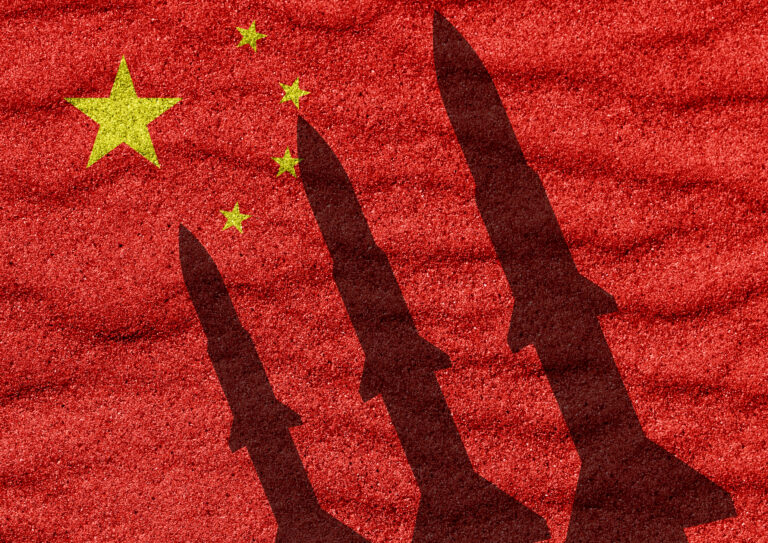
The landscape of international security is shifting. Recent revelations regarding China’s clandestine nuclear testing activities suggest we are entering a volatile new chapter in global arms competition. As major powers pivot back toward nuclear expansion, the guardrails of non-proliferation are under immense pressure.
🔍 Key Revelations & Allegations
Recent reports from the US State Department highlight a troubling lack of transparency from Beijing:
Secret Explosions: Evidence suggests China conducted secret nuclear tests as recently as June 2020 at the Lop Nur site.
Deceptive Tactics: The PLA is accused of using "decoupling"—a method to dampen seismic signals—to bypass international monitoring systems.
Infrastructure Growth: Research from 2025 indicates a "dramatic expansion" at testing sites, signaling preparations for new weapon designs.
⚠️ The Risk of an Unbridled Arms Race
China’s refusal to engage in meaningful dialogue or abide by traditional arms control frameworks like New START (which covers US and Russian forces but excludes China) has created a dangerous vacuum.
Low-Yield Weapons: China is reportedly pursuing nuclear warheads under 10 kilotons for tactical use on DF-26 missiles and H-6N bombers.
The Domino Effect: If the US or Russia responds by resuming their own testing, we could see a "testing spiral" that pulls in non-nuclear powers like Japan, South Korea, or Germany, potentially ending the era of non-proliferation. 📉
🌐 The Path Forward
With global stability at stake, the international community faces a critical choice. Without new, practical steps to improve nuclear stability and transparency, the world risks a return to the height of Cold War tensions—this time with more players and fewer rules. 🏛️
What do you think? Is the era of nuclear arms control officially over, or can diplomacy still pull us back from the brink? Let’s discuss in the comments. 👇
#NuclearArms #GlobalSecurity #Geopolitics