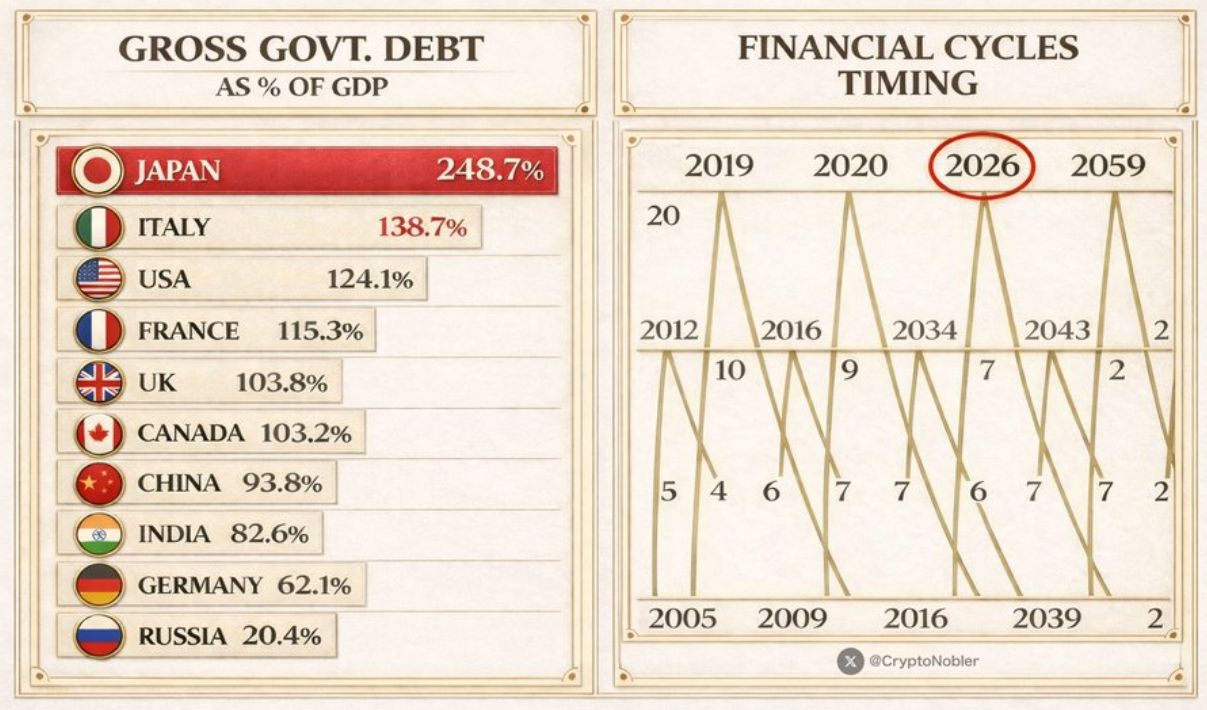
Bank of Japan is hiking interest rates again…
while selling $600 billion in U.S. stocks and ETFs.
Rate hikes + asset sales = global liquidity collapse.
This is a recipe for disaster.
And most people still don’t know the TRUTH:
Japan is preparing to dump $620 BILLION in U.S. stocks and ETFs to protect the yen.
Yes - stocks.
Not just bonds.
Not just FX.
This is a full-blown liquidity maneuver.
And markets are NOT priced for it.
The yen has been under nonstop pressure.
Officials have warned.
They’ve hinted.
They’ve delayed.
Now the messaging has shifted.
Japan can’t defend the yen with talk anymore.
They need real action.
That means selling dollar-based assets.
And a huge chunk of those assets live inside U.S. markets.
So this is no longer a “Japan-only” issue.
It turns into a global risk event.
Here’s the domino effect almost nobody is watching:
→ Japan sells U.S. equities and ETFs
→ Dollar liquidity drains
→ Volatility explodes across indexes
→ Risk assets reprice fast
→ Forced liquidations begin
And once volatility appears, it spreads.
Stocks drop.
ETFs unwind.
Crypto reacts instantly.
This is how quiet markets snap into chaos.
The most troubling part?
All of this is happening before the selling is officially confirmed.
Markets are still relaxed.
Positioning is still crowded.
That won’t hold.
And here’s the accelerant no one wants to price in:
Japan is expected to hike interest rates again next month.
That changes everything.
Higher rates strengthen the yen.
A stronger yen means more pressure to sell foreign assets.
Which means this selling wave doesn’t end - it escalates.
Rate hikes + asset sales = tighter global liquidity.
And global markets are addicted to liquidity.
Expect violent price swings.
Expect things to break where liquidity is thin.
High volatility isn’t a possibility - it’s the base case.
Pay attention now, not after the headlines hit.
I’ve studied markets for a decade and flagged nearly every major selloff.
If you want to make it through 2026, follow and turn notifications on.
I’ll post the warning before the mainstream news catches on.