MASSIVE:
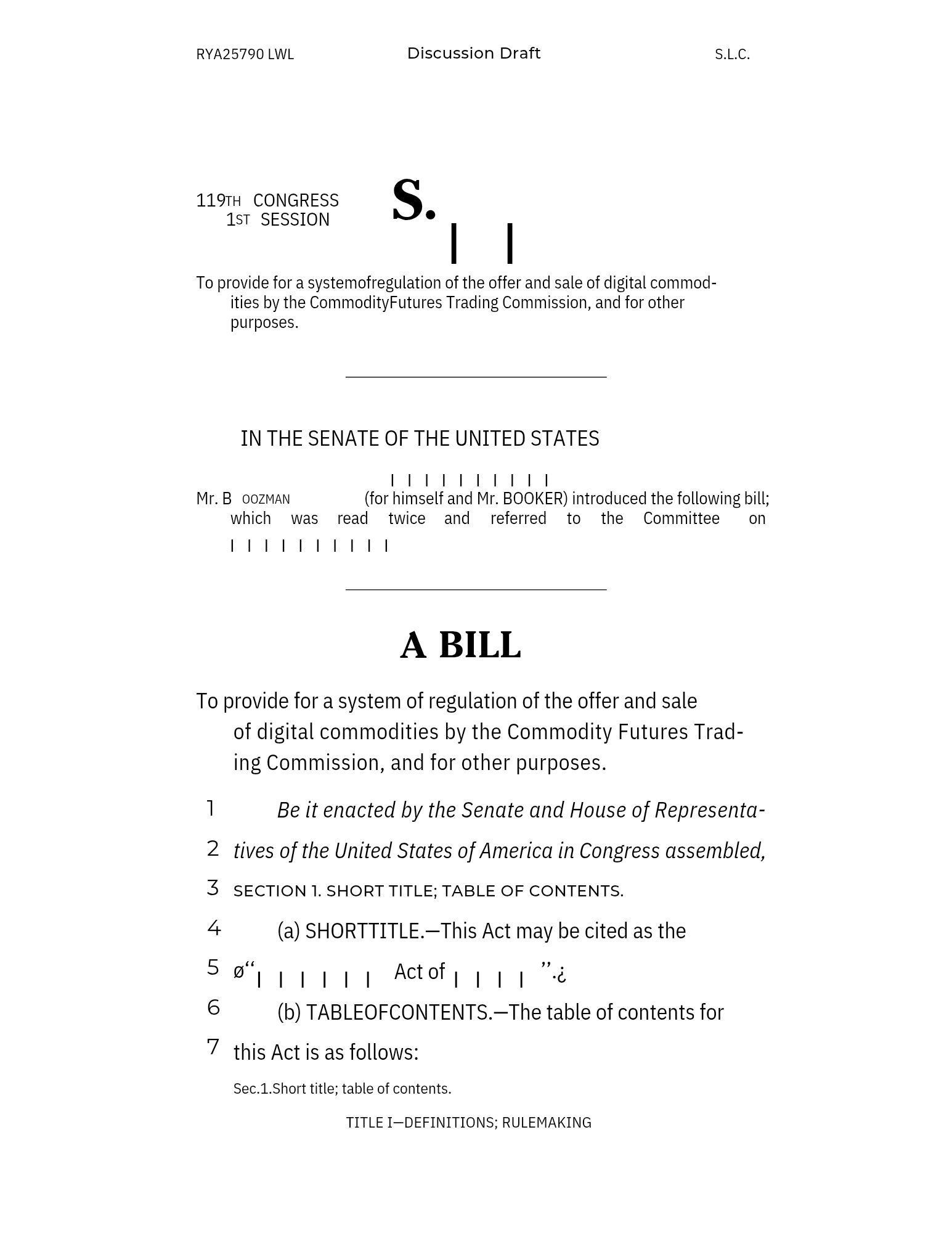
The White House has set a March 1 deadline to advance a comprehensive crypto market structure bill.
The signal is clear: regulatory clarity is coming, but not on the industry’s preferred terms.
At the center of the negotiations is a decisive shift against one of crypto’s most powerful adoption drivers: passive yield on stablecoin balances.
According to the draft discussed in today’s White House-led meeting attended by Coinbase, Ripple, a16z, major trade groups, and banking associations firms would be prohibited from offering rewards simply for holding stablecoins.
In effect, the savings-account model for digital dollars is being structurally dismantled.
Yield may only be permissible when tied to explicit economic activity, lending, liquidity provision, or other structured use cases, not for idle balances. This reframes stablecoins from yield-bearing instruments into pure payment rails.
Enforcement authority would be shared across the SEC, Treasury, and CFTC, with penalties reportedly reaching up to $500,000 per violation per day a level designed to ensure immediate compliance rather than negotiated settlement.
Banks, meanwhile, are pushing for further analysis on deposit displacement, concerned that payment stablecoins could accelerate outflows from traditional funding bases.
Despite these restrictions, the broader legislation is widely viewed by institutional participants as constructive.
The bill seeks to establish long-awaited clarity on:
- Custody standards
- Exchange oversight
- Token classification
- Jurisdictional boundaries between the SEC and CFTC
For large allocators, regulatory certainty often outweighs product flexibility. Capital does not require maximal upside, it requires defined rules, enforceable property rights, and predictable supervision.
If enacted, this framework could remove the single largest barrier to institutional participation: legal ambiguity.
The trade-off is structural.
Crypto may lose some retail-oriented yield mechanics, but gain access to deeper pools of conservative capital that have remained sidelined.
Negotiations will continue throughout the week, with a month-end agreement considered plausible. A finalized framework by March 1 would move the legislation into its next procedural phase.
In practical terms, the market is transitioning from an experimental frontier to a regulated financial sector, one where growth is likely to be slower, steadier, and far more capital intensive.
Clarity rarely feels bullish in the short term.