

@Fogo Official The growth of blockchain networks has exposed a recurring challenge. As adoption increases, many Layer 1 systems struggle to balance speed, decentralization, developer accessibility, and reliability. Some networks achieve high throughput but sacrifice stability. Others maintain strong security guarantees but cannot handle large scale user activity without congestion and rising costs. Fogo is designed to address this tension directly by combining a high performance Layer 1 architecture with the Solana Virtual Machine, often referred to as SVM.
At its core, the problem Fogo aims to solve is infrastructure limitation. Many decentralized applications require fast transaction confirmation, low fees, and predictable execution. Traditional networks often face bottlenecks when demand spikes. This affects user experience, application reliability, and long term scalability. Developers also face friction when migrating between ecosystems because different virtual machines require different programming models. By utilizing the Solana Virtual Machine, Fogo attempts to provide performance efficiency while maintaining compatibility with an established execution environment.
To understand how Fogo works, it is helpful to begin with the role of a virtual machine in blockchain design. A virtual machine defines how smart contracts are executed, how state transitions are validated, and how transactions interact with the ledger. The Solana Virtual Machine is known for its parallel execution model. Instead of processing transactions strictly one after another, it allows multiple non conflicting transactions to run simultaneously. This parallelization significantly increases throughput and reduces network latency.
Fogo integrates this execution model into its own Layer 1 consensus and network structure. At a high level, transactions are submitted to the network, validated by nodes, and executed through the SVM environment. The parallel runtime checks which transactions can run together without overlapping account access. This reduces idle time and maximizes hardware usage. The result is a system that aims to process a high volume of transactions while keeping confirmation times short and predictable.
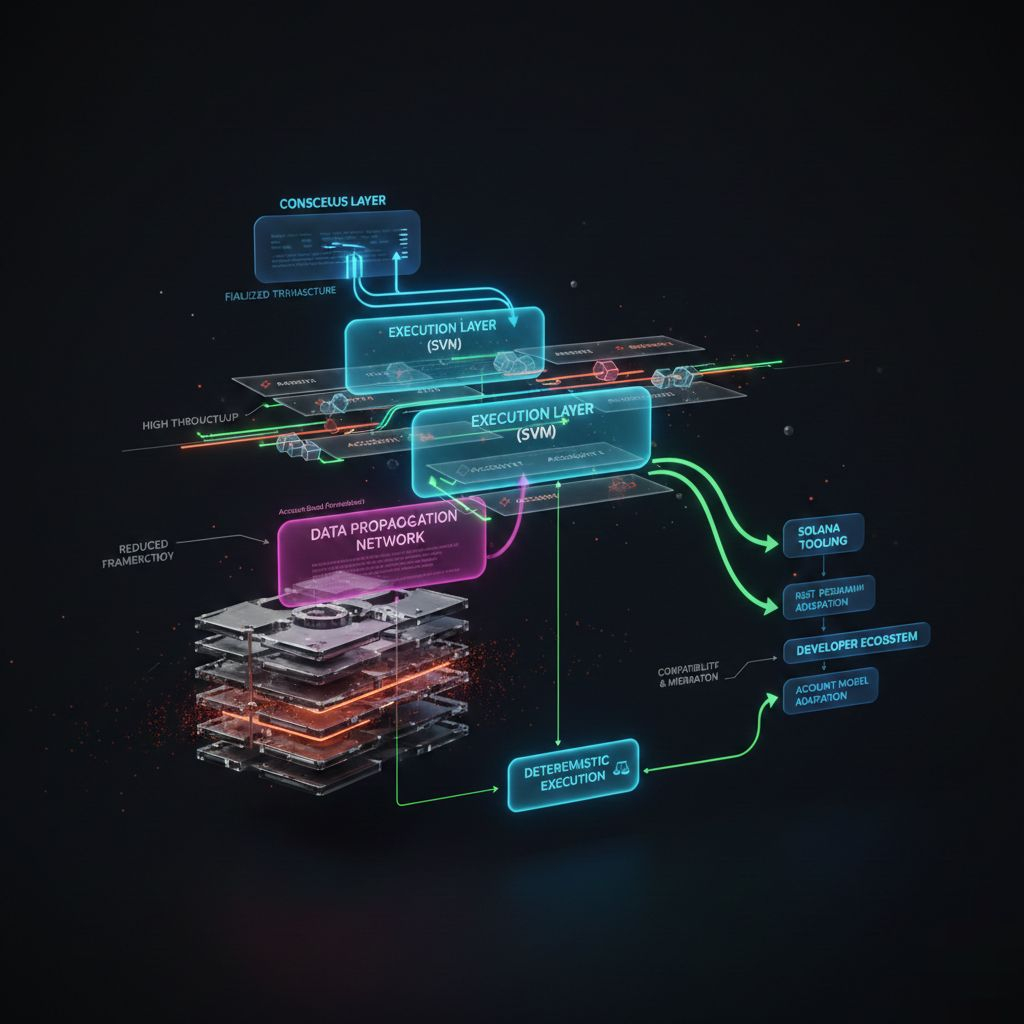
From an architectural perspective, Fogo separates concerns between consensus, execution, and data propagation. Consensus determines which transactions are finalized and in what order. Execution via the SVM handles contract logic and state updates. The networking layer ensures fast data sharing across nodes. This modular approach allows performance tuning at each layer without tightly coupling the entire system to one component. It also creates flexibility for future upgrades.
One of the defining features of using the Solana Virtual Machine is account based parallelism. Each transaction specifies which accounts it reads from or writes to. The runtime can safely execute transactions in parallel if their account sets do not overlap. This differs from traditional serial execution models and can significantly increase throughput under heavy demand. For developers, this model encourages careful design of contract state to maximize concurrency.
Another important mechanism is deterministic execution. Every validator runs the same program logic and must reach identical results. Fogo relies on the deterministic nature of the SVM to ensure that network participants remain synchronized. Any deviation would cause a block to be rejected. This shared execution standard strengthens reliability and reduces ambiguity across nodes.
From a developer perspective, compatibility with the Solana Virtual Machine lowers the barrier to entry. Developers familiar with Solana’s tooling, programming languages such as Rust, and account model can more easily build or migrate applications to Fogo. This reduces ecosystem fragmentation. Tooling, testing frameworks, and development practices can carry over, which shortens development cycles and improves maintainability.
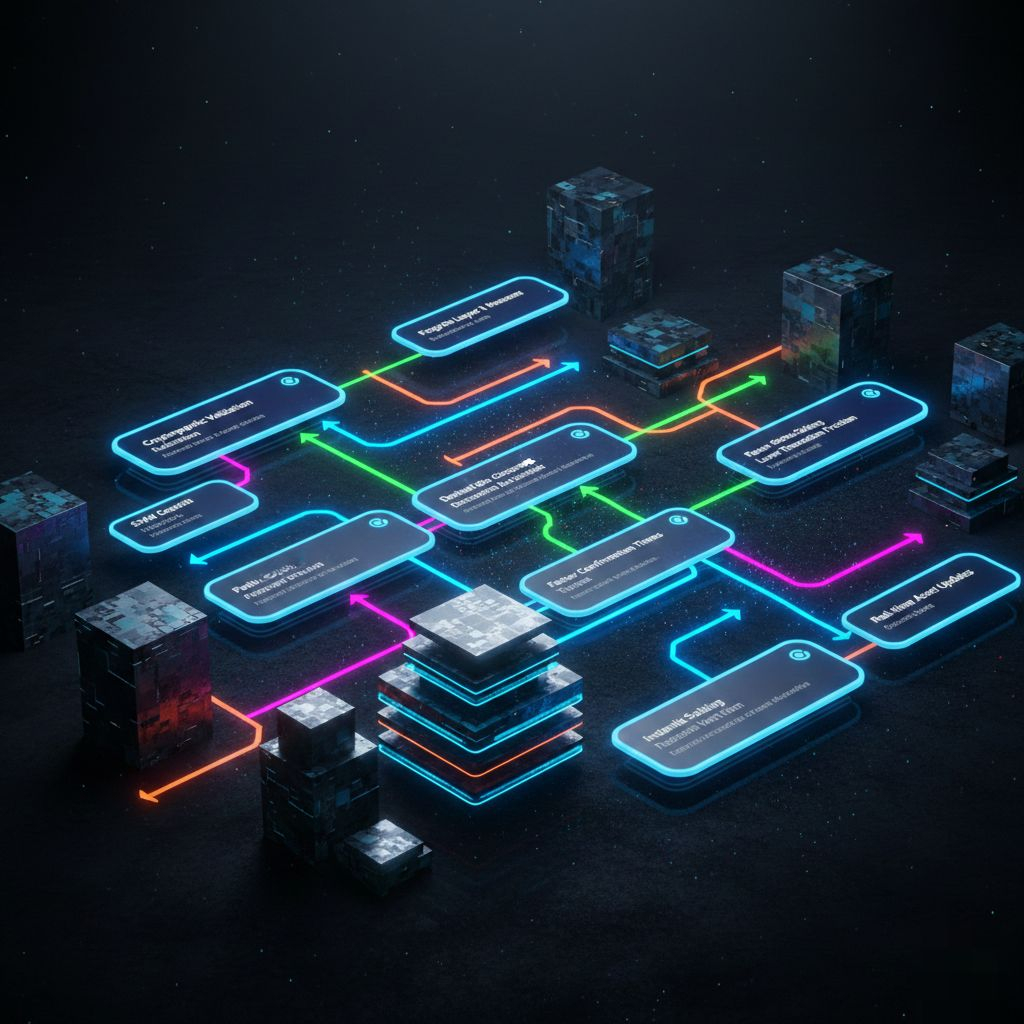
For users, much of this complexity remains invisible. What they experience is faster confirmation times, lower transaction friction, and smoother application performance. In decentralized finance, this can mean more responsive trading and liquidity management. In gaming, it can enable real time asset updates without noticeable delay. In identity systems, it can allow near instant verification without sacrificing security.
Security and reliability are central to any Layer 1 network. Fogo’s approach relies on cryptographic validation, distributed consensus, and deterministic execution to prevent unauthorized state changes. Because every node independently verifies transactions and contract results, the system does not depend on a single authority. Fault tolerance mechanisms allow the network to continue operating even if some nodes behave incorrectly or go offline.
Scalability is addressed through both execution efficiency and network design. Parallel processing increases computational throughput. Efficient data propagation reduces block propagation delays. If designed correctly, this combination allows the network to scale horizontally as validator participation grows. Compatibility with existing SVM based applications also supports ecosystem scaling without forcing developers to redesign core logic.
Cost efficiency is closely related to performance. When a network processes transactions quickly and avoids congestion, fees can remain stable and predictable. Efficient hardware utilization reduces wasted computation. For application builders operating at scale, predictable costs are often more important than short term fluctuations. A high performance base layer can reduce the need for complex off chain workarounds.
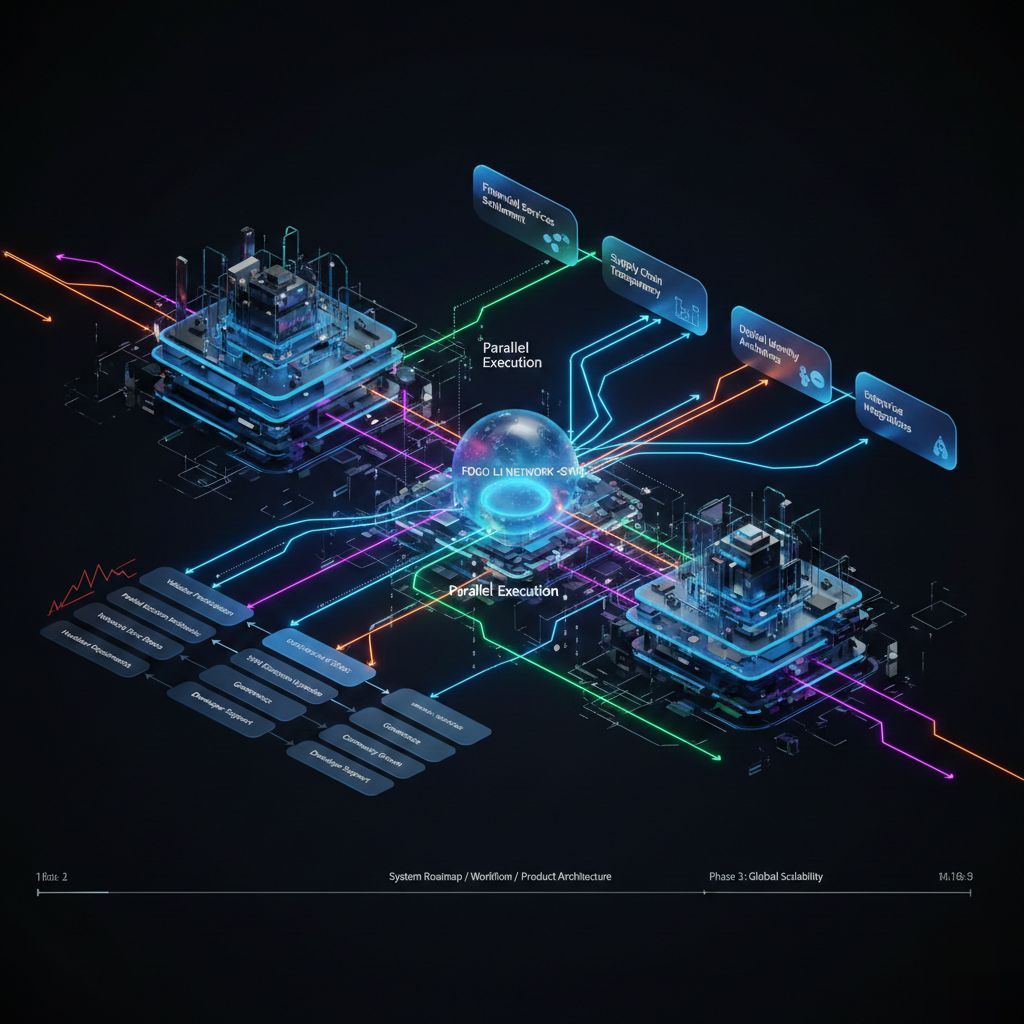
Fogo’s potential use cases extend across industries that require reliable digital infrastructure. Financial services can benefit from high throughput settlement layers. Supply chain systems can use transparent, tamper resistant records. Digital identity platforms can anchor credentials on chain while preserving user control. Gaming and digital collectibles can rely on fast, low cost state transitions. Even enterprise integrations may find value in a system that combines performance with an established execution environment.
Long term relevance will depend on several factors. The blockchain space is highly competitive, with many networks offering various trade offs between speed, decentralization, and interoperability. Fogo must maintain consistent performance under real world conditions, ensure validator participation remains decentralized, and keep pace with upgrades to the broader SVM ecosystem. Governance, community growth, and developer support will also influence sustainability.
There are technical challenges as well. Parallel execution models require careful contract design to avoid bottlenecks. Network synchronization at high throughput can stress infrastructure. Security audits and stress testing are necessary to maintain trust. As usage grows, ensuring that hardware requirements do not become exclusionary is also important for decentralization.
In summary, Fogo represents an effort to build a high performance Layer 1 network around the Solana Virtual Machine. By leveraging parallel execution and modular architecture, it aims to address scalability and developer friction in blockchain infrastructure. Its value lies not in promotional claims but in how effectively it delivers consistent performance, security, and compatibility. For developers and users alike, its significance will be measured by reliability, efficiency, and its ability to support real world decentralized applications over time.
