
Speed has become crypto most misleading marketing metric. Every new Layer 1 (L1) claims sub second finality yet traders from Singapore to Sao Paulo know the truth. Physical distance still dictates who wins the arbitrage game. The real battle is not for higher theoretical throughput. It is for consistent and predictable low latency regardless of where you are sitting.
Fogo a Solana Virtual Machine based Layer 1 has indeed identified this disconnect. Rather than just optimizing node software the team is fundamentally restructuring how validators relate to geography. Their validator zones concept does not simply chase faster blocks. It systematically minimizes the speed of light disadvantage that has silently favored certain market participants since the first DEX went live.
The Physics of Finality:
Light travels roughly 200 kilometers per millisecond in fiber optic cable. This means a trader in New York querying a validator cluster in Tokyo faces a minimum 100ms round trip before a single byte of data changes hands. That is before any consensus logic even executes.
Most chains treat this as an unsolvable ambient condition. Fogo architecture treats it as a design constraint to be strategically optimized around.
The network average block time currently sits at 40.02 milliseconds (Feb 14 2026) with 589.7 TPS over the past 24 hours. However those figures impressive as they are miss the larger architectural point. What truly matters is who gets to propose the next block and where they are physically located relative to the traders and applications relying on that finality.
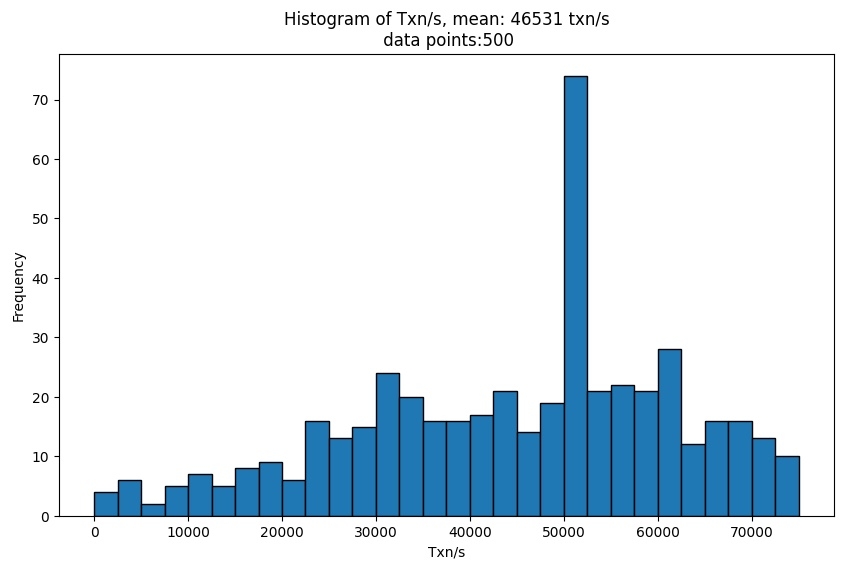
So what does this mean in practice?
It means Fogo can offer institutional grade execution predictability. This is not just speed displayed on a dashboard. It is speed that translates into demonstrably fairer markets for geographically distributed participants.
Validator Zones Rotating Proximity:
The validator zone mechanism works by organizing the network seven active validators (as of Feb 14 2026) into geographic clusters. Instead of every validator competing globally for every block proposal a system that inherently advantages nodes in low latency hubs like Northern Virginia or Frankfurt Fogo rotates which zone is active for block production.
Think of it not as a single race but as a series of regional heats. A zone comprising validators in Southeast Asia handles block production during periods when Asian trading volume dominates. Several hours later the active zone rotates to Europe and then subsequently to the Americas.
This rotation is governed by on chain parameters not by centralized scheduling. Validators must stake a minimum of 716.4 million FOGO (currently over 37% of circulating supply) to participate thus ensuring deep economic alignment with network health. The result is clear. A trader interacting with a DEX built on Fogo experiences finality latency determined primarily by their distance to the nearest active zone rather than the fastest validator located halfway around the planet.
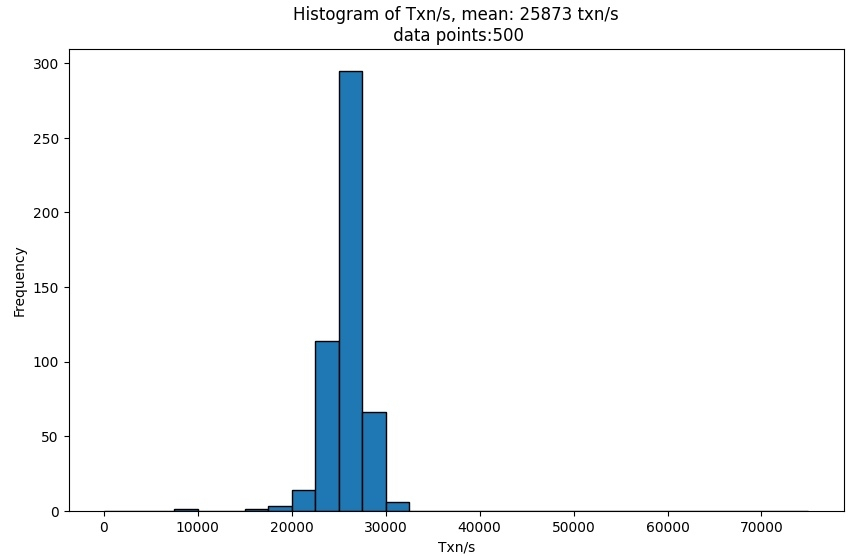
The Data Reality What Mainnet Metrics Actually Show:
Since mainnet launch Fogo has processed an astonishing 8.25 billion transactions. This is not testnet spam. This is real economic activity settling on a chain that as of Feb 13 2026 holds $1.18 million in Total Value Locked (DeFiLlama) which is up 3% in just 24 hours.
The validator set remains intentionally curated at seven active nodes. This is not a compromise on decentralization. It is actually a deliberate performance feature. Each validator runs the Firedancer client implementation which is purpose built for the SVM environment. With fewer highly optimized nodes the network achieves deterministic latency bands that would be impossible to guarantee with thousands of variable performance validators.
So what does this mean for users?
The validator count creates a coordination overhead that is both predictable and minimal. For traders this translates to 40ms block times that are not just theoretical maximums but are consistent daily realities. For builders it means they can model worst case settlement latency with genuine confidence. This is absolutely critical for applications like perpetual futures DEXs or options protocols where timing edges really matter.
Implications for the On Chain Trading Stack:
Fogo documentation outlines a vertically integrated approach. This includes an enshrined DEX native price feeds and colocated liquidity providers. The validator zones concept effectively ties this entire stack together.
When a liquidity provider colocates their infrastructure in the same region as an active validator zone they effectively eliminate geographic latency as a competitive variable. Their quotes then reflect true market conditions instead of stale data originating from a distant block proposer. The enshrined DEX can in turn offer tighter spreads because the underlying price oracles and matching engine operate within consistent temporal bounds.
However there is a catch here. This model only works if the validator rotation mechanism itself remains resistant to gaming. A sophisticated actor might try to predict zone transitions and then position their infrastructure accordingly. Fogo addresses this challenge through verifiable randomness in the rotation schedule coupled with economic slashing conditions for validators that attempt to manipulate proposal timing.
The Broader Thesis:
Fogo is not claiming to have solved the speed of light. What it is doing is more honest and in some ways even more ambitious. It is acknowledging that physical latency is an irreducible constraint and it is building a consensus architecture that distributes its impact fairly across the globe.
The project tokenomics show 3.62 billion FOGO unlocked as of Jan 15 2026 with the next 1.54 billion scheduled for September 20. This suggests a multi year runway for this ambitious infrastructure bet. Market cap currently sits at $80.73 million (CoinMarketCap Feb 14 2026) which implies significant room for institutional discovery as the validator zone model proves itself in live trading conditions.
For the trader staring at a 40ms block time from their terminal in Buenos Aires the underlying architecture matters less than the final outcome. They compete on strategy and insight not on geographic location. For the broader ecosystem that distinction represents the fundamental difference between a casino and a true market.
by Hassan Cryptoo
@Fogo Official | #fogo | $FOGO