

In the fast-paced world of blockchains, speed is king. Some networks built on the Solana Virtual Machine have really pushed what's possible. Fogo is one of those, a Layer 1 designed for things that need to happen ASAP, like trading, DeFi, and other financial stuff.
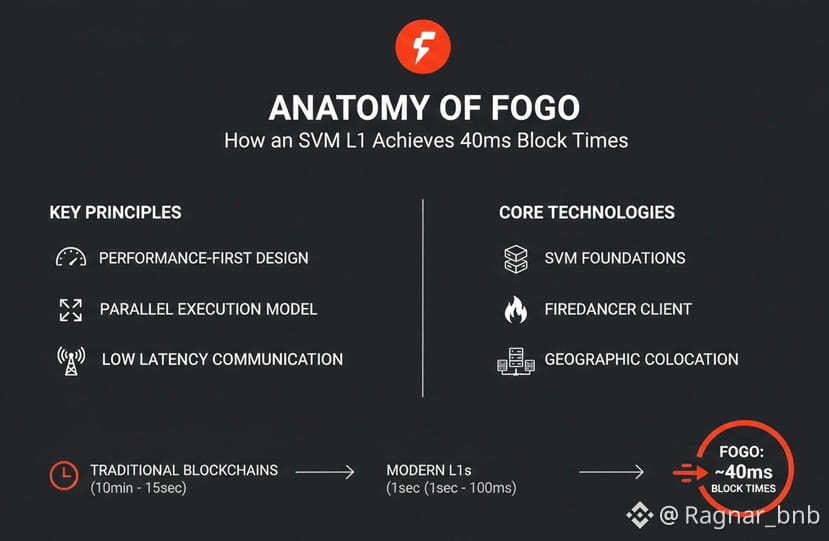
Fogo's big claim? It can get block times down to almost 40 milliseconds when things are just right. Let's break down how they do it, looking at their consensus design, Firedancer tech, and how their network is set up.
(Everything here is based on public info and how they say they do things.)
### Why Block Time is a Big Deal
Block time is just how long it takes to make a block. It matters because it changes how fast transactions go through, how good the user experience is, and how quickly apps react.
Older blockchains like Bitcoin and early Ethereum had longer block times because they cared more about security than speed. But newer Layer 1 networks try to get block times under a second so you can do cool stuff with finance and make interactive apps. Fogo is trying to get the lowest wait times possible.
### SVM: The Base and Why It Matters
Fogo is built using the Solana Virtual Machine. This is the same thing that powers the Solana network. The SVM lets you run many transactions at once, which is why Fogo can be so fast.
Because Fogo uses the SVM, it works with a lot of the things already made for Solana. That means developers can move their stuff over to Fogo without redoing everything.
### Speed First
From the start, Fogo wanted to be fast. All their decisions are based on speed and making sure things are reliable. They try to cut down on talking between different parts of the system and use hardware in the best way. Being as efficient as possible is the goal.
This is different from some blockchains that just want many different validators. Fogo is made for serious setups.
### Consensus and Making Blocks Fast
#### Leader-Based Plan
Fogo picks leaders to make blocks. Validators get assigned timeslots. This way, there are no delays from picking leaders all the time. Since everyone knows who's up next, validators can get ready in advance.
#### Proof of Stake Foundation
Fogo uses a Proof of Stake system. Validators put up tokens to participate. This makes things final quickly and keeps everyone honest. If you mess up, you get penalized. The system is setup to make sure everyone wants the network to be secure.
#### Fast Voting
Fogo's voting is based on Solana’s Tower BFT. Validators vote on blocks all the time. Lockout periods stop people from voting different ways. Giving votes more weight based on stake makes things more trustworthy. Blocks become final right away.
#### Quick Talk
Consensus messages are made to be fast. They use small formats and UDP networking. Critical info gets sent first. This cuts down on delays, and validators can share info in milliseconds.
### Firedancer and How Validators Perform
#### What's Firedancer?
Firedancer is a validator client made by Jump Crypto. It's written in C and C++. It's all about being fast and reliable. It controls memory and networking very well. Fogo uses Firedancer in its system.
#### Networking Tweaks
Firedancer has ways of doing networking that get around some normal steps. This cuts down on system overhead and makes packet sending quick. This allows for extreme packet flow.
#### Faster Transactions
Firedancer puts transaction processing into stages that are optimized. Each stage runs at the same time. Checking signatures, filtering, and executing are all done in parallel. This makes sure transactions go through without a hitch.
#### Stable and Separate
Firedancer is built so that if one part fails, it doesn't crash the whole thing. This makes uptime better and speeds up fixes. Network stability is improved.
### Running Things in Parallel
#### Knowing Who's Accessing What
Each transaction says what accounts it will read and write. This helps catch conflicts early. Transactions that don't conflict can run at the same time. This makes processing faster.
#### Using All the Cores
Fogo spreads work across many CPU cores. Separate transactions run in their own threads. Updating state is the only time things need to sync up. All of the server's power is put to use. Performance gets better with better servers.
#### Less Fighting
There are no global locks. Threads hardly ever block each other. This keeps wait times low, even when things are busy.
### Putting Validators Close Together
#### Validator Groups
Fogo wants validators to be in good data centers. Many are in big network hubs. Being close together cuts down on delays. Quality infrastructure is important. This helps with fast consensus.
#### Impact on Wait Times
Distance always adds delays. Even fiber networks have limits. By putting validators close, round trip times are minimized. Voting and block sharing are faster. This helps get blocks under 100 milliseconds.
#### Tradeoffs
Being close improves speed, but it means less geographic diversity. Fogo is okay with this because it wants fast speeds for things that need low wait times.
### How a Block is Made
#### Always Streaming Blocks
Block production is like a stream. Transactions are processed continuously. Execution starts as soon as it can. Blocks are built bit by bit. There's less idle time.
#### Verification in Stages
Checking signatures takes a lot of power. Fogo does this in stages. Batch processing and special instructions are used. Dedicated threads handle verification. This stops bottlenecks.
#### Sharing Efficiently
Blocks are sent using optimized gossip protocols. Data is broken into small pieces, and pieces are sent at the same time. This makes propagation delays super short.
### Storage
#### In Memory
Accounts that are used often are stored in RAM. This means less time waiting on disk access, and important data is ready to go. How memory is used is carefully watched.
#### Good Database
Persistent storage uses databases that are made for performance. Custom indexing makes access faster. Writes are batched and compressed.
#### Snapshot
Validators use fast snapshot systems. This cuts down on restart times, and full history replays are avoided, making the network more reliable.
### Getting to 40ms
Getting 40-millisecond blocks depends on good conditions. Network quality and validator hardware matter a lot. How close validators are and how simple transactions are also make a difference. When things are just right, the target can be hit.
Key things that enable this include leader scheduling and Firedancer networking. Running things in parallel and hardware acceleration are also important. When things aren't perfect, block times might increase.
### How This Compares to Old Ways
Old blockchains did one thing at a time and had slow networking. Fogo runs things in parallel and has optimized transport. Older systems used regular hardware, while Fogo needs high-end servers. This explains the gap in performance.
### Security
Fast systems have special risks. Detecting faults quickly is super important. Fogo uses staking incentives and slashing. Using varied clients improves resistance. Monitoring and backups are stressed.
### What You Can Do With Low Wait Times
Fogo supports apps that need real-time settlement. These include order book exchanges and derivatives. High-frequency trading is doable on-chain. Payment routing benefits from speed. Prediction markets and gaming also get advantages.
### Roadblock & Challenge
Validator hardware is costly, and running infrastructure is complicated. Maintenance needs experts. Balancing performance and decentralization is a constant challenge.
### In conclusion
Fogo’s low block times come from many coordinated optimizations. These include SVM execution, leader consensus, and Firedancer. Validator colocation and smart networking matter as well.
Instead of just one trick, Fogo improves everything. This design gives near real-time blockchain performance.
