
Real-World Assets (RWAs) are one of the most important developments in crypto today. They allow physical assets such as real estate, government bonds, gold, or even art to be represented as digital tokens on a blockchain. In simple terms, RWAs bring traditional finance on-chain.
Instead of needing large capital, paperwork, or banking intermediaries, investors can now buy fractional ownership of real assets directly through crypto platforms.
In 2025, the RWA sector experienced explosive growth, with billions of dollars flowing into tokenized assets. By 2026, analysts estimate that the sector could eventually reach trillions of dollars if adoption continues at this pace.
For investors in emerging markets, RWAs represent something powerful: access to global assets without geographic barriers.
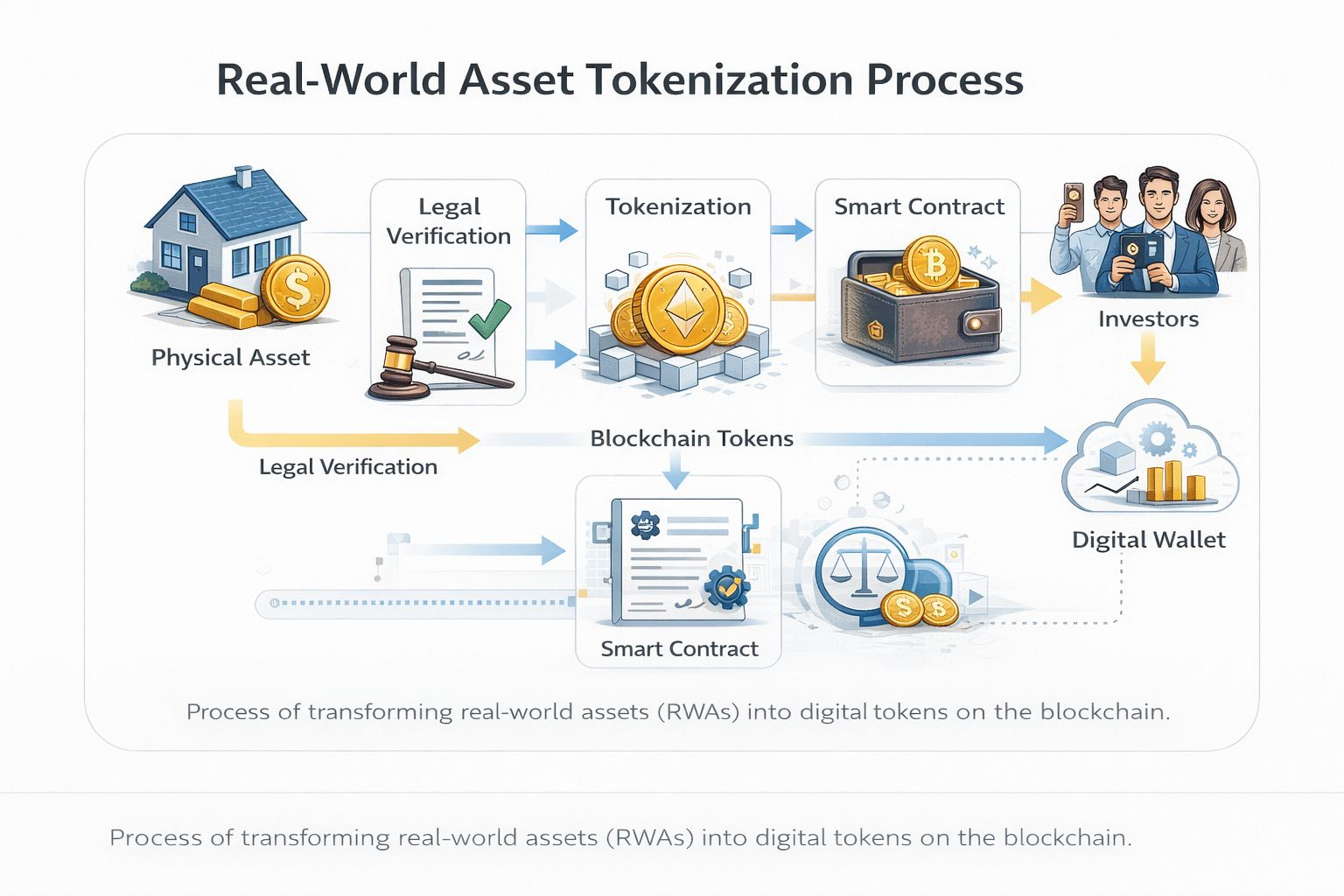
1. How RWAs Work (The Basics)
The foundation of RWAs is tokenization. Tokenization means creating a digital representation of a real-world asset on a blockchain.
For example:
A $1 million property can be divided into 1 million tokens. Each token represents $1 of ownership. When you buy tokens, you own a share of that asset.
However, it is important to remember: The physical asset remains off-chain. Legal structure and custody still matter.
2. Why RWAs Are Growing Fast
RWAs are becoming popular because they offer something crypto often lacks: stable, real yield.
Here’s why they are growing:
Institutions are tokenizing government bonds and funds
Investors want steady returns, not only volatile coins
DeFi platforms now use real assets as collateral
Global investors can access foreign assets more easily
In 2026, RWAs are one of the strongest bridges between traditional finance and crypto.
3. Real Examples of RWA Projects
Ondo Finance (ONDO):Ondo tokenizes U.S. Treasury products and offers on-chain yield backed by government securities. This gives crypto users exposure to traditional fixed-income returns without leaving the blockchain ecosystem.
Binance and Institutional Integration : Binance co-hosted RWA events at Consensus Hong Kong, discussing tokenized assets with privacy. They launched a program with Franklin Templeton where tokenized money market funds serve as collateral on Binance, letting users borrow against real assets. Also, Binance lists RWA tokens like those from Ondo, making them easy to trade.
Realio Network ($RIO): Realio focuses on tokenizing real estate and private equity. Through tokenization, property ownership can be divided globally, enabling passive income opportunities from real estate projects.
4. Practical Tips Before Investing in RWAs
RWAs are promising, but caution is essential.
4.1 - Start Small: Test the process with a small amount first. Understand how tokenization works before allocating serious capital.
4.2 - Verify Backing
Check:
Is the asset audited?
Is there proof of reserves?
Who holds custody of the real asset?
Transparency is critical.
4.3 - Understand Liquidity: Some RWA tokens are less liquid than major crypto assets. If you need to exit quickly, can you? Always verify trading volume.
4.4 - Consider Regulation: RWAs intersect heavily with legal frameworks. Regulatory changes can impact:
Access
Yield distribution
Platform operations
Stay informed.
4.5 - Diversify: Do not allocate all funds to a single asset type. Combine:
Stable RWAs
Blue-chip crypto (like $BTC, $ETH, $BNB)
Cash reserves
Balanced portfolios reduce risk.
For investors in regions with limited access to global markets, RWAs represent financial inclusion. Instead of being restricted to local banking products, investors can access diversified global instruments via blockchain technology.
To summarize, RWAs connect traditional finance and decentralized systems. If adoption continues, tokenized assets could represent one of the largest structural shifts in financial history. But like all investments, success depends on understanding, research, and disciplined risk management.