I spent a good amount of time digging into Midnight Network before writing this. Not just reading the summaries but actually trying to understand what problem it's supposed to solve. Because if you’ve been around crypto long enough you start noticing a pattern.
Every new project promises the same things. Faster chain. Cheaper chain. The future of finance. And after a while… it all blends together. Same old story.
Midnight feels a bit different. Not necessarily revolutionary. But it is clearly trying to tackle a problem that has been sitting quietly inside blockchain systems for years.
Blockchains are transparent by design. That was the original idea. Every transaction visible. Every wallet traceable. Everything recorded forever.
Great for trust.
Not so great for privacy.
And the moment you try to imagine real financial infrastructure running on top of that model… things start getting weird. Companies can’t run contracts if competitors can see every detail. Hospitals obviously can’t expose patient records. Even normal users might not love the idea that their entire financial history is permanently visible to anyone with a blockchain explorer.
So the problem becomes pretty obvious.
How do you keep the verification part of blockchain… without exposing every piece of data?
That’s basically the question Midnight Network is trying to answer.
The whole system revolves around zero knowledge cryptography. Honestly… and I'm not just saying this… the name makes it sound way more intimidating than it actually is.
The basic idea is simple.
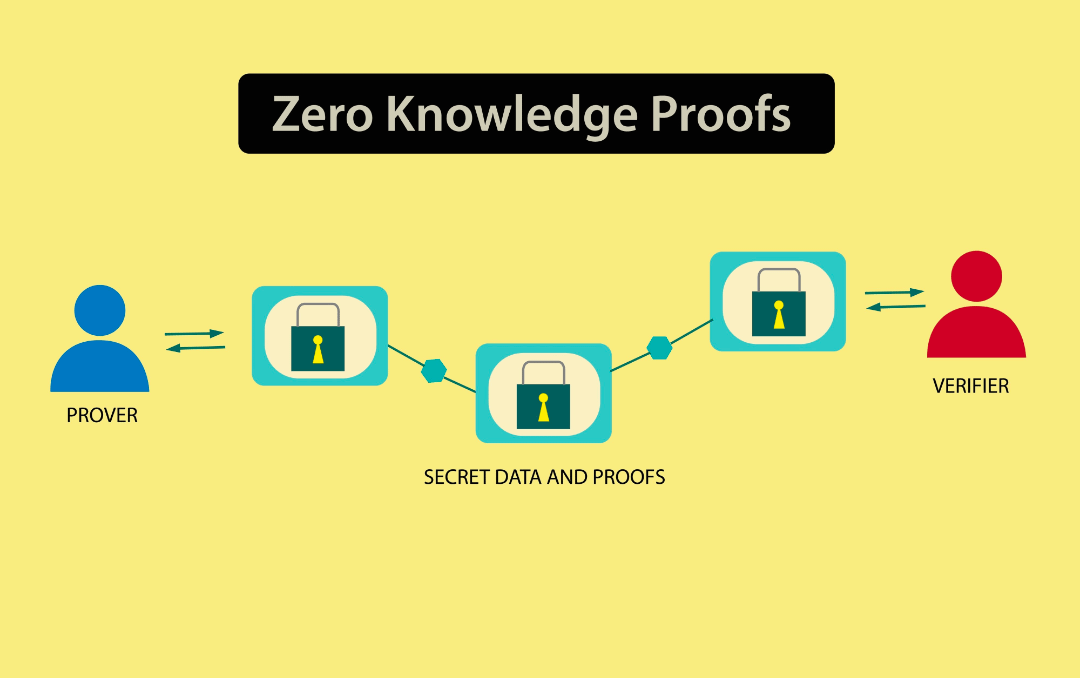
You can prove something is true without revealing the underlying information.
Imagine a payment system that needs to confirm you have enough funds. Traditional blockchains check your actual balance. Everyone can see it. With zero knowledge proofs the network only checks a mathematical proof that your balance is sufficient. The number itself stays hidden.
That small shift changes a lot.
In Midnight’s design sensitive computation happens privately while the blockchain records proof that everything followed the rules. The network verifies correctness… but it doesn’t see the raw data.
So instead of publishing full transaction details the chain records cryptographic evidence that the transaction was valid.
On paper this unlocks a lot of possibilities. Businesses could run contracts without exposing confidential information. Identity systems could verify eligibility without revealing personal data. Financial platforms could prove compliance without broadcasting internal records.
Sounds great.
But honestly this is also where some skepticism is healthy.
Zero knowledge systems look amazing in theory. The math is elegant. The architecture is clever. But real world systems have a habit of exposing the messy parts of good ideas.
Performance issues. Developer friction. Integration headaches.
And if building privacy applications is still complicated developers will just skip it. Simple as that.
I’ve seen this with normal users too. My cousin once asked me why Ethereum transactions require “gas tokens” and why fees keep changing. I tried explaining it. Five minutes later he just said “so basically it’s complicated”.
That’s the reality. Most people don’t care about cryptography or ZK proofs. They just want systems that work and don’t leak their data.
Another thing is regulation.
Privacy systems always make regulators nervous. Midnight tries to deal with that using something called selective disclosure. In theory information stays private during normal operations but can be revealed when regulators or auditors require it.
Sounds reasonable.
But let’s be real for a moment. Will regulators actually feel comfortable with a system where data is hidden by default and only revealed when necessary? I’m not completely convinced.
Still the architectural approach Midnight is taking is interesting.
Instead of trying to replace existing blockchains it positions itself as a partner network focused on confidential computation. Public chains continue handling transparent settlement while Midnight provides a privacy layer when applications need it.
That layered approach actually mirrors how traditional financial infrastructure works. Different systems handle different responsibilities. Payments. Compliance. Clearing networks. They interact… but they don’t expose every piece of data to everyone else.
Midnight seems to be applying that same idea to blockchain architecture.
There’s also an attempt to make development easier. Historically zero knowledge systems were extremely difficult to program. Only cryptography specialists could build anything useful. Midnight introduces tools where developers define the conditions they want verified while the system handles the proof generation behind the scenes.
Whether that abstraction actually works in practice… well… developers will decide that pretty quickly.
If building privacy apps still feels like solving a math puzzle most teams won’t bother.
The network also uses an unusual economic structure. Instead of requiring the main token for every transaction the system generates a secondary resource used for computation. That resource gradually decays over time and replenishes depending on participation in the network.
The idea seems to be separating long term commitment to the system from the everyday cost of using it. For applications running thousands of operations predictable costs matter a lot more than constantly fluctuating transaction fees.
Development wise Midnight is still early. Test environments are running. Developers are experimenting with confidential smart contracts. Pieces of the system are slowly becoming usable.
Nothing explosive yet. But infrastructure rarely grows through dramatic launches.
And maybe that’s the right way to look at Midnight.
Not another chain trying to dominate the entire ecosystem. More like an attempt to fill a missing layer that existing systems might eventually rely on.
Because sooner or later every blockchain runs into the same uncomfortable problem.
Transparency creates trust.
But too much transparency makes real world systems difficult to use.
Midnight is basically asking one question.
What if verification doesn’t actually require visibility.
What do you think? Can crypto really go mainstream without strong privacy… or is privacy itself the thing that keeps regulators uncomfortable? Let me know what you think.