
After spending years around crypto projects, I’ve developed a habit of looking at new announcements with a bit of distance. Not in a negative way, but more like someone who has seen different cycles repeat themselves. Every few years a new narrative appears that tries to connect blockchain technology with something bigger in the real world. Sometimes it’s storage, sometimes AI, sometimes gaming. Recently I noticed another direction slowly appearing in discussions — the intersection between robotics and decentralized networks. That’s how Fabric Protocol first caught my attention.
At first, I honestly thought it sounded like one of those ambitious ideas that crypto often likes to experiment with. The idea of robots interacting through a blockchain network isn’t exactly a small goal. But the more I read about it, the more I started to understand what the project is actually trying to build. Fabric Protocol seems less focused on hype and more focused on building a coordination layer where machines, AI agents, and humans can interact through verifiable systems.
From what I’ve seen, the network is supported by the Fabric Foundation, which operates as a non-profit organization guiding the project’s development. Their goal seems to be creating infrastructure where robots and intelligent systems can operate within a transparent environment. In simple terms, it’s about giving machines a way to verify actions, record tasks, and potentially exchange value using blockchain technology.
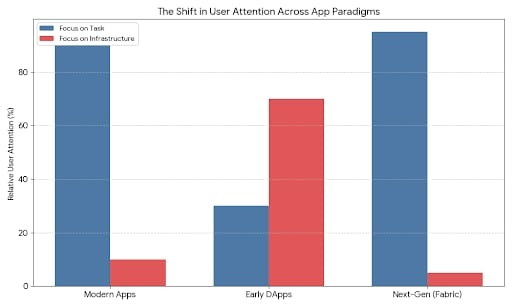
When I think about it, the concept actually makes sense if you look at where technology is heading. Robots are becoming more capable, AI systems are becoming more autonomous, and automation is starting to play a bigger role in everyday industries. If these systems eventually perform real tasks in the economy, they will need some kind of digital identity and coordination system. Fabric is basically trying to explore what that system might look like.
One of the things that stood out to me is the idea of machines having their own verifiable identities on the network. That means a robot could theoretically prove that it completed a task or contributed work in some way. Instead of relying entirely on centralized tracking systems, the network records those interactions through a public ledger. It’s an interesting attempt to combine robotics infrastructure with the transparency that blockchains are known for.
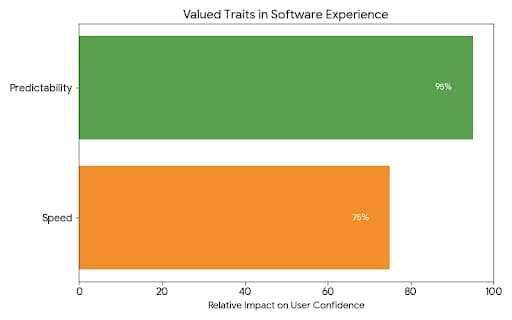
Of course, like most crypto ecosystems, there is also a token involved. In Fabric’s case it’s called ROBO. The token works as the economic layer of the network, helping coordinate activity, governance decisions, and different interactions within the system. I’ve seen many token models over the years, and while they often look similar on paper, their real value usually depends on whether the network actually gets used.
Fabric also introduces the idea that value could be tied to real robotic tasks or computational work happening on the network. In theory, robots contributing useful work could be part of the economic structure of the system. It’s an interesting approach because it tries to connect token incentives with real-world activity instead of purely financial mechanisms.
Still, I’ve been around this industry long enough to know that concepts are only the beginning. What really determines the future of a protocol is the community that forms around it. Developers, researchers, engineers, and early builders are the ones who decide whether an ecosystem becomes active or slowly fades into the background.
Another thing I tend to watch closely is how developers respond. Do they start building tools around the protocol? Do researchers experiment with it? Does the idea attract people who are genuinely interested in robotics and AI, not just traders looking for the next trending token? Those signals usually reveal more about a project’s future than any announcement ever could.
The robotics angle also introduces challenges that many blockchain projects don’t face. Software can evolve quickly, but hardware moves much slower. Robotics systems require testing, safety considerations, and real-world deployment environments. That means progress might be gradual rather than explosive, which is something crypto communities sometimes struggle to be patient with.
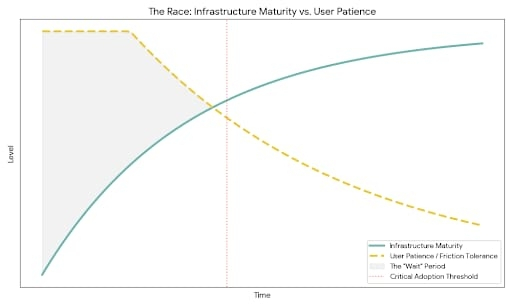
Still, there’s something interesting about seeing blockchain projects try to connect with real-world systems again. For a while, the industry seemed heavily focused on purely digital applications. Fabric feels like part of a broader shift where people are once again asking how decentralized infrastructure could interact with physical technology.
Right now, though, it still feels very early. The idea is ambitious, and the direction is interesting, but the real story will only unfold once the ecosystem starts showing actual activity. If developers, robotics teams, and AI researchers begin experimenting with the protocol, then it could slowly grow into something meaningful. If that doesn’t happen, it may remain an interesting concept that arrived before the ecosystem was ready.
For now, I’m simply watching from a distance. Not jumping to strong conclusions, not getting overly excited either. Fabric Protocol is one of those projects that I’ll keep an eye on quietly, just to see how it develops once real users and builders start shaping what the network actually becomes.