

I looked at MIRA’s tokenomics, I wasn’t trying to find upside.
I was trying to find pressure.
Because token models don’t usually fail in bull markets. They fail in silence — when incentives drift, emissions outpace utility, or when nobody actually needs the token beyond speculation. So instead of asking, “How high can this go?” I found myself asking something less exciting: “Who needs this to function?”
That question changes everything.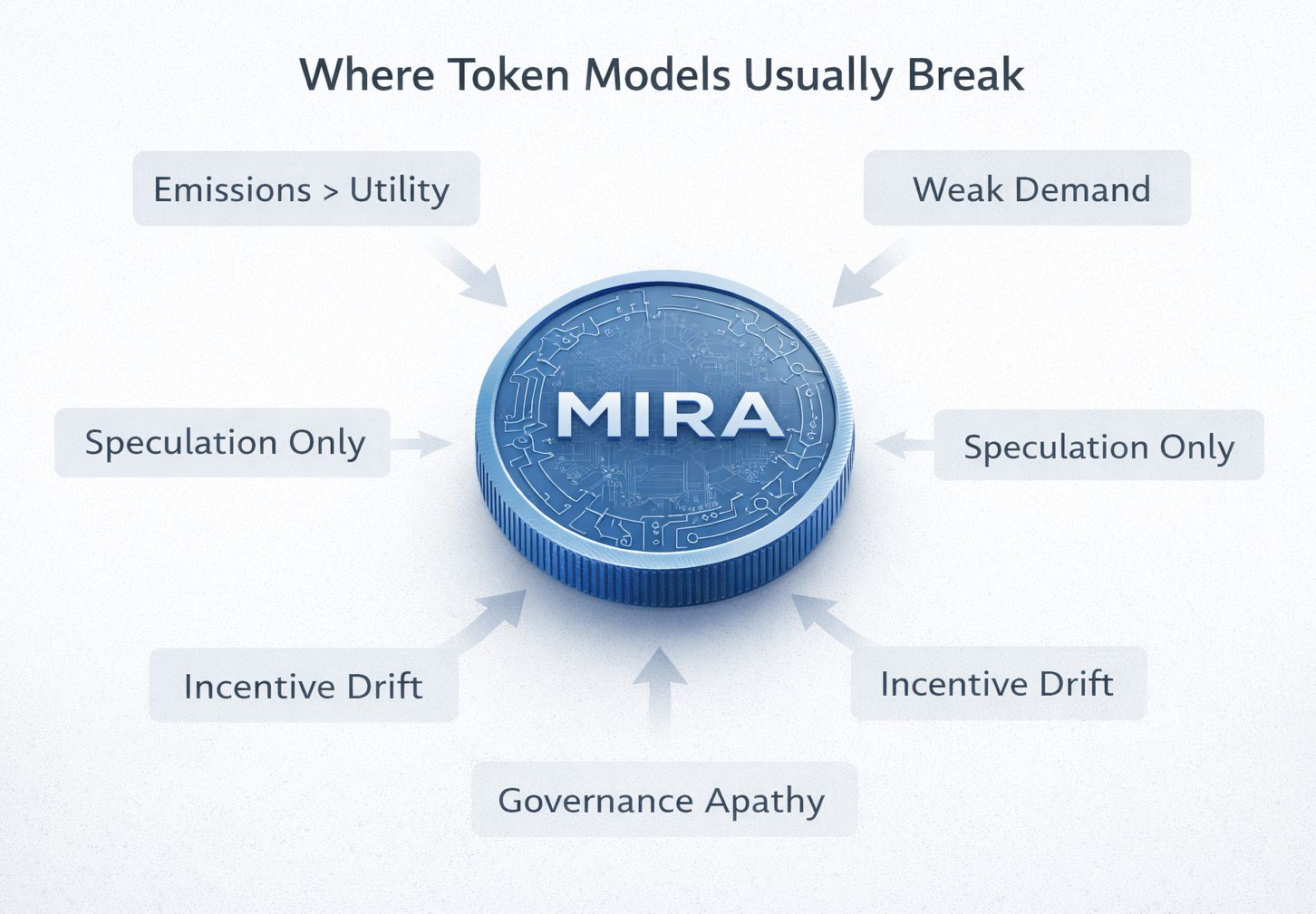
Most token models in crypto start with distribution mechanics. Allocation tables. Vesting schedules. Community incentives. Liquidity programs. MIRA’s structure, at least on the surface, feels less obsessed with early velocity and more concerned with long-term coordination.
And that’s where sustainability actually lives.
If MIRA is positioning itself as a decentralized compute and coordination layer, then the token isn’t just a fundraising tool. It becomes a balancing mechanism. Nodes need incentives to provide compute. Validators need rewards to secure the network. Users need a predictable cost structure to access resources. Governance needs skin in the game.
That’s not hype. That’s plumbing.
The long-term sustainability of any infrastructure token depends on whether it captures real economic activity. Not trading volume — activity. If agents, developers, or autonomous systems genuinely rely on the network for computation and verification, then the token has a structural role. It becomes fuel.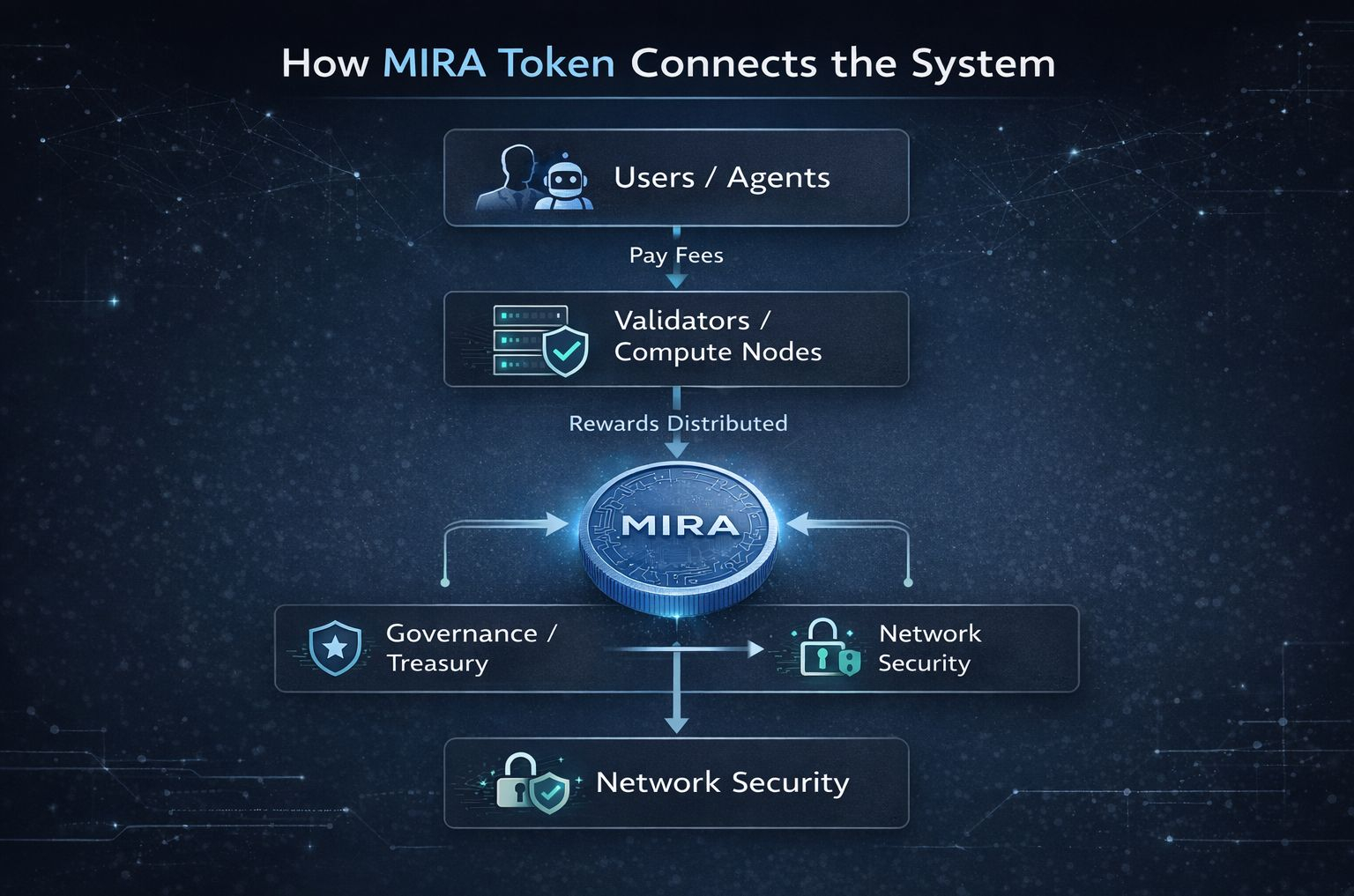
If they don’t, it becomes decoration.
One thing that stands out about MIRA’s model is that it seems tied to usage rather than narrative cycles. Emissions and rewards are connected to participation in the network — providing compute, validating tasks, maintaining coordination. That’s healthier than pure inflationary farming models, but it still depends on demand materializing.
Supply schedules matter, but they’re secondary to purpose.
A slow unlock with weak demand still bleeds. An aggressive unlock with strong utility can stabilize faster than people expect. The tension between emission and adoption is what defines the long-term curve.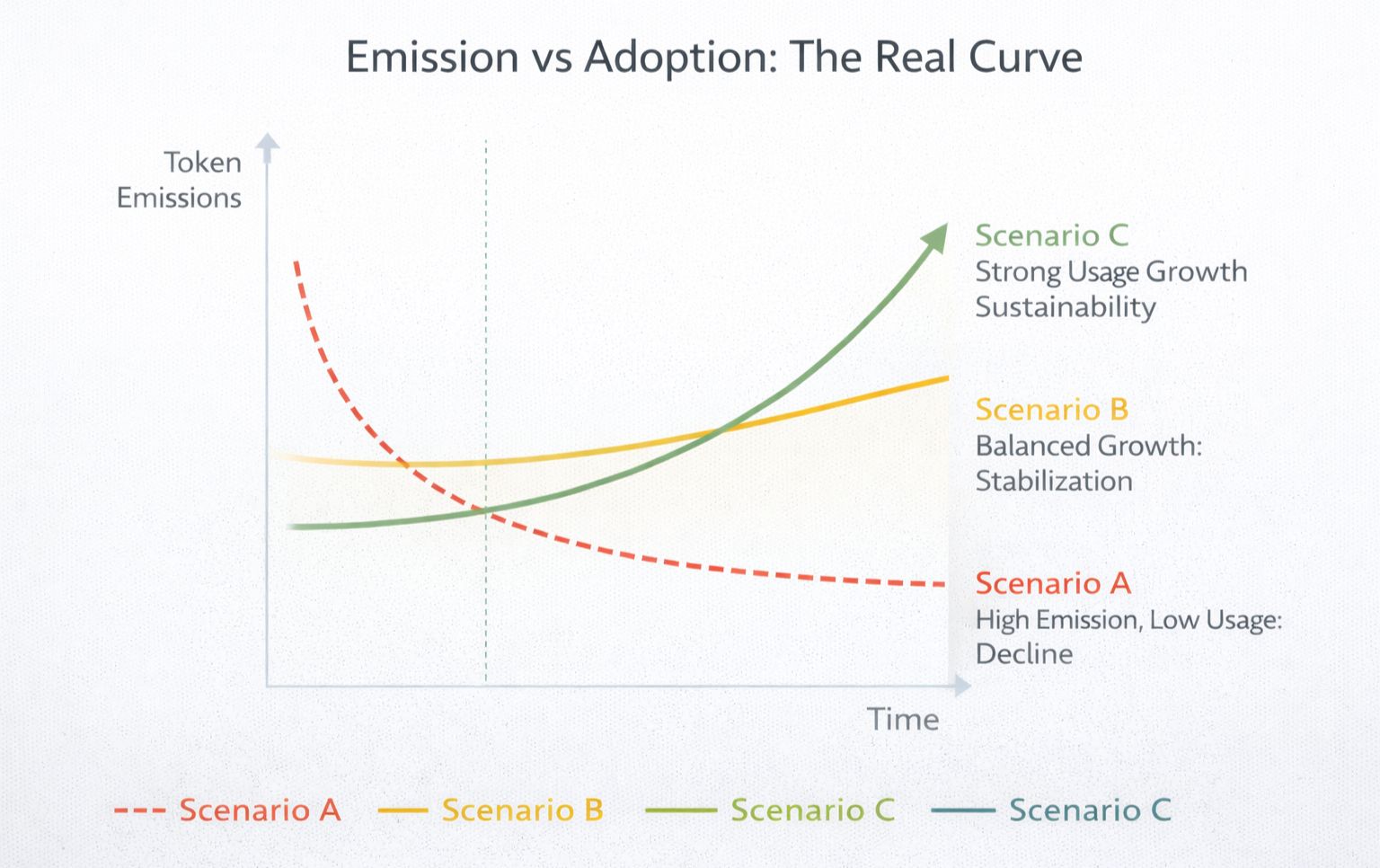 MIRA’s sustainability won’t be decided by its whitepaper math alone. It’ll be decided by whether real workloads anchor themselves to the network.
And that’s the harder part.
There’s also governance. If the token carries voting power, then sustainability becomes social as much as economic. Who holds it? Builders? Early investors? Passive speculators? Foundations can guide vision early on, but over time, token distribution shapes the direction of the ecosystem.
A decentralized compute protocol can’t afford governance apathy. If only a small percentage participates in decision-making, the system drifts. If governance becomes politicized, progress slows. Sustainability isn’t just about token burns or staking rewards. It’s about whether the people holding the token care about the infrastructure it represents.
Then there’s pricing stability.
For a network that wants to support real-world compute and potentially autonomous agents, volatility isn’t just a trader’s concern. It affects cost predictability. If running workloads becomes unpredictable because token prices swing violently, serious builders hesitate. That’s where mechanisms like staking, dynamic fees, or treasury buffers matter — not as financial tricks, but as shock absorbers.
Still, I’m cautious.
General-purpose infrastructure tokens have a history of overestimating how quickly demand scales. Building a decentralized compute layer is one challenge. Convincing AI teams, robotics startups, or enterprise developers to anchor mission-critical workloads to it is another.
Long-term sustainability won’t come from scarcity narratives. It will come from boring repetition — workloads processed, fees paid, nodes rewarded, governance proposals executed. Over and over.
What I respect about MIRA’s framing is that it doesn’t seem to scream urgency. It doesn’t feel like it’s optimizing for a quick speculative cycle. That patience can either be a strength or a liability in crypto, where attention moves fast.
If adoption lags too long, token models strain. If utility compounds quietly, the token becomes less about speculation and more about coordination.
I’m not convinced the balance is guaranteed. No token model is immune to misalignment.
But the real test isn’t in the allocation chart. It’s in whether, five years from now, something meaningful still runs on it — something that would be inconvenient to move elsewhere.
If that happens, sustainability follows.
If it doesn’t, no tokenomics model, no matter how elegant on paper, can manufacture relevance.
For now, the math is less interesting to me than the direction.
Because in infrastructure, sustainability isn’t designed in spreadsheets.
It’s earned in usage.
