
been researching FOGO's validator setup and honestly? economics force exactly the centraliztion everyone's worried about 😂
what bugs me:
FOGO validators aren't equal. performance-based.
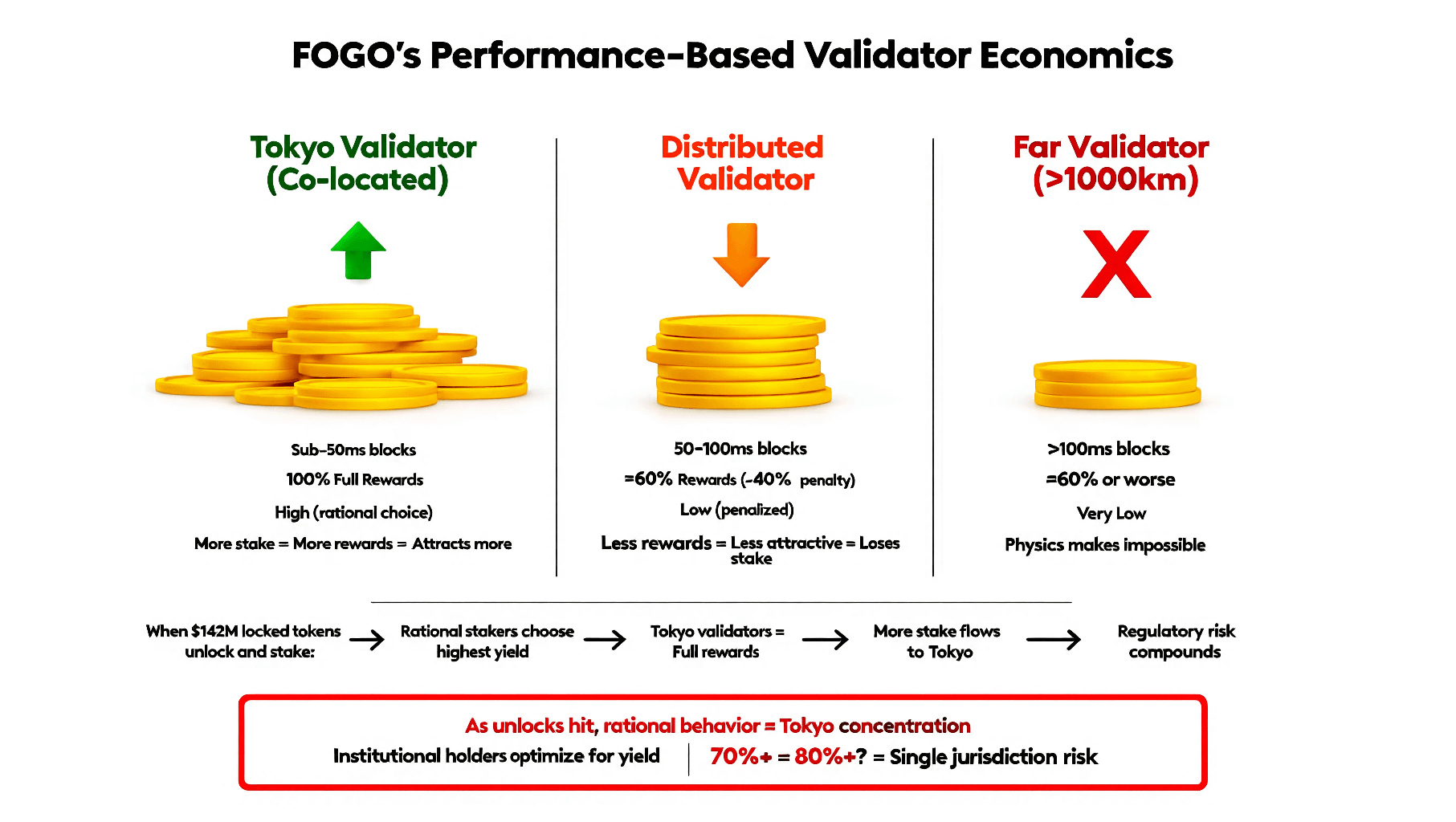
sub-50ms production → full rewards. distributed → ~40% penalty.
sounds fair. but physics doesn't care.
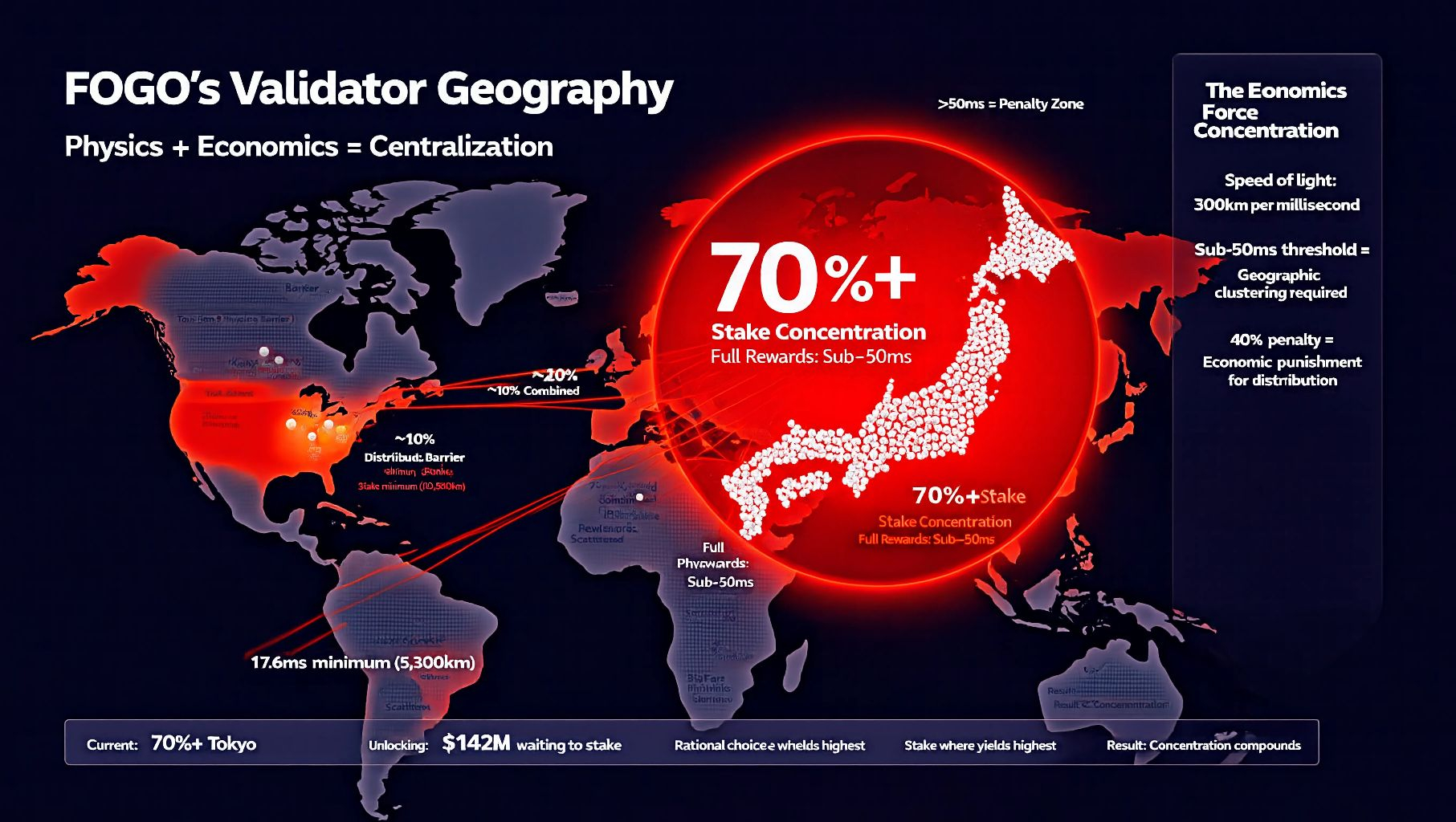
speed of light: 300km per millisecond. Tokyo-Singapore: 5,300km = 17.6ms minimum just signal travel. add processing, consensus → impossible hit 50ms distributed.
solution? cluster Tokyo. 70%+ stake one city.
not choice. economics punish distribution.
the tokenomics angle nobody discusses:
62% locked tokens unlock, where stake?
rational: stake highest yield. highest yield? Tokyo validators (full rewards, no penalty).
institutional (12.31%) unlocks 6-12 months. optimize yield. stake Tokyo.
foundation (22.19%) eventually unlocks. same rational. stake Tokyo.
compounding concentration:
more stake → more rewards → attracts more → higher concentration.
rich validators richer. distributed get 40% less. economics force centralization.
locked tokens ($142M) haven't chosen yet. when unlock and stake, rational = Tokyo.
not idle governance. actual stake affecting consensus.
my concern though:
single jurisdiction = regulatory failure point.
70%+ Tokyo means Japanese government pressure majority network.
seen before:
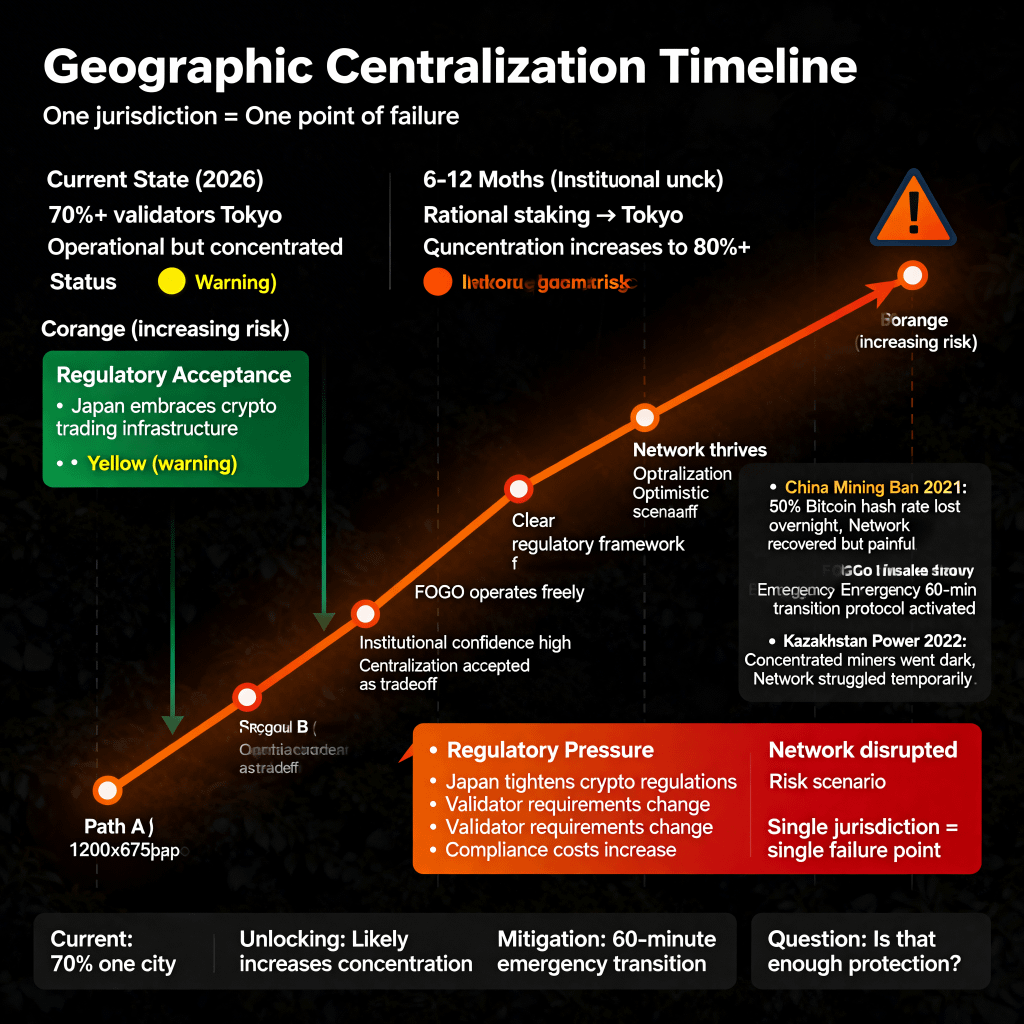
China banned mining → Bitcoin hash 50% drop overnight
Kazakhstan power → miners offline, network struggled
single jurisdiction = systemic risk.
FOGO wants institutions. institutions want regulatory certainty. Tokyo concentratin creates opposite certainty.
emergency transitions ~60 minutes shift zones. 60 minutes vulnerability.
"decentralized blockchain" but 70% one city. federation with steps.
what they get right:
explicit choice. speed over distribution. honest tradeoff.
institutional HFT thousands/second, co-located matters. sub-50ms worth centralization risk.
penalties transparent. everyone knows. 40% distribution penalty clear.
institutions show scale accept Tokyo risk for performance, economics work.
built HFT needs even conflicts decentalization.
what worries me:
validator distribution over time. unlocks stake, Tokyo increases or decreases?
increases (rational yield) → centralization compounds → regulatory risk grows.
decreases (accept penalty) → performance drops → advantage diminishes.
lose-lose. either centralization up or performance down.
62% locked = validators waiting. institutional unlocks, stake distributed (penalties) or Tokyo (compound)?
past: institutions optimize yield. Tokyo clustering likely increases unlocks hit.
honestly don't know if sustainable model or systemic centralization breaks regulatory pressure.
watching: geographic distribution next 6-12 months, institutional staking when unlocks.
Tokyo concentration acceptable tradeoff or regulatory time bomb?? 🤔
