
🚀 Bitcoin ($BTC ) & Ethereum ($ETH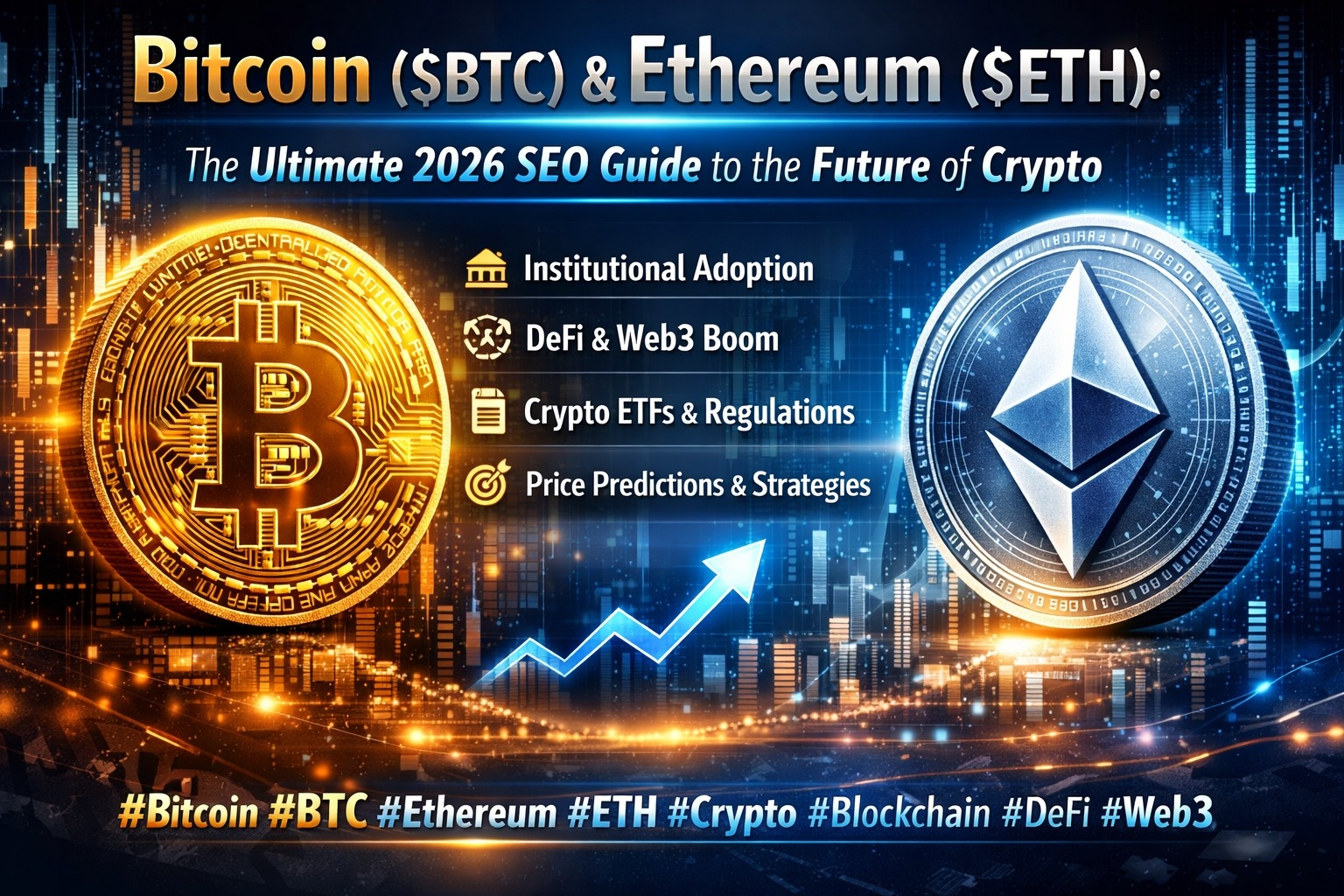 ): The Ultimate 2026 SEO Guide to the Future of Crypto
Introduction
In 2026, $BTC (Bitcoin) and $ETH (Ethereum) remain the two most dominant forces in the cryptocurrency market. As institutional adoption grows and blockchain innovation accelerates, investors worldwide are closely watching these digital assets. Whether you’re a beginner or an experienced trader, understanding Bitcoin and Ethereum is essential for navigating today’s crypto landscape.
This SEO-optimized guide covers everything you need to know about Bitcoin and Ethereum, including use cases, price drivers, investment strategies, and future outlook.
What Is Bitcoin ($BTC)?
Bitcoin is the world’s first decentralized cryptocurrency, launched in 2009 by the anonymous creator Satoshi Nakamoto. It operates on blockchain technology, enabling peer-to-peer transactions without intermediaries like banks.
Key Features of Bitcoin:
Limited supply of 21 million coins
Decentralized and censorship-resistant
Store of value (Digital Gold narrative)
Increasing institutional adoption
Bitcoin is widely viewed as a hedge against inflation and economic uncertainty.
What Is Ethereum ($ETH)?
Ethereum is a decentralized blockchain platform launched in 2015 by Vitalik Buterin. Unlike Bitcoin, Ethereum enables developers to build smart contracts and decentralized applications (dApps).
Key Features of Ethereum:
Smart contract functionality
Foundation of DeFi (Decentralized Finance)
NFT ecosystem leader
Proof-of-Stake consensus (energy efficient)
Ethereum powers thousands of blockchain projects, making it the backbone of Web3 innovation.
Bitcoin vs Ethereum: What’s the Difference?
Feature
Bitcoin ($BTC)
Ethereum ($ETH)
Purpose
Digital store of value
Smart contract platform
Supply
Fixed (21M)
No fixed max supply
Consensus
Proof-of-Work
Proof-of-Stake
Use Cases
Payments, Store of Value
DeFi, NFTs, dApps
Both assets serve different but complementary roles in the crypto ecosystem.
Why BTCand ETH Are Trending in 2026
1️⃣ Institutional Adoption
Major financial institutions continue adding Bitcoin and Ethereum to their portfolios.
2️⃣ ETF & Regulatory Developments
Crypto ETFs and clearer regulations have boosted investor confidence.
3️⃣ DeFi & Layer-2 Growth
Ethereum scaling solutions improve speed and reduce fees.
4️⃣ Global Economic Uncertainty
Investors turn to decentralized assets during inflation or banking instability.
Investment Strategies for Bitcoin & Ethereum
Long-Term Holding (HODL)
Many investors accumulated BTCnd ETH as long-term assets.
Dollar-Cost Averaging (DCA)
Investing fixed amounts regularly reduces volatility risk.
Staking Ethereum
ETH holders can stake to earn passive income.
Future Outlook: Will Bitcoin and Ethereum Reach New ATHs?
Both Bitcoin and Ethereum historically follow market cycles. As adoption expands and blockchain technology matures, analysts predict strong long-term growth potential.
However, cryptocurrency markets remain volatile. Always conduct your own research (DYOR) before investing.
#Blockchain #DeFi #Web3 #NFT #CryptoNews #CryptoInvesting #BullMarket #Altcoins