I have spent years watching the digital landscape shift from a playground of speculation into a powerhouse of actual production and as I sit here in 2026 it has never been clearer that we have entered the era of Fogo. When I first encountered the Fogo network I saw more than just another ledger or a faster way to send data because I saw a philosophy of pure utility that was missing from the early days of blockchain development. This transition away from hype and toward functional ecosystems is not just a trend but a total restructuring of how we interact with value online and Fogo stands at the absolute center of this movement. The rise of this utility driven ecosystem is a testament to what happens when you prioritize the user experience and the technical efficiency of the SVM over short term gains and empty promises.
In my view the secret to the success of Fogo lies in its uncompromising speed and its refusal to compromise on decentralization even while hitting forty millisecond block times. I have used networks before that claimed to be fast but they always felt clunky or required me to wait for minutes for a final confirmation whereas here the experience is as fluid as a traditional web application. This performance is the bedrock upon which the entire ecosystem is built because without that speed you cannot have true utility in a global market that never sleeps. I often think about the developers who are now flocking to this space because they finally have a canvas that can handle their most ambitious ideas without the bottleneck of high fees or slow settlement. This is the velocity of value in action where the distance between an idea and its execution is measured in milliseconds.
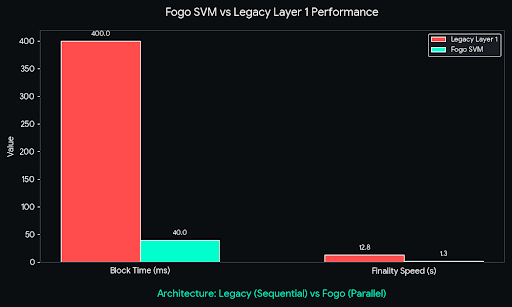
The $FOGO token itself is the lifeblood of this entire machine and I find the way it interacts with the ecosystem to be a masterclass in economic design. Every single action I take whether it is voting on a proposal or interacting with a decentralized application requires a small amount of this fuel which creates a constant and healthy demand. It is not just a digital asset to be held in a wallet but a tool to be used and that distinction is what separates a utility driven ecosystem from a speculative one. I see a world where this token powers everything from micro payments to complex logistics tracking systems and the beauty of it is that most users might not even realize they are using a blockchain because the interface is so seamless and the underlying tech is so invisible. The SVM allows for parallel processing which means thousands of these interactions happen simultaneously without the network ever breaking a sweat.
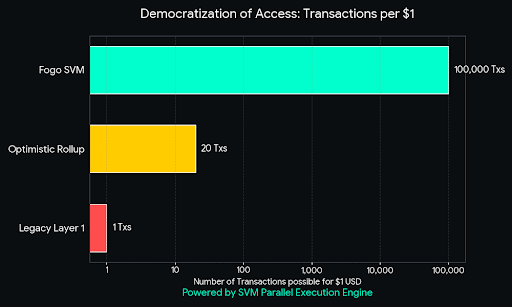
The architecture of Fogo is fundamentally different from what came before because it leverages the power of parallel execution to ensure that transactions do not get stuck in a single line waiting for approval. When I look at the legacy systems of the past I see bottlenecks and high costs that prevented small users from participating but Fogo has solved this by making the costs nearly non existent. With a transaction fee of roughly zero point zero zero zero zero one dollars there is no barrier to entry for anyone with a digital connection. This democratization of access is what drives the growth of the utility driven ecosystem and it is why I believe the next wave of global users will find their home here rather than on the slow and expensive networks of the past.
As I look at the growth of DeFi within this space I am struck by how much more efficient capital has become when it is freed from the friction of the past. I see liquidity flowing like water between different protocols and I see lending markets that offer real rates based on actual usage rather than inflationary subsidies. This is the mature phase of the industry that I have been waiting for where the value of a project is determined by the problems it solves and the service it provides to its users. Fogo has become the standard for this new way of thinking because it provides the tools and the speed necessary to compete with centralized finance on an even playing field and in many cases it is actually winning because of its transparency and its open source nature.
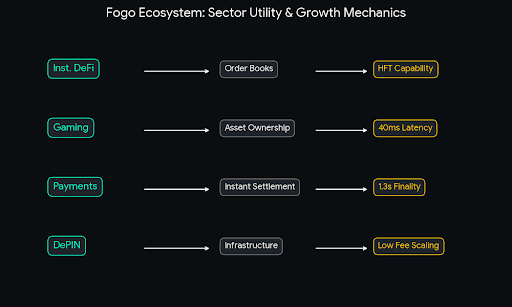
The rise of the utility driven ecosystem is not just about finance but also about gaming and identity and logistics and every other industry that requires fast and reliable data transmission. I see developers building massive multiplayer worlds where every item is owned by the player and every trade happens in real time without any lag or high fees. This is only possible because of the SVM and the specific optimizations that the Fogo team has implemented to ensure that the network scales horizontally. As more validators join the network the capacity increases which means we are building a system that can grow to meet the needs of the entire planet without slowing down or becoming too expensive for the average person to use.
The global reach of this ecosystem is also something that I find incredibly inspiring as I see people from all corners of the world accessing the same financial tools and opportunities regardless of their local banking infrastructure. This level of inclusion is only possible when you have a network that is both cheap to use and easy to understand and Fogo has nailed both of those requirements. I believe we are only just scratching the surface of what is possible as more industries begin to realize that they can migrate their operations to a utility driven blockchain to save costs and increase transparency. This is not just a revolution in finance but a revolution in how we organize human effort and Fogo is the engine that is making it all possible for everyone involved in this incredible journey.
When I talk to builders in the Fogo community I hear a different kind of conversation than I heard during the previous cycles. They are not talking about token prices or market caps but about throughput and latency and user retention and actual problems that need solving. This shift in focus is the clearest sign that we have moved into the utility age where the real value is created by the work being done on the chain rather than the hype surrounding it. I find it deeply satisfying to be part of a community that values technical excellence and genuine innovation over everything else because that is the only way we will build a digital economy that lasts for decades to come.
The future of the internet is a utility driven ecosystem and Fogo is the blueprint for how that future will be built. Every time I interact with the network I am reminded of how far we have come from the early days of slow blocks and high fees and it makes me excited for what the next few years will bring as we continue to push the boundaries of what is possible with the SVM. We are architecting a world where value moves as fast as data and where everyone has a seat at the table thanks to the efficiency and the accessibility of this incredible platform. It is an honor to be a witness to this transformation and to share my perspective on why I believe this is the start of the greatest utility era the digital world has ever seen. In the coming months I expect to see even more breakthroughs in how we use this technology to solve the most pressing challenges of our time because the foundation is now solid and the tools are ready for prime time. This is the moment we have all been waiting for and I am ready to see how far we can go together in this new era of utility.
I often spend my nights thinking about the sheer scale of the opportunity that lies ahead for those who embrace this change early because the transition from speculative assets to utility based systems is the single most important shift in the history of decentralized technology. We are moving away from a world of empty promises and into a world where the strength of a network is measured by the actual transactions that power real world services. This is not a transition that will happen overnight but the momentum behind Fogo is now undeniable as more enterprises and developers realize that they can no longer afford to ignore the advantages of the SVM. Every block that is finalized in forty milliseconds is another step toward a more efficient global economy that does not depend on slow intermediaries or centralized gatekeepers who take a cut of every transaction.