
The world is entering a new technological era where machines robots and intelligent systems are becoming a core part of everyday life. From factories and warehouses to hospitals and smart cities automation is rapidly transforming how industries operate. But while machines are becoming smarter the infrastructure that powers them is still largely centralized and controlled by a few large organizations. This creates limitations around transparency scalability security and ownership of machine data. The Fabric Foundation is working to solve this challenge by building what is known as the Decentralized Machine Stack—a new open infrastructure designed to support the next generation of intelligent machines.
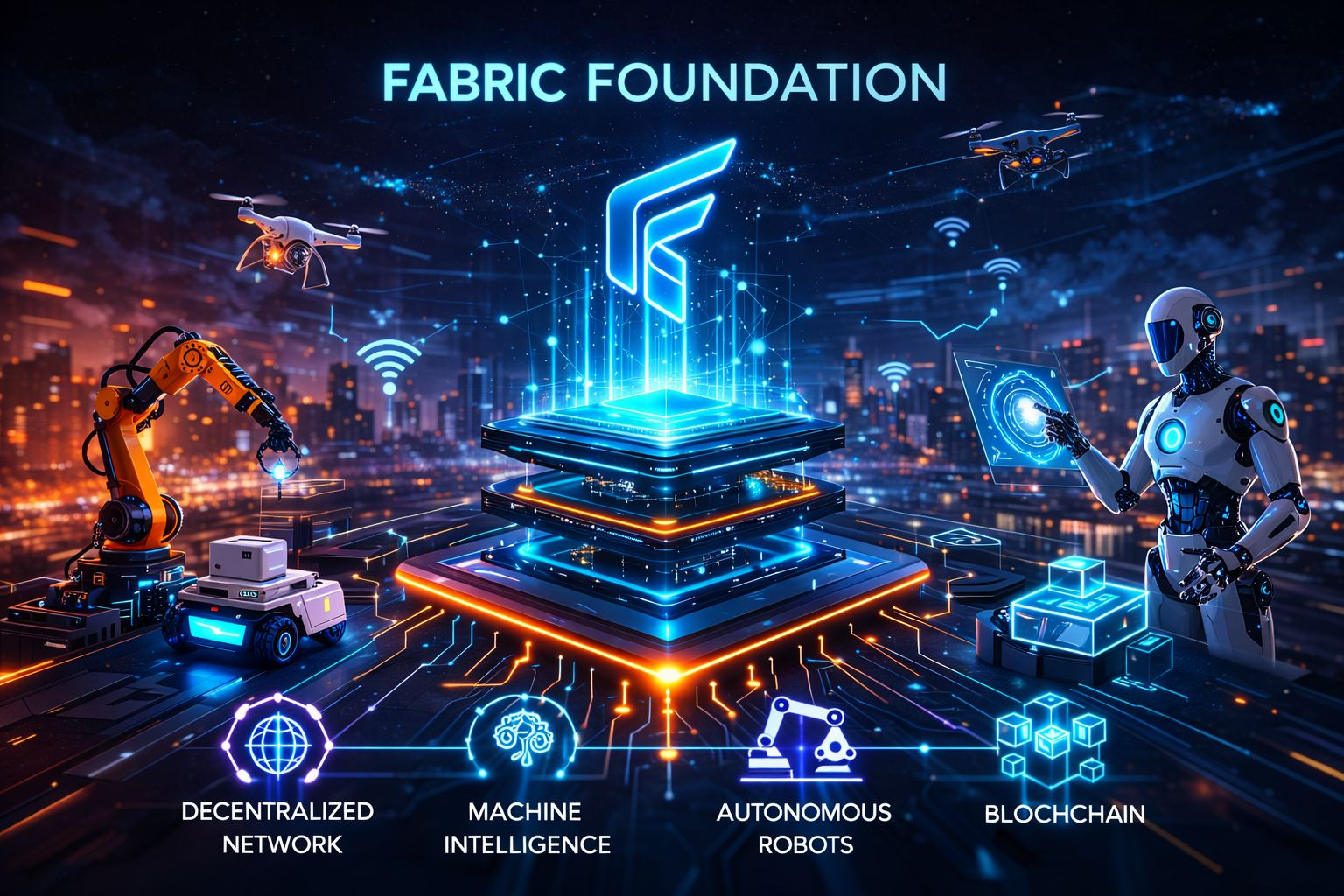
This article explores how Fabric Foundation is building the decentralized infrastructure for robotics and machine intelligence why the decentralized machine stack matters and how it could reshape industries in the coming years. We will also look at the project's technology ecosystem token utility and the latest developments that are helping it gain attention in the Web3 and robotics sectors.
The Fabric Foundation focuses on a simple but powerful idea: machines should be able to communicate operate and collaborate on a decentralized network. Instead of relying on centralized servers controlled by corporations machines could run on an open infrastructure where developers businesses and individuals can participate. This decentralized approach opens the door to a future where machines can securely share data, coordinate tasks and even operate autonomously across global networks.
The concept of the Decentralized Machine Stack refers to a layered technology framework designed to support machine communication, coordination, and computation in a decentralized environment. Just as the internet relies on protocols such as TCP/IP to allow computers to communicate the decentralized machine stack provides the digital infrastructure that allows robots AI agents and automated systems to work together seamlessly.
At the base of the stack is the decentralized infrastructure layer. This layer provides distributed computing resources networking capabilities and blockchain verification systems. Instead of running machine operations through centralized cloud providers Fabric enables these processes to run across decentralized nodes. This makes the system more resilient secure and scalable. When machines rely on decentralized networks they are less vulnerable to single points of failure censorship or control by centralized platforms.
Above this layer is the machine coordination layer. This component allows different machines to communicate and collaborate. In traditional automation environments machines are usually programmed to perform isolated tasks within closed systems. Fabric introduces an open communication framework where robots and intelligent systems can interact with one another through standardized protocols. For example warehouse robots could coordinate logistics tasks automatically, or autonomous delivery systems could communicate with traffic infrastructure to optimize routes.
Another important part of the stack is the data and intelligence layer. Modern machines rely heavily on data to improve performance and decision-making. However data ownership has become a major issue in today's digital economy. Fabrics decentralized design allows machine-generated data to be stored and verified on secure networks where ownership remains with the data creator. This ensures that businesses and developers maintain control over their data while still benefiting from shared intelligence across the ecosystem.
One of the biggest advantages of the decentralized machine stack is interoperability. Many existing robotics systems operate within closed ecosystems where different devices cannot easily communicate with one another. Fabric aims to create a universal infrastructure that allows machines built by different manufacturers to operate together. This approach can significantly accelerate innovation because developers are able to build on top of a shared network rather than creating isolated solutions.
Security is another critical focus of the Fabric ecosystem. As machines become more autonomous the risks associated with hacking or system manipulation increase. A decentralized architecture can help mitigate these risks because data and control functions are distributed across many nodes rather than stored in a single location. Blockchain-based verification also ensures that machine instructions and data exchanges remain tamper-proof.
Fabric Foundation’s vision goes beyond simple automation. The organization aims to create a machine economy where machines can interact economically with humans and with each other. In this model machines could perform services share data, and receive payments automatically through decentralized protocols. For instance an autonomous drone could deliver packages and receive payment instantly through blockchain-based transactions. This creates an entirely new economic model where machines act as active participants in digital markets.
To support this ecosystem Fabric integrates token-based incentives that help maintain and expand the network. The project’s token plays a key role in facilitating transactions, governance and resource allocation across the decentralized machine stack. Participants who provide computing power storage or machine services can earn tokens as rewards. Developers can also use the token to deploy applications access network resources and pay for machine coordination services.
Token utility is essential for sustaining decentralized infrastructure because it aligns incentives among participants. Instead of relying on centralized funding or corporate control the Fabric ecosystem encourages community participation. Node operators developers and businesses all contribute to the network while benefiting from the growth of the ecosystem.
In recent updates Fabric Foundation has focused on expanding partnerships with robotics developers AI researchers, and Web3 infrastructure providers. These collaborations aim to accelerate the development of decentralized robotics platforms that can be deployed across multiple industries. The foundation has also been working on improving the scalability of its infrastructure allowing more machines and applications to operate on the network simultaneously.
Another recent milestone includes the development of machine identity frameworks. In a decentralized machine network every device must have a secure digital identity. Fabric is developing cryptographic identity systems that allow machines to authenticate themselves and interact safely with other devices on the network. This identity layer is critical for ensuring trust within decentralized environments where machines must communicate autonomously.
The Fabric ecosystem is also investing in developer tools that make it easier for innovators to build applications on top of the decentralized machine stack. These tools include software development kits (SDKs) APIs and integration frameworks that connect robotics platforms with decentralized infrastructure. By simplifying the development process Fabric aims to attract a global community of builders who can expand the capabilities of the network.
Industries such as logistics manufacturing, agriculture and healthcare could benefit greatly from decentralized machine infrastructure. In logistics decentralized coordination systems could allow fleets of autonomous vehicles to optimize delivery routes in real time. In agriculture networks of autonomous farming equipment could share environmental data and collaborate to improve crop efficiency. Healthcare robots could securely exchange medical data while preserving patient privacy.
The decentralized machine stack could also support smart city infrastructure. Urban environments are increasingly relying on intelligent systems for traffic management energy distribution and public safety. A decentralized framework allows these systems to operate more transparently and efficiently while reducing the risks associated with centralized control.
One of the most exciting aspects of Fabric’s vision is the possibility of machine-to-machine collaboration at global scale. As millions of machines connect to decentralized networks, they can form dynamic ecosystems that adapt to real-world conditions. For example autonomous supply chain systems could automatically adjust production and distribution based on demand patterns detected by networked sensors and AI systems.
Despite its promising potential building decentralized machine infrastructure is not without challenges. Robotics and automation technologies are still evolving, and integrating them with decentralized networks requires advanced technical solutions. Issues such as latency data synchronization, and cross-platform compatibility must be carefully addressed. Fabric Foundation is actively researching these challenges and developing solutions that balance performance with decentralization.
Regulation is another important factor that will influence the growth of decentralized machine networks. As autonomous systems become more common governments and regulatory bodies will need to establish frameworks that ensure safety and accountability. Fabric’s transparent and verifiable infrastructure could actually help regulators monitor machine activities more effectively while preserving decentralization.
Education and community engagement are also key components of Fabric’s strategy. The foundation supports developer communities research initiatives, and educational programs that explore decentralized robotics and AI infrastructure. By encouraging collaboration between academia, industry and the Web3 community Fabric aims to build a strong foundation for long-term innovation.
Looking ahead the decentralized machine stack could become a critical layer of the digital economy. Just as cloud computing transformed software development and online services decentralized infrastructure may transform how machines operate in the real world. Instead of isolated automation systems controlled by a few corporations, we could see a global network of machines that collaborate openly and efficiently.
For developers entrepreneurs and businesses the Fabric ecosystem represents an opportunity to participate in the future of intelligent infrastructure. By building applications and services on decentralized machine networks innovators can create new economic models and technological solutions that were not previously possible.
The Fabric Foundation is still in the early stages of its journey but the ideas behind the decentralized machine stack are already attracting attention across multiple industries. As robotics artificial intelligence, and blockchain technologies continue to converge, the need for open machine infrastructure will only grow stronger.
In conclusion Fabric Foundation’s decentralized machine stack represents a bold step toward a future where machines operate on open secure and collaborative networks. By combining decentralized infrastructure with advanced robotics and AI systems the project aims to create a new digital ecosystem where machines can communicate cooperate and transact independently. This approach not only enhances efficiency and innovation but also ensures that control over machine networks remains distributed rather than concentrated in the hands of a few powerful organizations.