
Man, I learned this the hard way, and it was frustrating. A few cycles back, I was watching a token that looked solid on every surface metric I could see. Volume was popping, social chatter was nonstop, exchanges seemed genuinely interested, and for a moment, I caught myself thinking all that motion meant real value. Then I asked myself the tougher question: were people sticking around because the network was actually solving something important, or were they just passing through because the launch was fresh? That question still sticks with me, and it’s exactly why I’m keeping an eye on Midnight’s next phase—through governance, incentives, and what I call the retention problem.
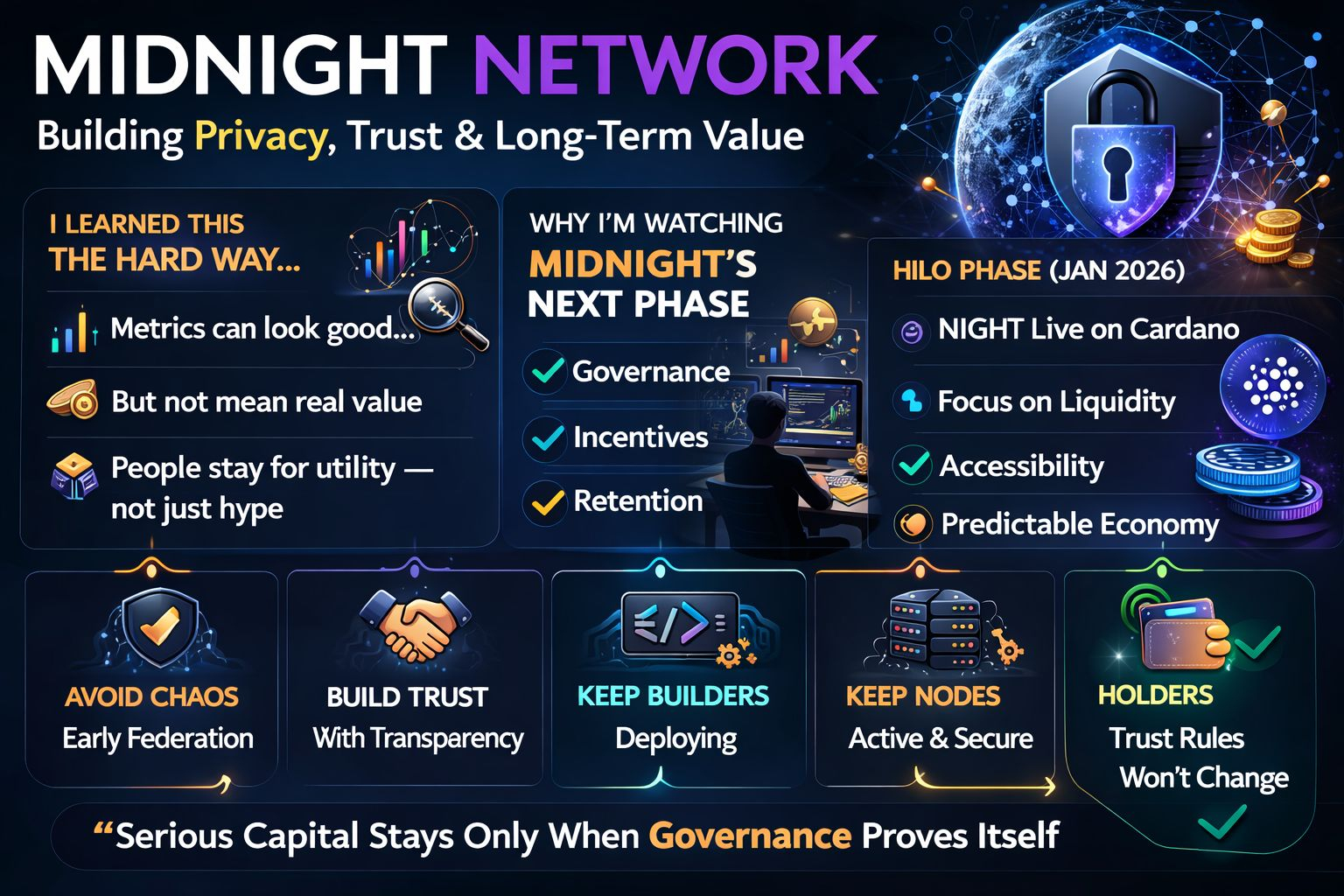
Midnight isn’t just tossing a token into the market and hoping it all works out. As of January 2026, they’re still in the Hilo phase, with NIGHT live on Cardano. Right now, the focus is on liquidity, accessibility, and giving builders a predictable economic setup before mainnet.
I actually think this gradual approach makes a lot of sense, but it does bring tension. Early federation helps avoid chaos at launch, especially when privacy infrastructure and enterprise reliability matter. But it also means investors have to watch carefully—will the handoff to wider participation happen on time, and with enough transparency to build trust? In crypto, retention isn’t just users coming back. It’s builders continuing to deploy, node operators staying active, and holders trusting the rules won’t suddenly change. A network can grab attention with flashy listings and hype, but serious capital only sticks when governance proves itself over time.