A few weeks ago I was watching a small cleaning robot moving around a shopping mall floor. Nothing unusual about that at first. It followed a slow pattern, avoided people’s feet, turned when it reached the wall. But the thought that stuck with me later was not about the robot itself. It was about the invisible system behind it. Someone had to schedule the task, track the work, confirm that it actually happened, and eventually pay for it.
Humans handle these coordination steps almost instinctively when people are the workers. Managers assign tasks. Supervisors confirm the job was done. Payments follow. With robots, though, the structure is less obvious. Machines do not negotiate wages. They do not sign contracts. Yet if thousands of machines begin doing useful work across cities and industries, something still needs to organize all of that activity.
That is where ideas like the ROBO token start to appear. Not as a flashy financial instrument, at least in theory, but as a way to account for machine labor inside a shared network. The idea sounds strange when you first hear it. A token for robot work? But the moment you step back and think about how distributed machines might operate, the logic becomes easier to see.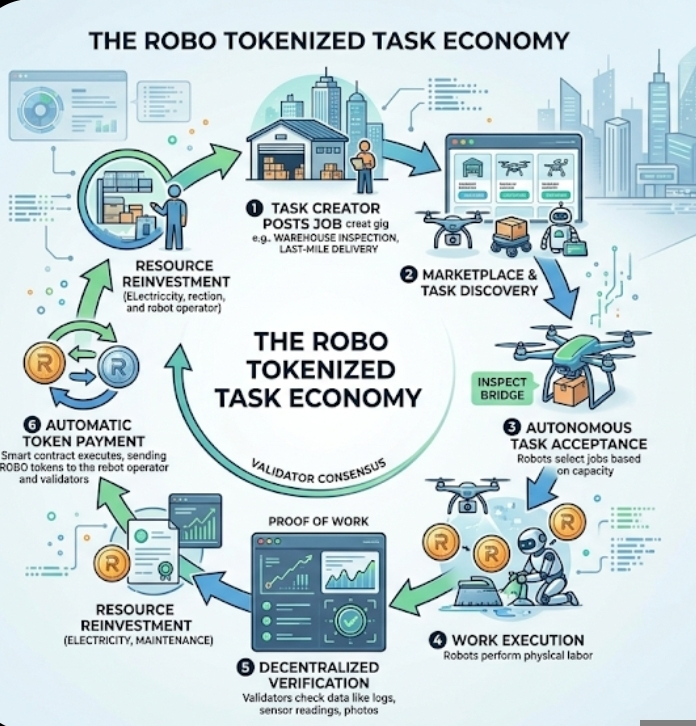
Imagine a network where tasks are posted the same way freelance jobs appear on human gig platforms. A warehouse needs inspection. A drone can do it. A street cleaning robot is available nearby. A monitoring robots can scan the equipment in a power station. These tasks could be accepted by machines capable of performing them. When the job is finished and verified, payment happens automatically. In this system, the token becomes the accounting unit that keeps track of work performed.
People often push back on this idea, and honestly the skepticism is reasonable. The internet already coordinates enormous systems without needing tokens everywhere. Email works because protocols exist, not because someone pays a coin every time they send a message. The same is true for many digital networks. So the question becomes whether robot coordination really requires an economic layer at all.
The difference appears when machines begin performing work that consumes resources in the physical world. Robots burn electricity. Hardware degrades. Operators invest money building and maintaining machines. When these machines start accepting tasks from different users or organizations, there needs to be some consistent way to price the work they perform. Otherwise every robot network ends up building its own internal billing system, which quickly becomes messy.
The token in this case tries to simplify that. Instead of dozens of incompatible systems, a shared unit tracks the value of completed tasks. A delivery robot might earn ROBO tokens after confirming it transported a package between two locations. A monitoring drone might earn tokens after uploading inspection data from a bridge or building. The token becomes less about speculation and more about measuring output.
Of course, that neat explanation hides the messy part. Verification.
A robot saying it completed a task does not automatically make it true. Anyone who has worked with machines long enough knows sensors fail, software glitches happen, and data can be misreported. So networks experimenting with robot task markets usually include validators. These participants review evidence that a task occurred. The evidence might include sensor readings, location signals, timestamps, or operational logs.
In theory the system rewards validators for accurate confirmations. In practice things are rarely that tidy. Incentives have strange side effects. If validation becomes too easy, people may approve tasks without carefully checking them. If the reward for reviewing work becomes large, participants might prioritize quantity rather than accuracy. These small economic details matter more than people expect.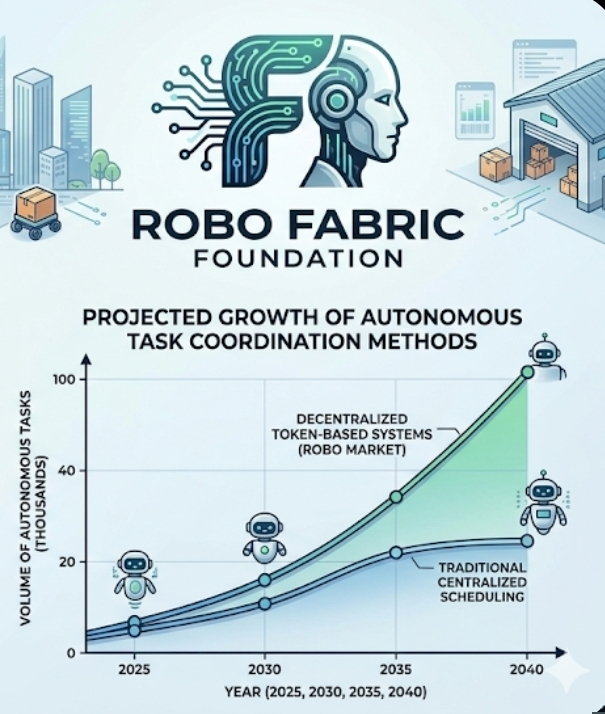
I have seen something similar play out in online communities. Ranking dashboards or reputation scores begin as helpful tools. Over time they subtly reshape behavior. Writers chase engagement metrics. Contributors adjust their tone depending on how visibility algorithms respond. Platforms like Binance Square illustrate this dynamic clearly. Content that performs well on leaderboards gains credibility quickly, even if the underlying technology being discussed is still experimental.
The same psychological effect can spill over into projects connected to token economies. When discussions about networks like ROBO trend across social platforms, attention sometimes arrives before understanding. That does not mean the idea is flawed. It simply means perception and technical progress do not always move at the same speed.
Another thing that rarely gets discussed openly is the difficulty of verifying physical work compared with verifying digital transactions. Blockchain networks can confirm whether a transaction occurred because the system itself records every step. Robots operate in the real world, which is much less predictable. A drone inspecting infrastructure might encounter weather issues. A delivery robot might take an unexpected route because of road obstacles. Interpreting those events inside a verification system requires careful design.
Still, the broader idea behind robot task markets is interesting in a quiet way. For decades robots lived inside controlled environments like factories. Their tasks were predictable and assigned internally. Now machines are starting to move through open environments. Streets, warehouses, construction sites, farms. Suddenly the coordination problem becomes larger.
Who assigns work to thousands of machines owned by different operators? How does a system confirm that work happened? And how does payment flow between machines and the people running them?
A token like ROBO attempts to answer those questions with a market mechanism. Instead of centralized scheduling systems, tasks appear in a shared network. Robots capable of performing them accept the work. Validators confirm the result. Payment follows automatically. At least that is the intention.
Whether this model becomes common is hard to predict. Markets built around new technology often take years to settle into something stable. Sometimes they fail quietly. Sometimes they evolve into infrastructure that people barely notice once it becomes normal.
What interests me more is the shift in thinking behind it. For a long time we built robots as tools controlled directly by companies or individuals. Now some developers are experimenting with the idea that machines might participate in open economic systems. They discover work, complete tasks, prove the result, and earn compensation through protocols rather than managers.
That possibility changes the conversation slightly. Not dramatically, at least not yet. But enough to make you look at that slow cleaning robot moving across the mall floor and wonder whether, somewhere behind the scenes, it might eventually be part of a marketplace rather than just a scheduled machine.

Artículo
ROBO Token and the Economics of Robot Task Markets
Aviso legal: Contiene opiniones de terceros. Esto no constituye asesoramiento financiero. Es posible que incluya contenido patrocinado. Consultar Términos y condiciones.
0
3
102
Descubre las últimas noticias sobre criptomonedas
⚡️ Participa en los debates más recientes sobre criptomonedas
💬 Interactúa con tus creadores favoritos
👍 Disfruta del contenido que te interesa
Correo electrónico/número de teléfono