For decades, our imagination has been captured by a specific vision of the future. It’s a world where robots are either helpful servants, like Rosie from The Jetsons, or terrifying overlords, like the machines in The Matrix. We tend to think of the relationship between humans and intelligent machines as one of replacement. The robot is coming for your job, your seat in the car, or, in the worst-case scenario, your place on the planet.
But what if that’s the wrong way to look at it? A growing number of technologists and thinkers believe we are entering a new era, not of artificial intelligence, but of Collaborative Intelligence. And at the forefront of this movement is a concept known as the Fabric Protocol.
This isn't about building a better robot. It's about building a better bridge between us and them.
Beyond Replacement: The Power of "And"
To understand Collaborative Intelligence, we first have to let go of the "Human vs. Machine" mindset. This old way of thinking is a zero-sum game. If the machine wins, the human loses. But this ignores the fundamental truth that humans and machines are good at completely different things.
· Humans are great at creativity, empathy, big-picture thinking, adapting to unexpected situations, and understanding context. We can look at a painting and feel something. We can tell a joke and know if it will land. We can comfort a friend without needing a manual.
· Machines (and robots) are great at speed, precision, processing massive amounts of data, performing repetitive tasks without getting tired, and operating in environments that are dangerous for humans.
Collaborative Intelligence is the "and." It’s about combining human creativity and intuition with machine speed and accuracy. It’s the idea that 1+1 can equal 3. The goal isn't to build a robot that can paint a masterpiece; the goal is to give the human artist a robotic tool that allows them to paint on a canvas the size of a building with perfect precision.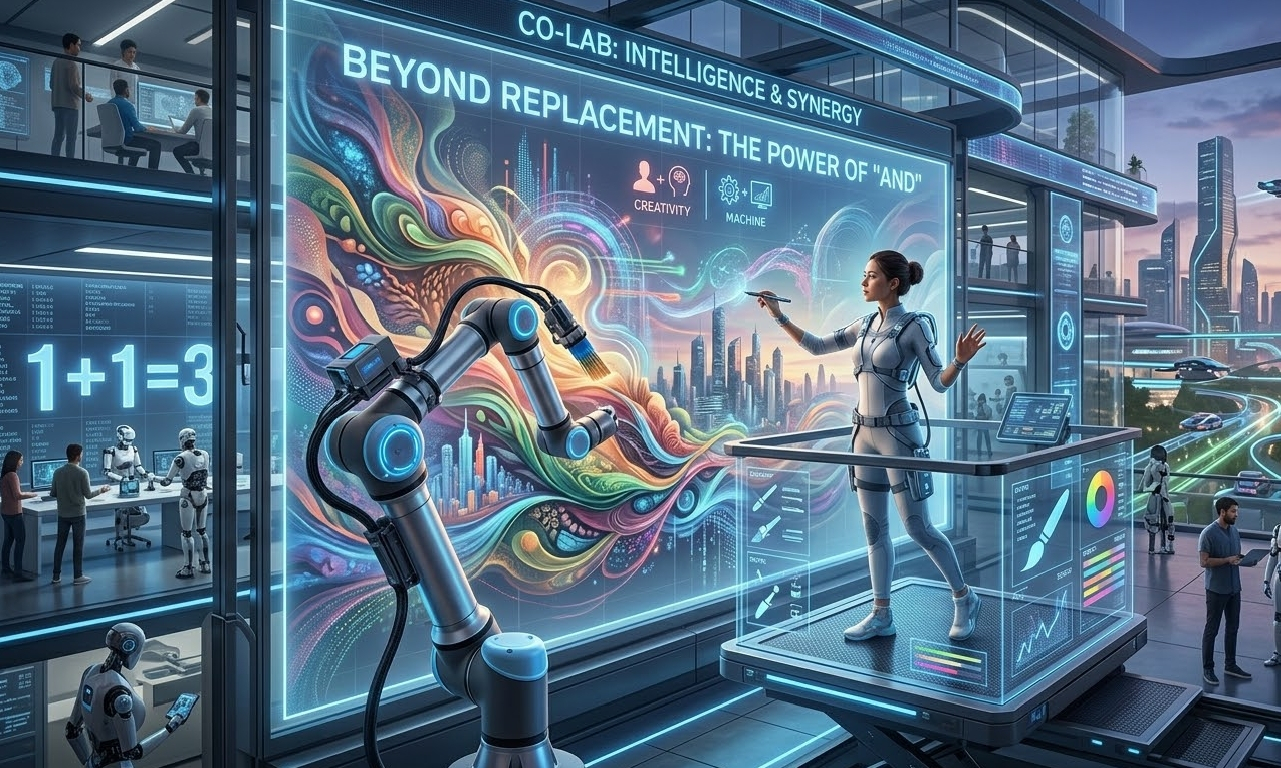
The Problem: Robots Live in a Bubble
So, if this idea is so powerful, why isn't it everywhere yet? The main reason is that robots are currently isolated. They live in a bubble.
Think about a typical industrial robot in a factory. It’s a brilliant piece of engineering. It can weld a car chassis with millimeter precision, thousands of times a day. But it is also deaf, dumb, and blind to everything except its specific task. It’s locked in a cage for safety, because if a human wandered into its path, the robot wouldn't know to stop. It has no "social awareness."
Even more advanced robots that use cameras and sensors are often limited to their own "brain." One robot learns how to open a door, but that knowledge stays with that one robot. Another robot, twenty feet away, has to learn how to open a door all by itself from scratch. They don't share what they learn. They don't learn from us, and we struggle to learn from them. The data is locked away in proprietary systems, a digital Tower of Babel where no one speaks the same language.
This is the core problem that the Fabric Protocol aims to solve.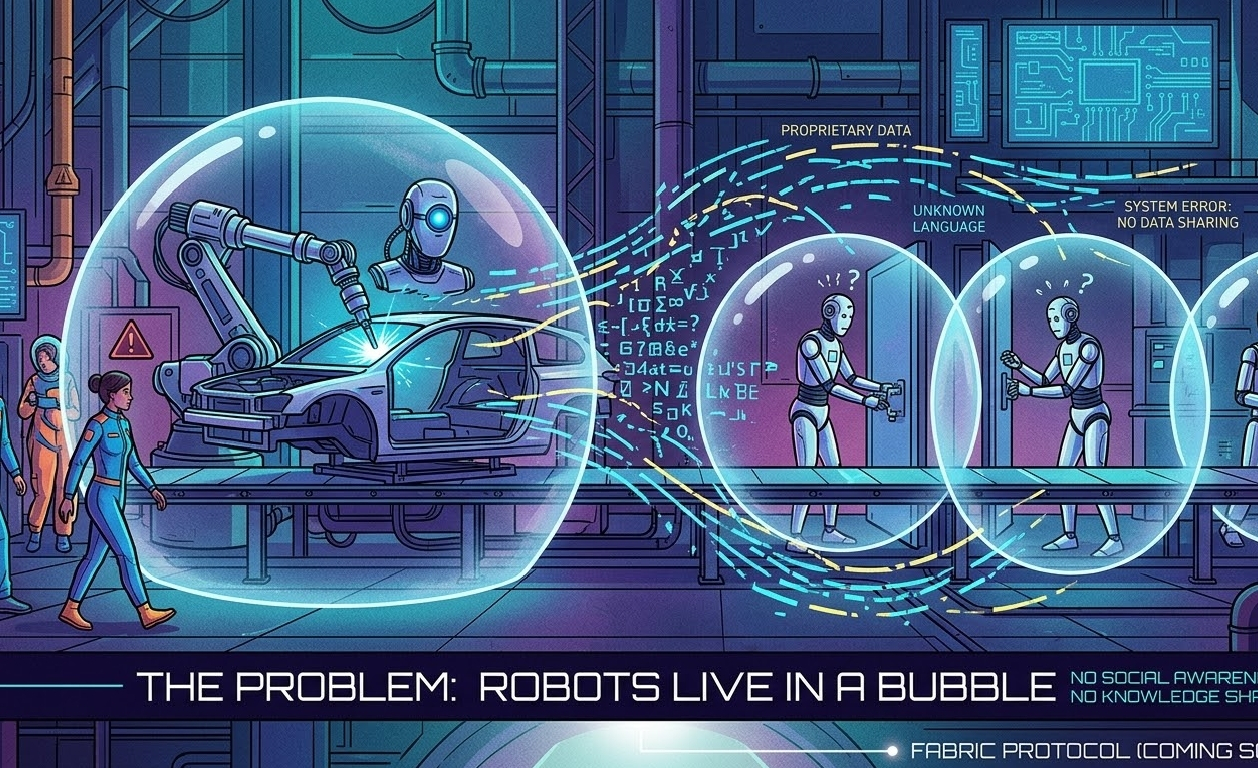
Introducing the Fabric Protocol: A Common Language
So, what exactly is the Fabric Protocol? You can think of it as a universal operating system or a common language for the robotic and AI world. It’s not a robot itself, and it’s not a piece of hardware you can buy. It’s a set of rules, a digital framework, that allows all the different pieces of our technological world to talk to each other.
Imagine if every electronic device you owned required its own specific charger, and none of the chargers were compatible. It would be chaos. That’s the state of robotics today. The Fabric Protocol aims to be the universal USB-C charger for intelligence.
It creates a shared space—a "fabric"—where information can be exchanged freely and securely. This allows for three revolutionary things:
1. Robot-to-Robot Learning: When one robot figures out how to do a new task—like folding a specific type of shirt—that knowledge can be uploaded to the Fabric. Every other robot connected to the Fabric can then instantly access that knowledge and fold that shirt too. Learning becomes a community effort, accelerating progress exponentially.
2. Human-to-Robot Communication: Currently, teaching a robot a new task often requires a team of programmers writing complex code. With the Fabric Protocol, a human could theoretically show a robot how to do something, or simply tell it in plain English. The Fabric translates human intention into machine action. It’s the difference between trying to explain music to someone by writing equations, and simply humming them a tune.
3. Robot-to-Human Feedback: This is the most exciting part of Collaborative Intelligence. The robot isn't just a dumb tool taking orders. It can feed information back to the human to make us better. A surgeon operating with a robotic arm could receive real-time data from the Fabric, warning them of a potential complication based on thousands of similar past surgeries. A construction worker could be guided by a robotic assistant that senses they are about to make an unsafe cut. The robot becomes a partner that enhances our own senses and abilities.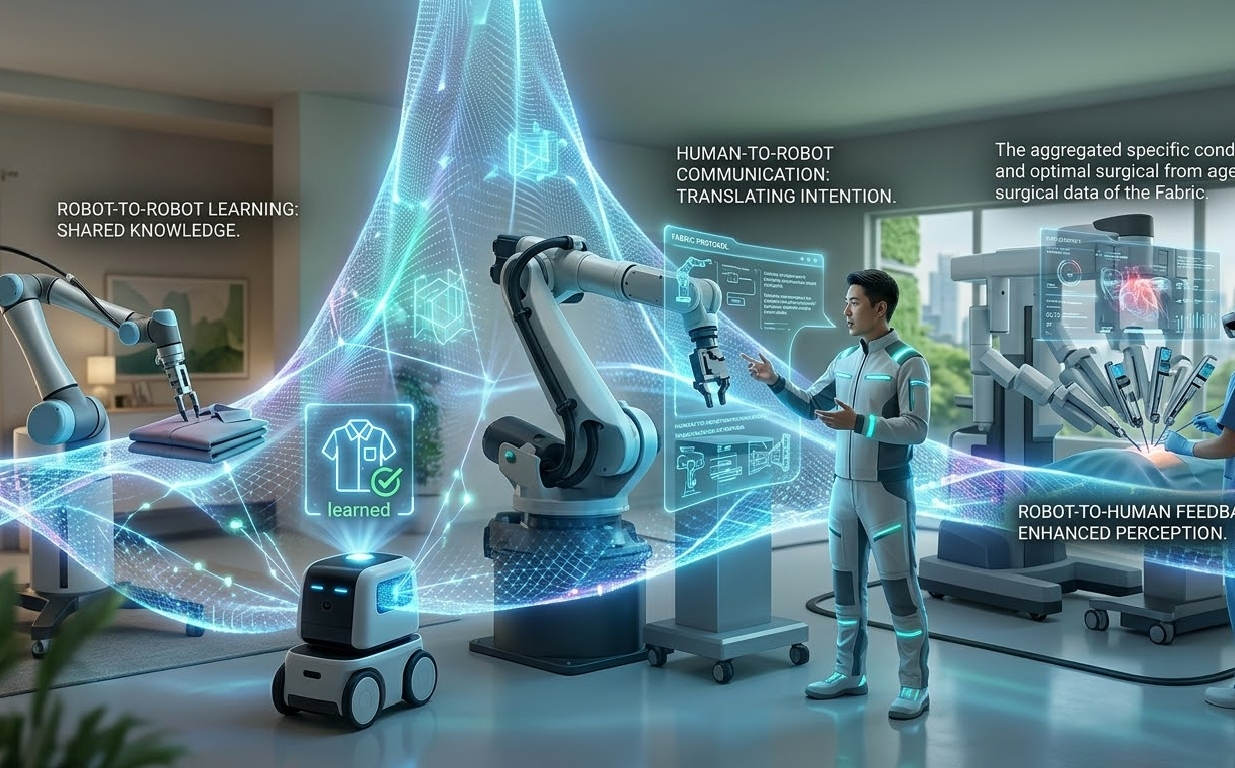
A Day in the Life with Collaborative Intelligence
To really understand the vision, let’s imagine a future powered by this kind of collaborative fabric.
The Morning: You wake up because your smart home, connected to the Fabric, sensed your light sleep phase and gently started the coffee maker. Your personal AI assistant, also on the Fabric, has already reviewed your calendar, checked the traffic, and coordinated with your car to have it pre-heated and ready to go at the optimal time.
At Work: You manage a warehouse. Instead of a fleet of identical robots following fixed paths, you have a diverse team of machines from different manufacturers. A new shipment arrives. You simply tell the system, "We need to stack the pallets in the north corner." The Fabric protocols kick in. The unloading robots, the forklift robots, and the stacking robots all communicate, divide the task based on who is available and best suited, and get to work. When a tricky, oddly-shaped package arrives, the system flags it for you. You walk over and, using a simple AR headset, show the robot the best way to grip it. The robot learns, and shares that knowledge through the Fabric.
In the Evening: You’re an amateur potter. You have a simple robotic arm in your home studio. You’ve had a long day and your back hurts, but you want to throw a large vase. You tell the robot, "Hold the clay and help me center it." The robotic arm, guided by your hands, provides the perfect counter-pressure, taking the strain off your body while you provide the artistic skill and vision. You aren't replaced by the machine; you are amplified by it.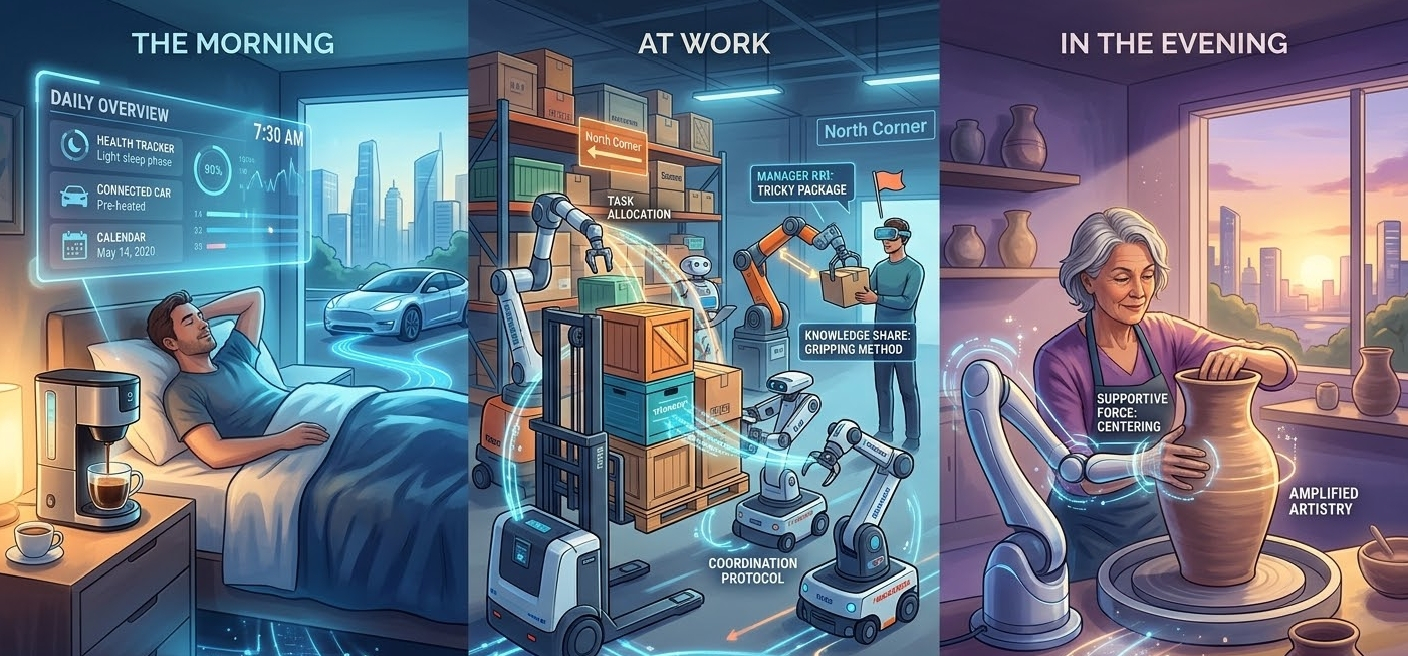
Addressing the Fear: Will Robots Take Our Jobs?
This vision naturally leads to the biggest question: What does this mean for our jobs and our purpose?
The proponents of Collaborative Intelligence, including those behind the Fabric Protocol, argue that it won't lead to mass unemployment, but to a massive shift in the nature of work. Just as the internet didn't eliminate the need for communication but changed how we do it, Collaborative Intelligence will change what we do with our working hours.
The "dull, dirty, and dangerous" jobs—the repetitive assembly line task, the hazardous waste cleanup, the deep-sea inspection—will increasingly be handled by robots. This frees up human beings to focus on the work that requires human skills: problem-solving, creativity, strategy, emotional intelligence, and care.
A nurse won't be replaced by a robot. But a nurse might be assisted by a robot that handles the physical task of lifting a patient, or that monitors vital signs and alerts the nurse to a subtle change earlier than a human could spot. This allows the nurse to spend more time actually caring for the patient and less time on logistics. The job becomes more human, not less.
The fear often comes from a history of automation being used to replace workers. The Fabric Protocol represents a philosophical shift: using technology to empower workers.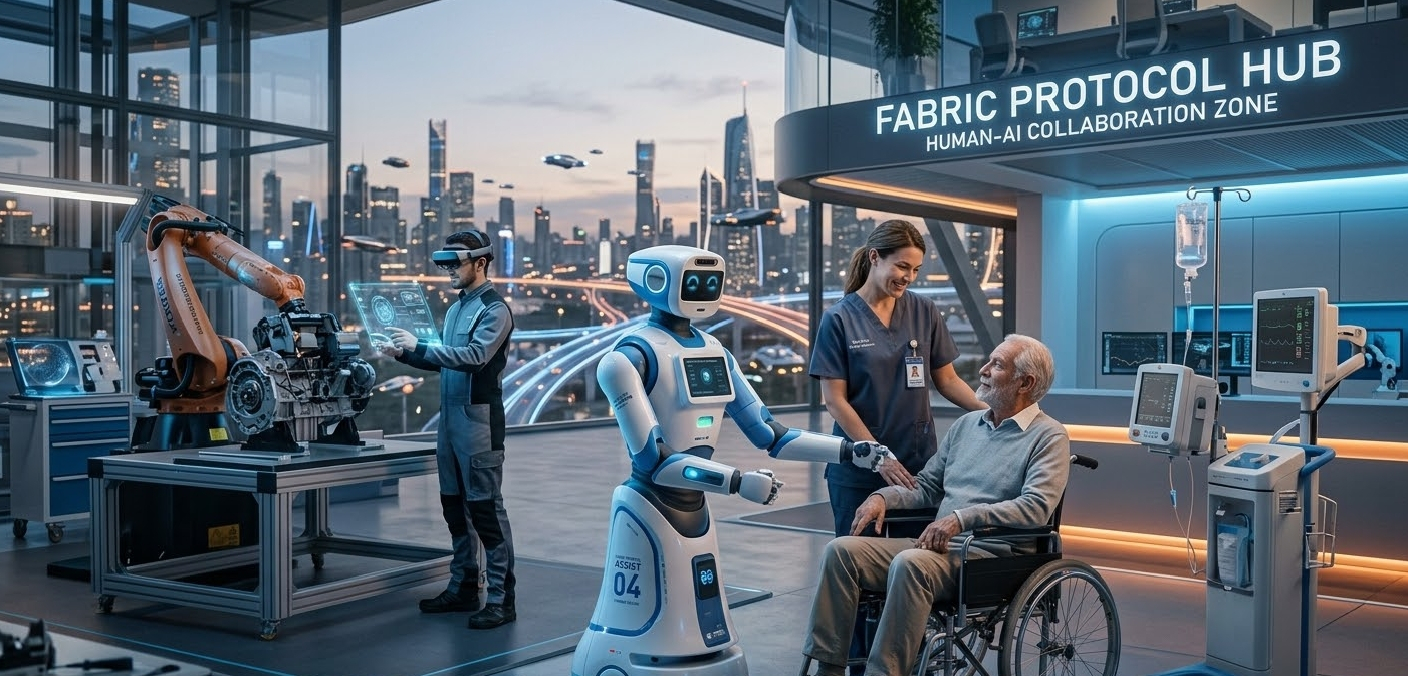
The Future is a Partnership
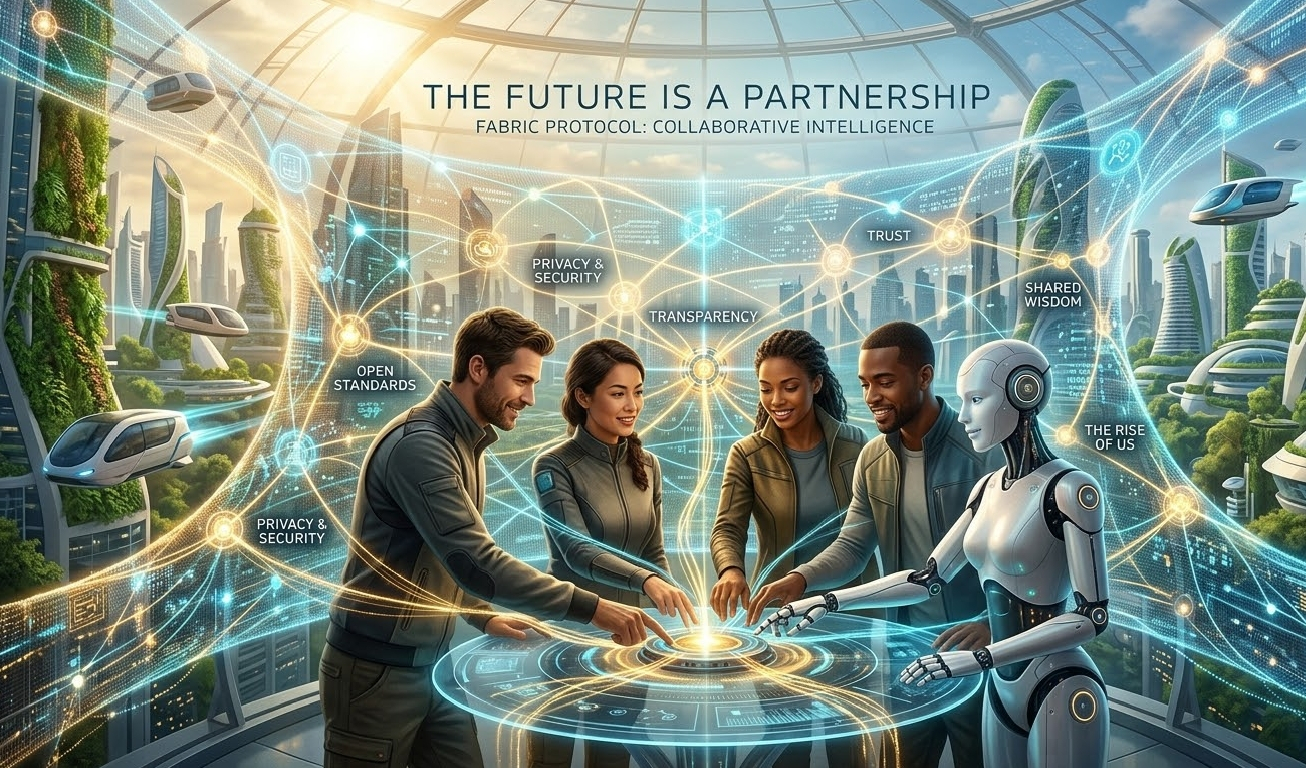
The vision of the Fabric Protocol is ultimately a very human one. It acknowledges that technology is at its best when it serves us, not the other way around. It moves us away from the cold, competitive model of AI towards a warm, cooperative model of Collaborative Intelligence.
Building this "fabric" isn't just a technical challenge; it’s a social one. It requires companies to agree on open standards, to prioritize security and privacy, and to build systems that are transparent and trustworthy. It requires us, as a society, to have a conversation about what we want this future to look like.
The rise of robots is inevitable. But their impact on our lives is not. By choosing to build a future based on connection and collaboration, we can ensure that the intelligent machines we create don't become our rivals, but our partners. They can handle the mechanics, so we can focus on the magic. They can manage the data, so we can focus on the wisdom.
The Fabric Protocol offers a blueprint for that future. A future where the smartest machine in the room isn't the one that can beat us at chess, but the one that can make us better at being human. It’s not the rise of the robots; it’s the rise of us. @Fabric Foundation #robo $ROBO