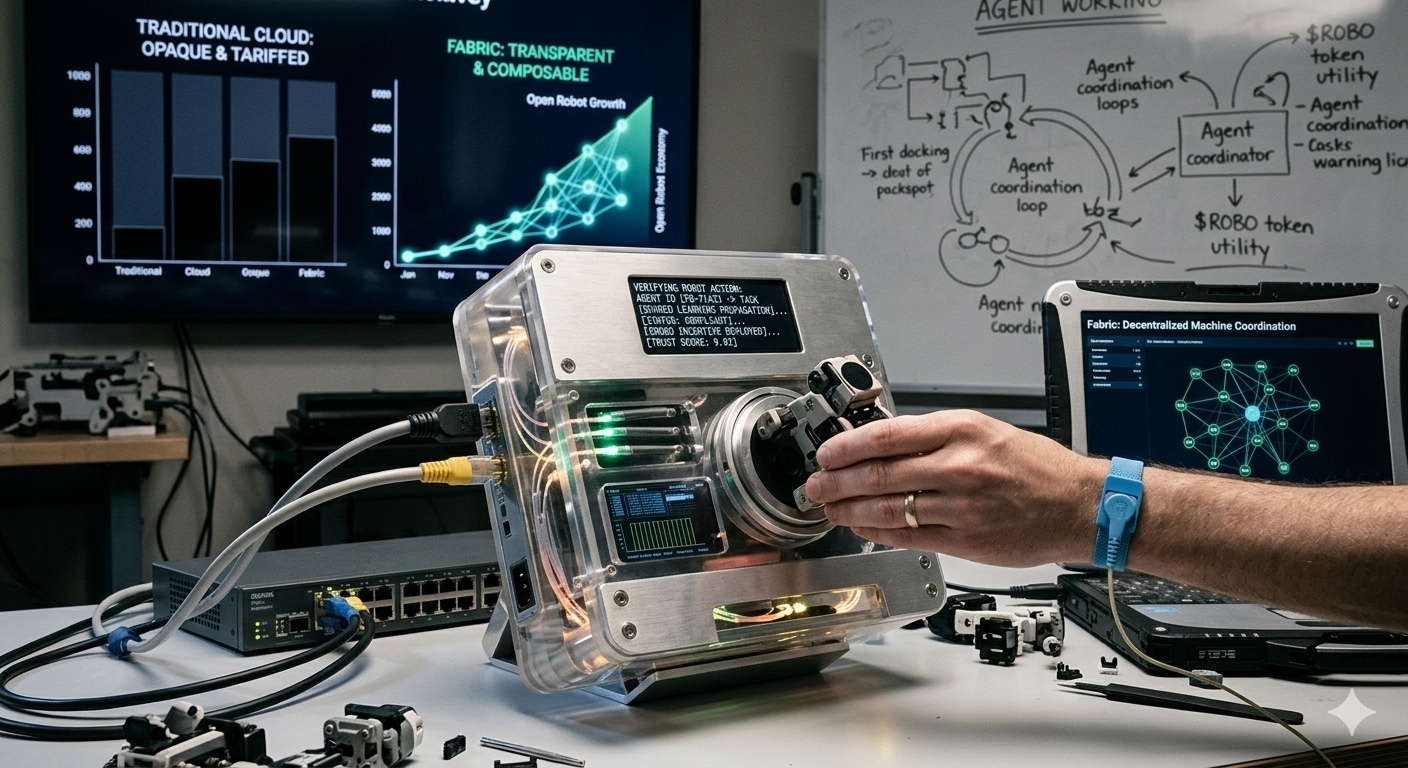
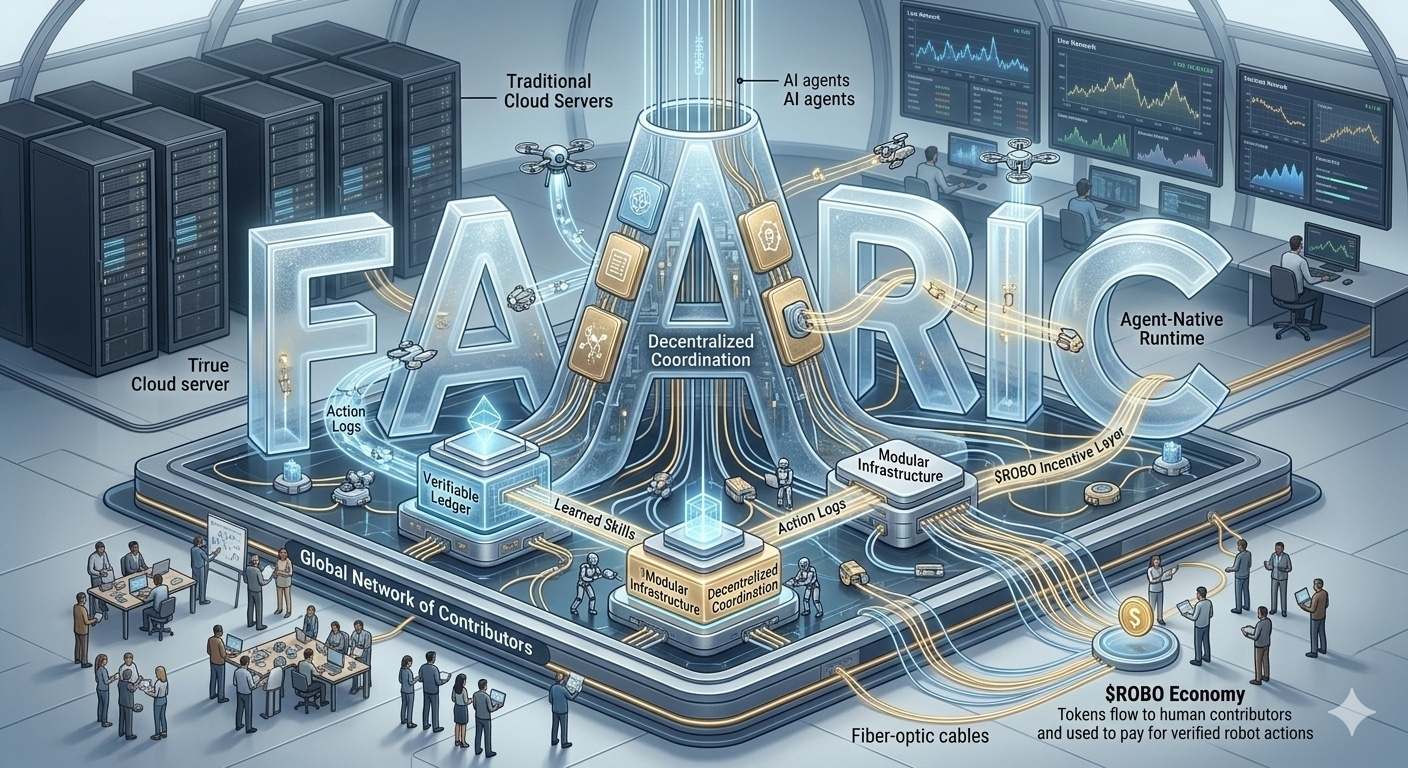
When most people think of infrastructure, they think of cloud providers: centralized servers, APIs, and developer tools that scale quickly. These systems work well for Web2 applications, but they have limits when it comes to decentralization, verifiable computing, and collaborative machine-level operations. Fabric Protocol changes this paradigm by combining modular infrastructure with public-ledger verification. This ensures that every robot, AI agent, and data input is auditable, accountable, and interoperable.
Unlike traditional cloud platforms where trust is placed in a company, Fabric distributes coordination across a global network of contributors. Agents can execute tasks autonomously, share learned skills instantly, and evolve collectively. The protocol enforces verifiable compliance, making robot actions transparent and predictable — something impossible in conventional cloud architectures.
Another major difference is economic alignment. Traditional clouds charge for access, often with opaque pricing and limited incentive for collaborative innovation. Fabric, on the other hand, integrates $ROBO as an incentive layer. Builders, trainers, and contributors earn ownership when they improve the system, and users pay to access verified robot capabilities. This creates a self-reinforcing ecosystem where human and machine collaboration grows stronger over time.
In my experience, the gap is not just technical — it’s philosophical. Traditional clouds optimize for efficiency and uptime. Fabric optimizes for trust, coordination, and composability. For Web3 developers, this is crucial: composable infrastructure reduces friction, enables experimentation, and allows independent systems to evolve together. It’s the difference between renting a server and co-owning a living, adaptive network of machines.
In short, Fabric is not just a cloud for robots — it’s a foundational layer for the Open Robot Economy. It aligns incentives, verifies actions, and amplifies human capability through collective intelligence. The future of decentralized applications will rely on infrastructure like this, not just flashy interfaces or speed metrics. $ROBO #ROBO @Fabric Foundation