
I have watched the crypto space for four years. It has taught me the same lesson over and over: sounding innovative does not mean something is actually practical. Most people only figure this out after they have chased the wrong ideas.
So when Fabric announced their approach to robot malfunctions and disputes and everyone on Binance Square was really excited I did what I have learned from experience. I stopped reading posts. Started talking to people who handle robot failures for a living.
What they told me was not what I expected to hear.
I had two conversations with people outside of the crypto world. One person was a robotics engineer and the other was a legal advisor in automation. I asked them both the question, without using any blockchain terms: would your field use a shared system that logs every malfunction and resolves disputes through community votes?
Both of them said no. They did not say maybe. That they would consider it later. They just said no.
The reasons they gave me were specific. Have stayed with me. The engineer who fixes robots thinks real-time response is everything. They do not want to wait for a network to confirm a fix. The legal advisor deals with disputes daily. They need clear chains of command. Not a decentralized vote that could drag on.
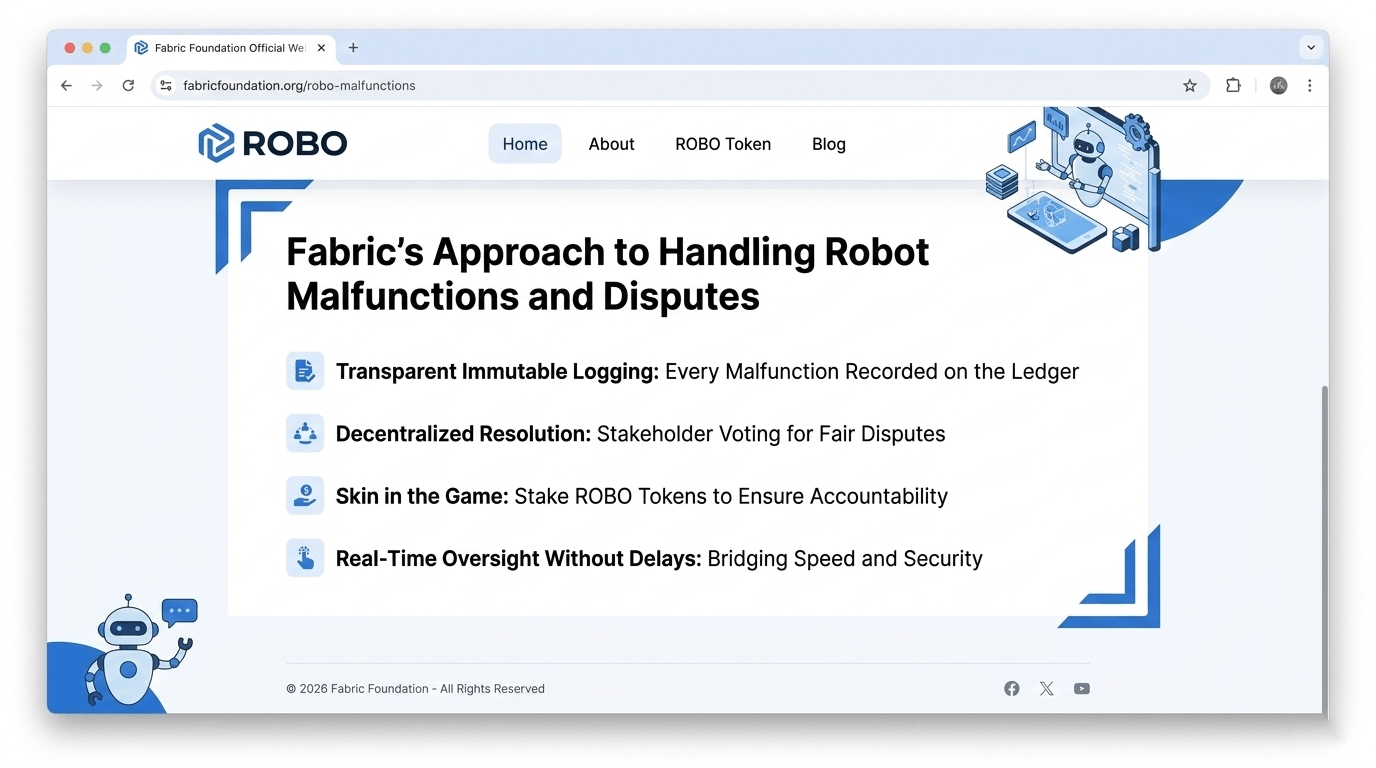
Even though the idea of transparent logging sounds good it would cause problems because speed and privacy are non-negotiable. When a robot malfunctions in a warehouse the fix has to happen now. Not after blocks confirm. And disputes often involve sensitive data. Sharing it on a ledger? Opens doors to leaks.
I am not saying that these conversations are proof of anything. Talking to two people is not enough to know what everyone thinks. But what they told me is something that deserves to be thought about: maybe the people who made Fabric are trying to handle malfunctions in ways they think the robotics industry needs. Not ways that the industry actually needs.
This is a mistake that people can make. It is not being incompetent. It is just applying crypto mechanisms to real-world disputes without checking if the mechanisms fit the pace.
The crypto world is very good at making things that it needs for itself. DeFi solved problems that DeFi users had. Tools for DAOs solved problems that online communities had. Making oracles reliable solved problems that smart contracts had. The crypto ecosystem is good at finding problems within itself and solving them.
It is harder to handle things for fields that already have protocols in place.
Industrial robotics is not a field that is waiting for blockchain to manage its malfunctions. It is a field that already has a lot of safeguards and systems. The people who work in this field are not against new approaches. They have already adopted AI diagnostics because it solves real problems. They just do not have the problems that Fabric's approach is trying to solve.
In some cases it makes sense to use blockchain for dispute resolution. In industrial contexts malfunctions already have logs and arbitration clauses. The system is not flawless. It works and it is backed by regulations and courts.
What Fabric needs to show. Not just describe. Actually show. Is that its approach can resolve a malfunction dispute faster than current methods and that it is worth the switch for someone who is not already in crypto.
Now there is no evidence that this is true.
This does not mean that the hype around Fabric cannot grow. These are two things that the market often confuses. The attention on a project can build a lot just because people like the narrative and the tech sounds futuristic. It has happened times before. Ideas that do not actually resolve anything can still draw crowds for a long time because the story is compelling.

But there is a trap that people who are not professionals can fall into when the excitement is high: they think that just because something might work someday it justifies the attention today. The current buzz around Fabric already assumes that a lot of adoptions will happen. The difference between the buzz and what it actually handles is being filled by peoples beliefs. When peoples beliefs are what is holding up the interest the question is not whether the resolutions will actually improve. It is whether people will keep believing enough for those improvements to matter.
The responsible way to think about Fabric is not to dismiss it. It is to be clear about what you're actually engaging with. You are not engaging with something that's resolving disputes today. It is not being used in a meaningful way. You are not engaging with something that industries are already adopting. They are not. You are betting that robot malfunctions will eventually need the kind of decentralized handling that Fabric is building and that Fabric will be the one that succeeds.
That bet might pay off. Sometimes bets on protocols pay off. They require patience, a plan for what to do if you are wrong or a way to step back before it is too late.
The dangerous thing is to chase something because it sounds advanced hold on to it because you like the story and only walk away when the story unravels. By which point the early promoters have already moved on.
After four years the one thing that I have learned to trust is not roadmaps or whitepapers. It is whether I can answer one question clearly: what problem, experienced by real people outside of the crypto world does this solve today?
For ROBO I do not have an answer to that question now.
That does not mean the answer will never exist. It means I am not willing to commit todays energy to something that might happen tomorrow or in three years or never.
Waiting for proof is not being skeptical. It is the way that I have been able to avoid wasting time.
$ROBO #ROBO @Fabric Foundation #robo