
Seven months back, when Michael Saylor first called STRC Strategy's "iPhone moment," it felt spot on. Just like the iPhone's launch was revolutionary but needed time to fully mature with apps and ecosystem growth, STRC started out volatile. It was a brand-new instrument in price discovery phase—small scale, wild swings, and the market figuring out what it was really worth.
Fast forward to March 2026, and things look completely different. STRC has matured big time. It's way more stable, scalable, and finally acting like the reliable digital credit tool it was meant to be. We're seeing real product-market fit now.
Just as the App Store turned the iPhone into something massive, the real game-changer for STRC will be the layers built on top—like Saturn—that expand its reach and utility. STRC is positioned to grab a serious piece of the massive $150 trillion global fixed income market.
How Price Finally Stabilized
If you look at the 30-day average prices, STRC is now comfortably sitting in the par range of $99–$101. It took over seven months of tweaks and market learning to get here.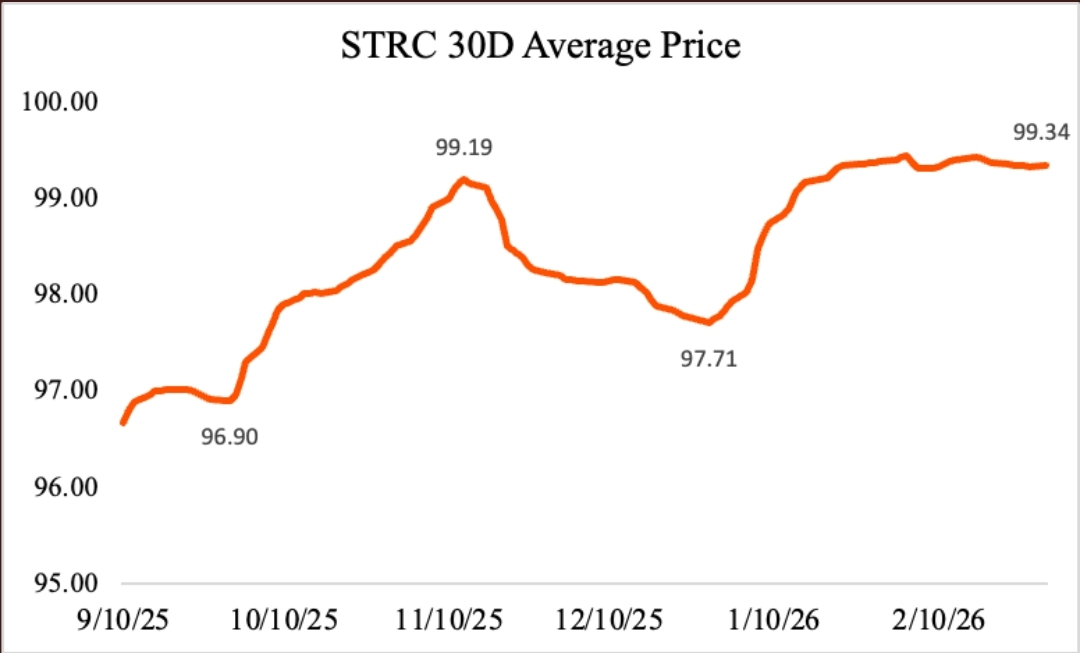
Early on, it dipped to around $99 in November but couldn't hold and slid back toward $97 in December—right when Bitcoin crashed hard from $120k down to $70k. Even through that chaos, it held par pretty impressively. Data from BitcoinQuant shows way more shares trading in that tight $99–$101 band lately.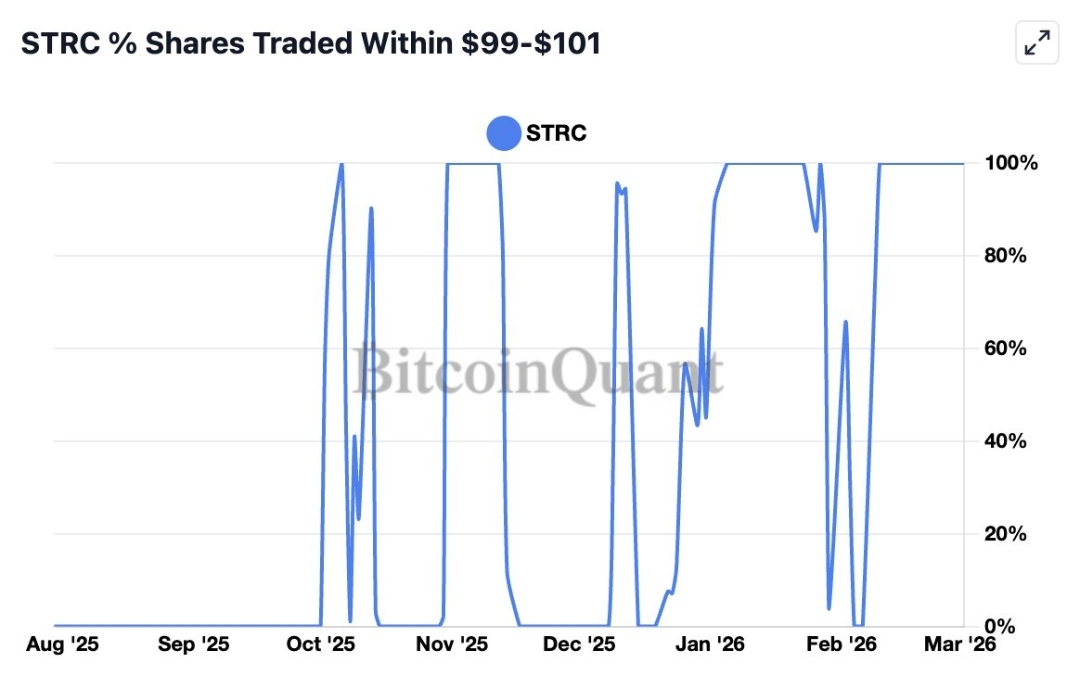
The $2.25 billion cash reserve was a huge help in December. It gave everyone confidence that dividends were safe and Strategy wasn't forced to dump Bitcoin. That visible backstop killed a lot of the fear.
They also smartly switched the rate adjustment from a 5-day VWAP to a full monthly VWAP. This avoids knee-jerk reactions from just the last few days of the month and makes decisions based on the bigger picture.
All these steps are turning STRC into a more resilient, trustworthy digital credit asset.
Par Behavior Keeps Getting Better
It's not just about staying near par more often—when it does dip below, the recoveries are faster and less painful.
Since launch, there've been about 10 below-par periods. The first one (post-IPO) took 66 days to bounce back. But the last five? All under 10 days.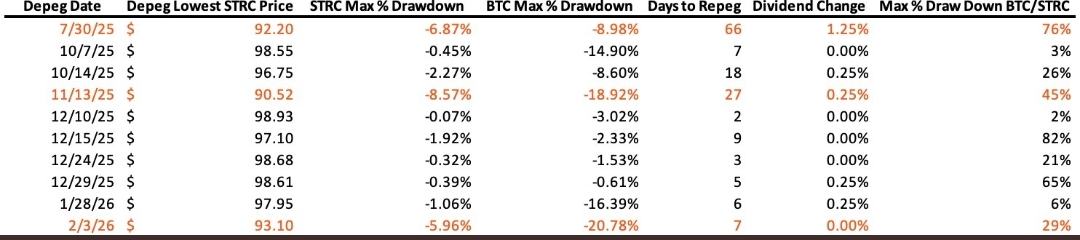
Zoom in on the biggest dips (the orange ones in the charts), and the pattern is clear: shorter recovery times, shallower discounts relative to Bitcoin's moves. Discounts happen, but they're fixing quicker with less drama. The negative reflexivity is fading, and the market is pricing it smarter.
This isn't luck—it's better design plus a market that's finally understanding STRC.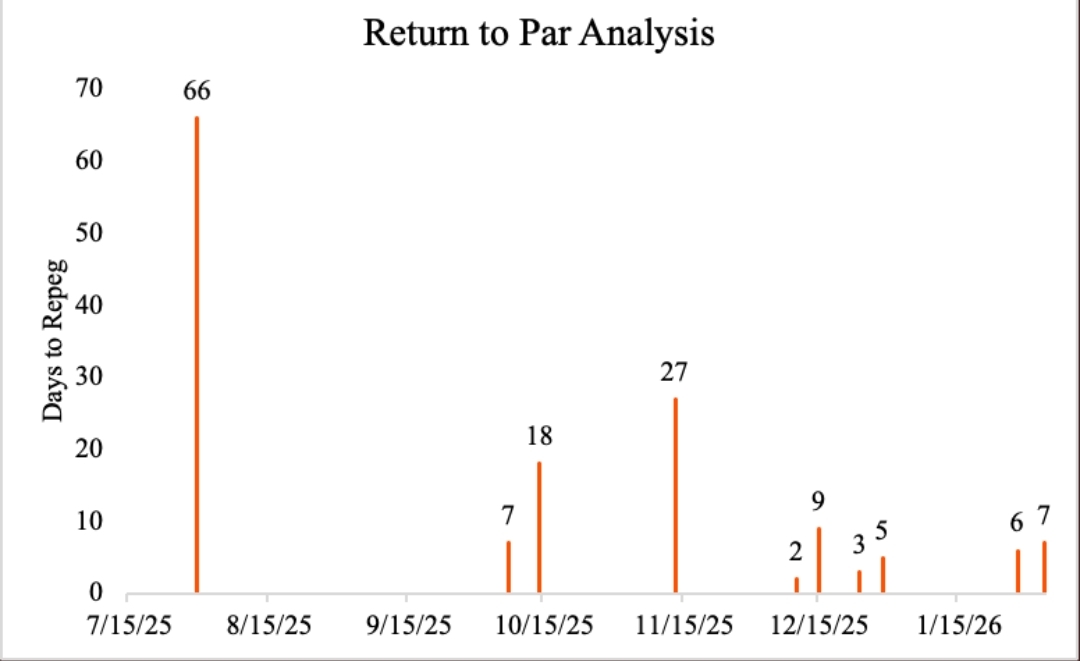
Issuance has stayed strong too, even with Bitcoin's ups and downs. Strategy has put out $663M in STRC total. Market cap jumped from $2.7B to over $3.5B, all while keeping leverage steady.
Unlocking Real Scale
With stability locked in and issuance picking up, the big question is: how huge can STRC get?
Strategy pairs STRC issuance with equity raises. For every $1 of STRC, they can bring in roughly $5 of MSTR equity—even when mNAV is lower. This flips the scaling limit from amplification ratios to pure demand for STRC and Strategy's equity market access.
Even in down periods for Bitcoin, when they issued more STRC, the $BTC backing actually improved thanks to the cash reserve and paired equity.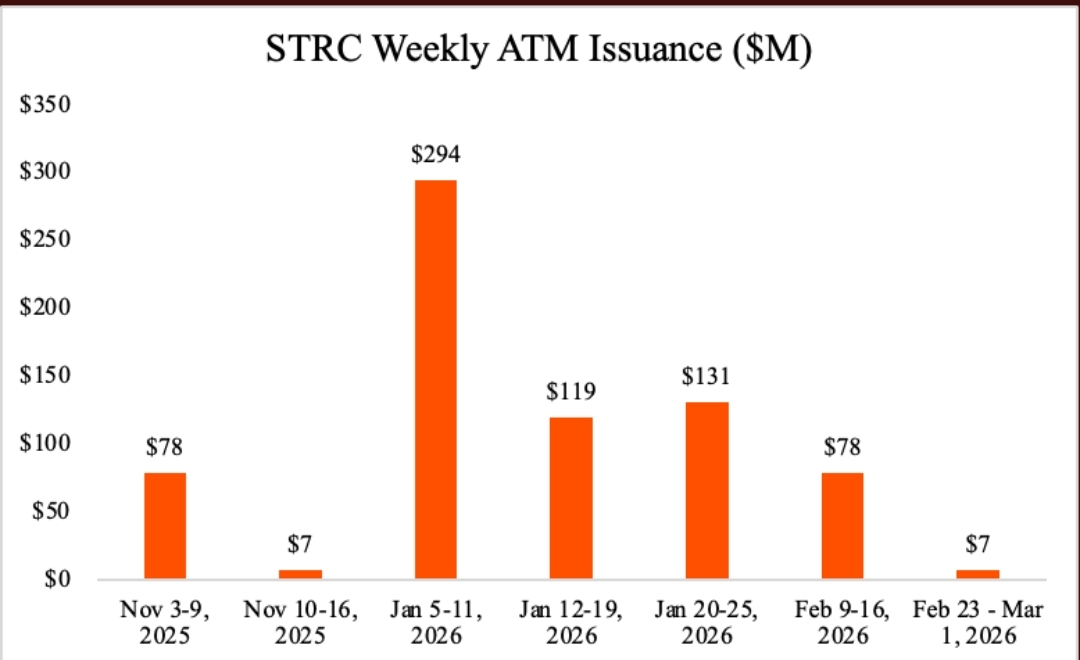
Looking ahead: If amplification stays ~25% and they issue ~$20B equity yearly, with Bitcoin hitting $1M by 2035, STRC could scale toward $1T in the next decade.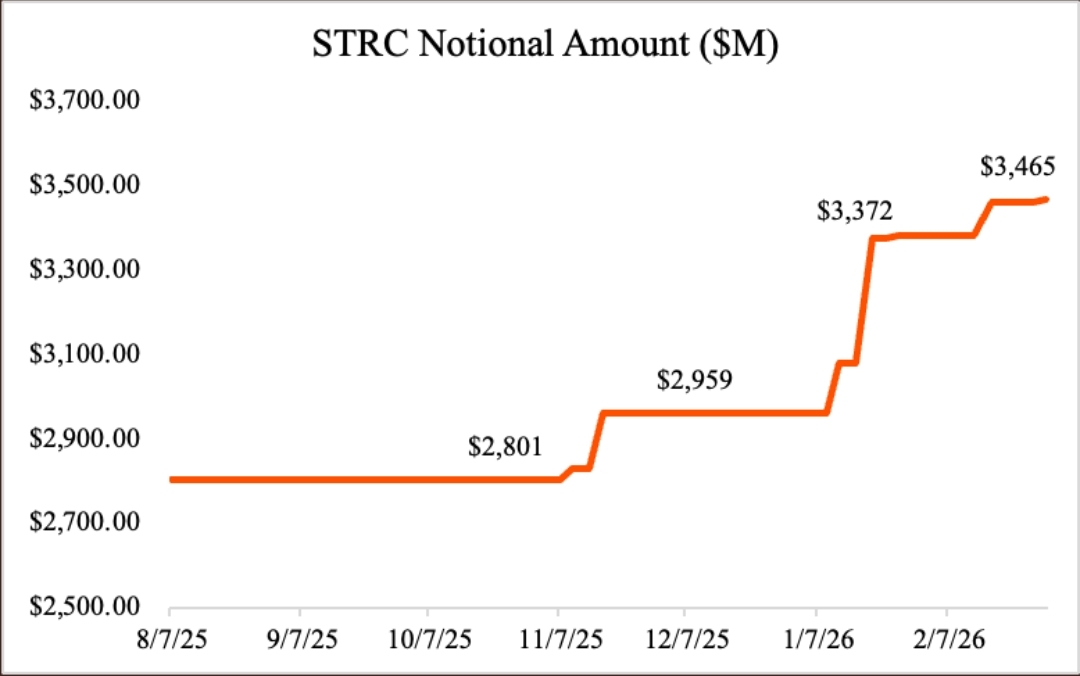
Bottom line: As long as it's trading at par and equity doors stay open, STRC isn't in price discovery anymore—it's in scale discovery.
Saturn Takes It Global—From Scale to Dominance
STRC has nailed it in traditional markets. The next hurdle is distribution.
Right now, you're limited to folks with U.S. brokerage access. But in 2026, stablecoins reach 10x more people worldwide. Demand for STRC is global; the rails aren't—yet.
That's where Saturn changes everything. Through sUSDat, it uses stablecoins and on-chain markets to open STRC to everyone, no brokerage needed. It plugs STRC into DeFi's permissionless capital layer, unlocking higher leverage, better yields, and massive new demand.
With $100B+ floating in DeFi protocols already, sUSDat should pull strong flows. Platforms like Pendle and Morpho will supercharge adoption by adding optionality and reducing volatility.
STRC proved product-market fit in trad markets. Saturn extends it worldwide, delivering 11%+ Bitcoin-backed yield to global investors who were locked out before.
This feels like the next big unlock. STRC isn't just surviving—it's evolving into something that could redefine digital credit.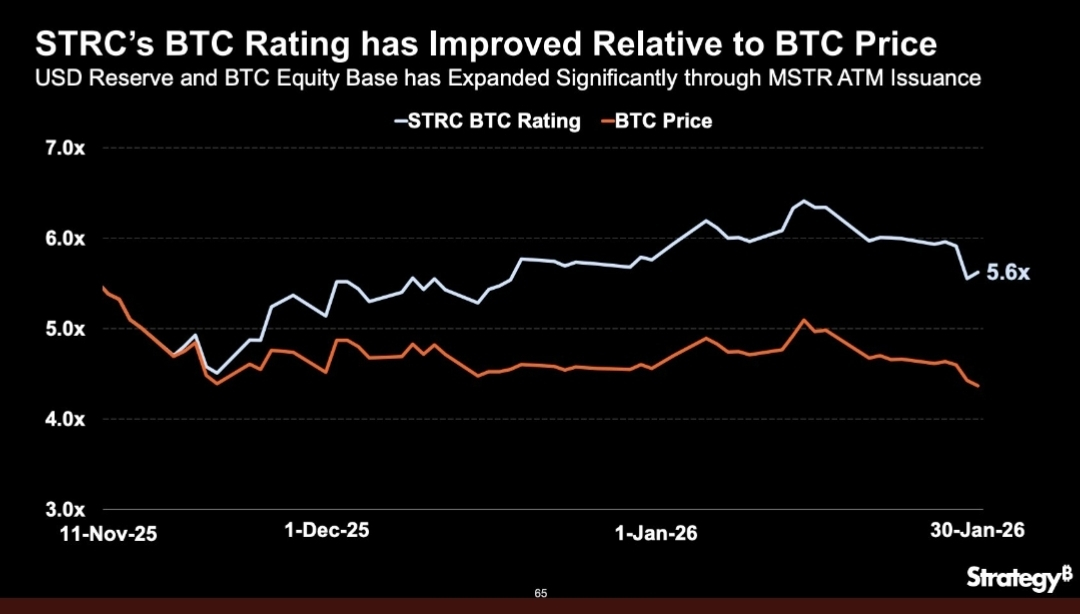
What do you think—will Saturn be the App Store moment for STRC? Drop your views below!$BTC
#MarketRebound #AIBinance #StockMarketCrash #USIranWarEscalation #USCitizensMiddleEastEvacuation