
#Robo $ROBO @Fabric Foundation
isn’t just another robotics paper — it feels like a blueprint for how humans and machines might actually coexist without fear.
When I read about $ROBO #ROBO @Fabric Foundation ,what stood out to me most was the idea of combining public ledgers with robot cognition. Instead of closed datasets and black-box control, Fabric proposes verifiable computing, open skill chips, and transparent governance. In my opinion, that’s the missing layer in today’s AI race.
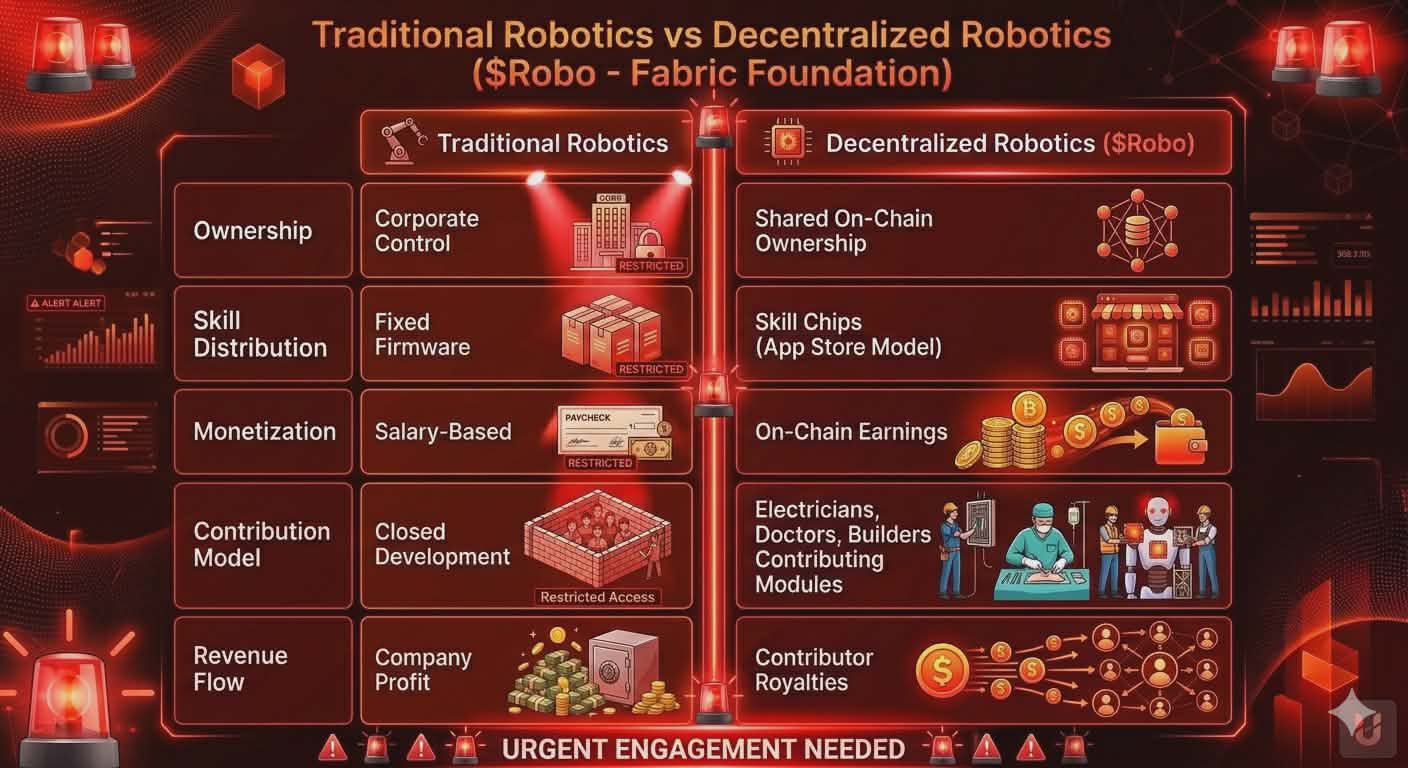
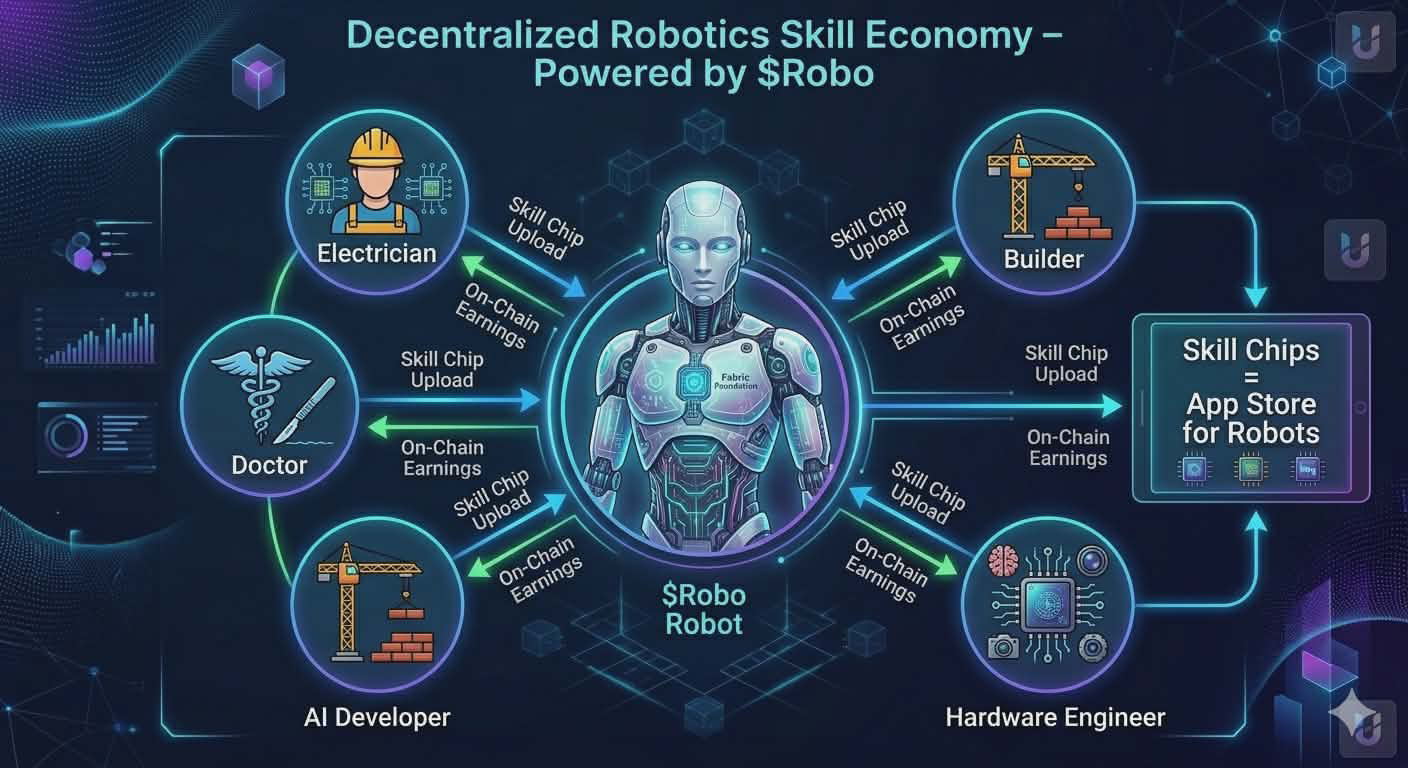
Think about it this way: today, humans spend 8,000–10,000 hours mastering a profession. But robots powered by Fabric can share skills instantly. One electrician robot trained under California code could replicate its expertise across thousands of machines. The efficiency gains are obvious. But what I appreciate is that Fabric doesn’t ignore the risks — job displacement, wealth concentration, and “winner-takes-all” scenarios are directly addressed through economic design.
The Adaptive Emission Engine, Structural Demand Sinks, and graph-based reward layer aren’t just token mechanics. They are coordination tools. Contributors who train, secure, and improve ROBO1 earn ownership through the protocol. Users pay for services. Revenue feeds back into the ecosystem. It creates a living economic loop instead of a hype cycle.
I’ve always believed that if robots are going to reshape society, their evolution shouldn’t be controlled by one company or one country. A modular, app-store-like system of skill chips, combined with decentralized governance and transparent identity, feels far more resilient.
Fabric isn’t just building a robot. It’s attempting to build a public infrastructure for intelligence — where humans don’t get replaced silently, but participate directly in the upside.
That’s a future worth paying attention to.When I read about $Robo #Robo @Fabric Foundation, what stood out to me most was the idea of combining public ledgers with robot cognition. Instead of closed datasets and black-box control, Fabric proposes verifiable computing, open skill chips, and transparent governance. In my opinion, that’s the missing layer in today’s AI race.
Think about it this way: today, humans spend 8,000–10,000 hours mastering a profession. But robots powered by Fabric can share skills instantly. One electrician robot trained under California code could replicate its expertise across thousands of machines. The efficiency gains are obvious. But what I appreciate is that Fabric doesn’t ignore the risks — job displacement, wealth concentration, and “winner-takes-all” scenarios are directly addressed through economic design.
The Adaptive Emission Engine, Structural Demand Sinks, and graph-based reward layer aren’t just token mechanics. They are coordination tools. Contributors who train, secure, and improve ROBO1 earn ownership through the protocol. Users pay for services. Revenue feeds back into the ecosystem. It creates a living economic loop instead of a hype cycle.
I’ve always believed that if robots are going to reshape society, their evolution shouldn’t be controlled by one company or one country. A modular, app-store-like system of skill chips, combined with decentralized governance and transparent identity, feels far more resilient.
Fabric isn’t just building a robot. It’s attempting to build a public infrastructure for intelligence — where humans don’t get replaced silently, but participate directly in the upside. @Fabric Foundation
That’s a future worth paying attention to #ROBO