
The integration of artificial intelligence and physical automation has reached a pivotal milestone with the official arrival of Fabric Protocol on Binance. As a decentralized infrastructure designed specifically for general-purpose robotics, Fabric Protocol bridges the gap between digital intelligence and physical execution. At the heart of this ecosystem is the $ROBO token, which powers the network’s unique verifiable computation and human-machine alignment systems.

A New Era for the Robot Economy
Fabric Protocol distinguishes itself by offering a modular "skill chip" architecture through its partnership with the OpenMind foundation. This framework allows robots to learn, adapt, and execute complex tasks—ranging from warehouse logistics to delicate medical assistance—through a decentralized, open-source environment. Unlike traditional robotics developed in corporate silos, Fabric enables a global network of contributors to train and manage intelligent machines. This ensures that the development of robotic intelligence remains transparent, accountable, and accessible to a global community of contributors rather than being locked behind proprietary walls.
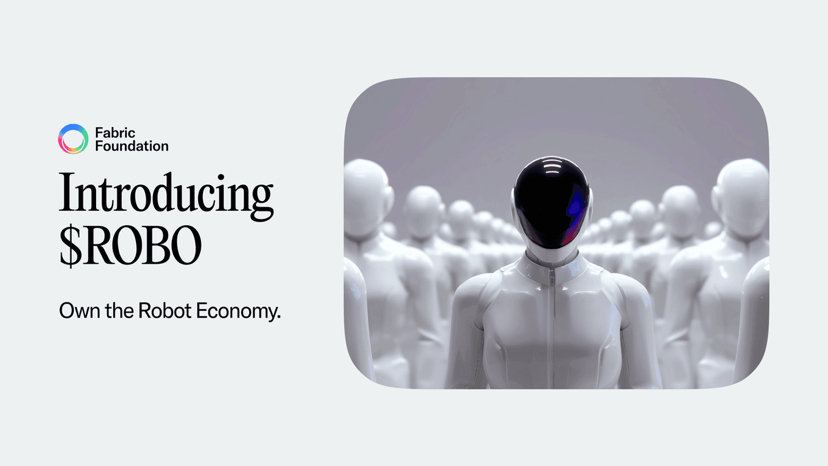
The protocol functions as a "Social Network for Machines," where hardware from different manufacturers—such as AgiBot, Fourier, and UBTech—can share intelligence and context in real-time. By utilizing the OM1 universal operating system, Fabric allows a single piece of software to run across diverse hardware profiles, from humanoids to quadrupeds, drastically reducing the cost of innovation in the robotics sector. This interoperability is the cornerstone of the project, fostering an environment where a skill learned by one machine can be instantly verified and deployed across the entire fleet.
The Role of $ROBO in the Machine Economy
By listing on the world’s leading exchange, the project gains the liquidity and visibility necessary to scale its mission of "owning the robot economy." The native token serves as the essential utility layer for this new industrial age. Its primary functions include:
* Work Bonds and Security: To register hardware on the network, robot operators must post a refundable bond. This deposit ensures that operators remain honest and their machines stay online. If a machine commits fraud or violates safety protocols, a portion of the bond is "slashed," protecting the integrity of the network.
* Network Fees and Settlement: All machine-to-machine (M2M) transactions—from requesting a data query to paying for a charging session—are settled in the native asset. While services may be quoted in fiat for ease of use, the underlying on-chain settlement occurs entirely through the protocol’s token.
* Governance through veROBO: Holders can lock their tokens to receive voting power. This allows the community to decide on critical protocol parameters, such as safety standards, fee structures, and the ethical alignment of autonomous agents.
Technical Foundation and Scaling
Initially deployed on the Base network to leverage Ethereum’s security, Fabric Protocol has clear plans to migrate to its own dedicated Layer 1 (L1) blockchain. This specialized chain will be optimized for the high-frequency, low-latency communication required for real-time robot coordination. With backing from heavyweights like Pantera Capital and Coinbase Ventures, the protocol is positioned to support millions of autonomous agents.
Investors and tech enthusiasts can now participate in this frontier of Web3 by securing their stake in the future of autonomous labor. As the demand for verifiable AI and robotic efficiency grows, the utility of this decentralized framework is set to become the global standard. The Binance listing represents the first step toward a future where robots are not just tools, but active, self-sovereign participants in the global economy.
@Fabric Foundation