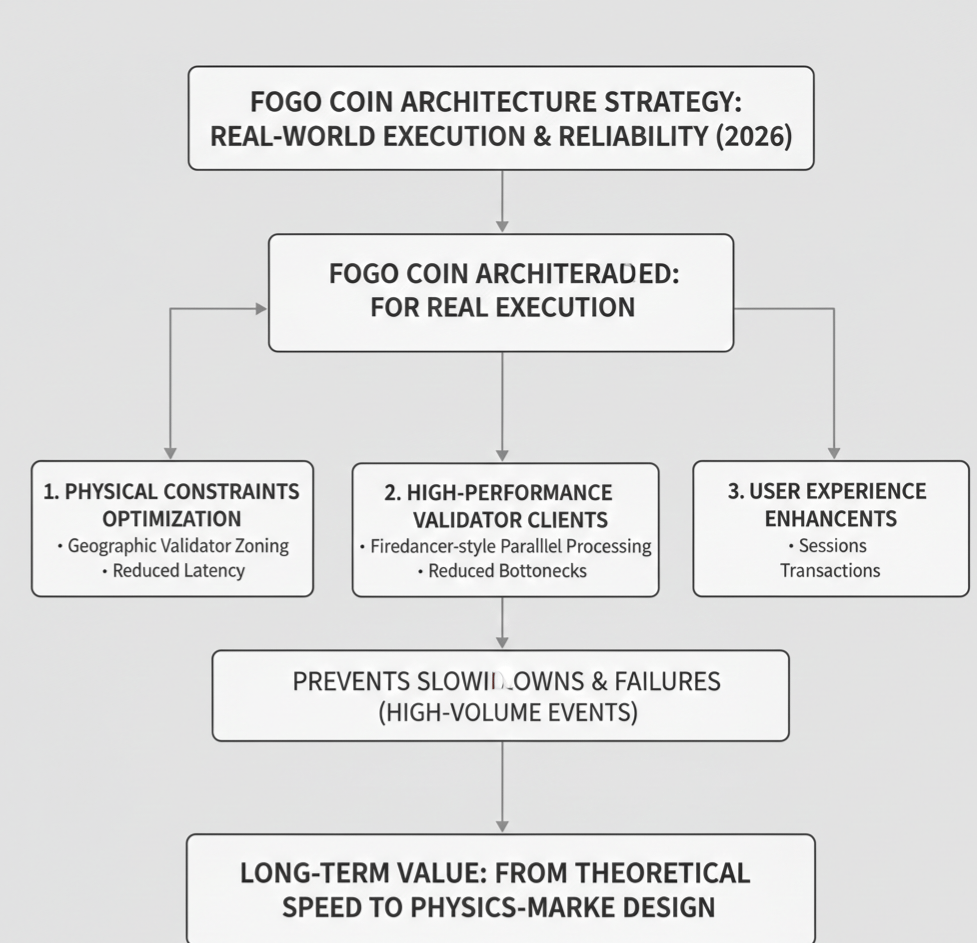
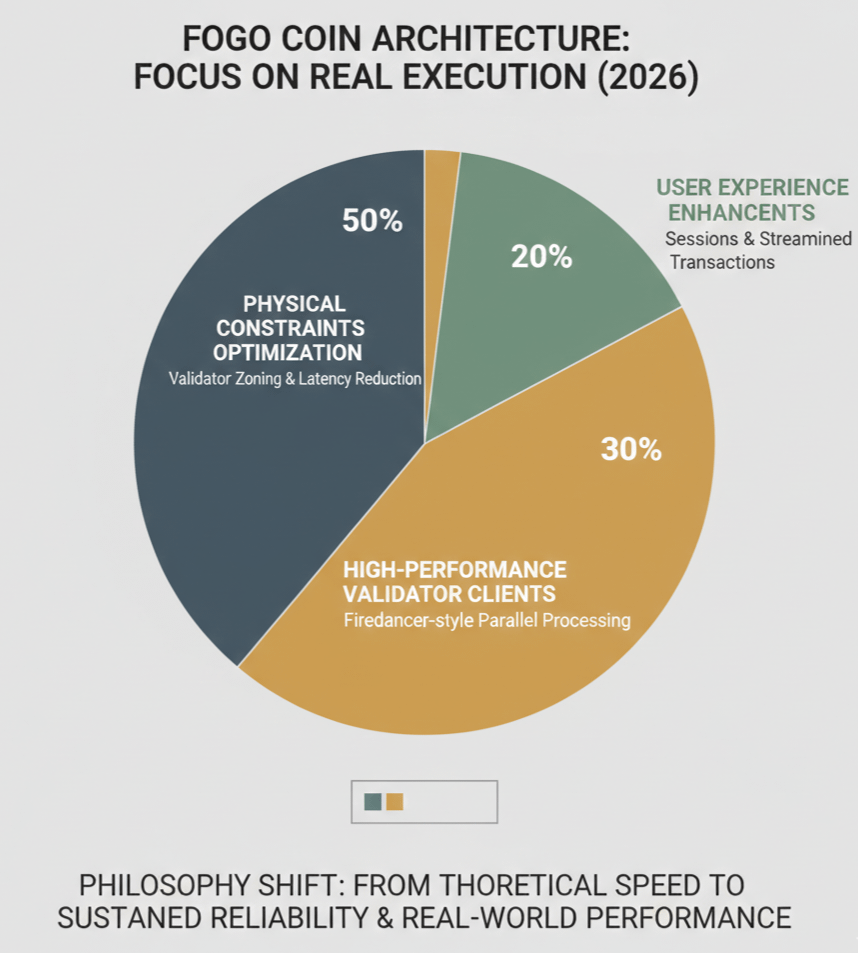
In 2026, the conversation around Layer 1 blockchains has matured. We are no longer impressed by theoretical TPS numbers thrown around in marketing decks. What actually matters now is execution reliability under real-world stress. This is where Fogo Coin has caught my attention.
Fogo operates on the Solana Virtual Machine architecture but what differentiates it is not simply compatibility, it is optimization. Instead of competing in a race for bigger headline numbers, Fogo focuses on two overlooked physical constraints: validator distance and hardware inefficiency.
In most networks, validators are scattered globally, which sounds decentralized and secure, but it introduces communication delays. Physics does not care about blockchain narratives. Data traveling long distances will always take longer. Fogo addresses this through geographic validator zoning. By clustering validators strategically, it reduces latency significantly without compromising core security assumptions.
From my perspective, this is a mature approach. Rather than promising unrealistic scaling breakthroughs, Fogo acknowledges that infrastructure must respect physical boundaries.
Another key innovation is its integration of Firedancer-style high-performance validator clients. Firedancer, originally developed for the Solana ecosystem, pushes execution closer to hardware limits by improving parallel processing and reducing inefficiencies in transaction validation.
What this means practically is fewer bottlenecks during high-volume events. In volatile market conditions or high-demand NFT minting scenarios, many networks slow down or fail. Fogo’s architecture is clearly designed to prevent that.
In my view, this is what real scalability looks like, not just raw speed but sustained reliability.
Sessions are another major addition. They reduce repeated signature prompts and streamline transaction flows. User experience has been a silent killer for blockchain adoption. People do not want to approve five transactions just to perform one action. Fogo understands that friction equals abandonment.
Looking at recent 2026 discussions around execution-layer efficiency, Fogo seems aligned with where the market is heading. Institutional participants are no longer tolerating unreliable infrastructure. Consistency matters more than hype.
Personally, I see Fogo as part of a second-generation Layer 1 wave, networks that learned from the congestion crises of earlier chains and decided to engineer around real bottlenecks instead of marketing around them.
If this trajectory continues, Fogo Coin may not just be another token in the ecosystem. It could represent a philosophy shift: from theoretical blockchain promises to physics-aware execution design.
And honestly, that’s the kind of direction this industry needs.