
Think of the digital economy as a massive box of “intelligence Legos.” Each block represents a piece of data—identity credentials, payments, contracts, health records, or ownership rights. In today’s systems, whenever you need to prove something, you must show the entire Lego piece. Want to prove you are eligible for a service? You reveal your identity. Want to confirm you can pay? You expose financial details. Blockchain improved trust by recording transactions on transparent ledgers, but transparency often came at the cost of privacy. Now imagine a system where the network can confirm that a Lego fits perfectly in the structure without revealing its shape, color, or internal design. That idea sits at the heart of Midnight Network, a blockchain built around zero-knowledge cryptography.
Zero-knowledge technology allows a system to verify that information is true without revealing the information itself. In simple terms, it separates verification from disclosure. Instead of sharing the full data, a user can prove a statement—such as meeting regulatory requirements, owning an asset, or satisfying a contract—without exposing sensitive details. This shift might sound subtle, but it represents a profound change in how digital systems handle trust. For decades, trust online has required transparency or intermediaries. Privacy-preserving cryptography offers a third path: verifiable truth without unnecessary exposure.
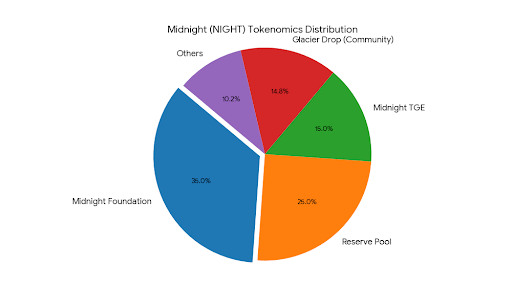
The theory behind this technology is already gaining practical traction. Midnight is being developed within the broader ecosystem of Cardano, aiming to provide a blockchain layer designed specifically for confidential applications. Its native token, NIGHT, supports governance, staking, and network incentives. Across the broader blockchain industry, investment in zero-knowledge infrastructure has accelerated as developers and institutions recognize the need for systems that combine transparency with confidentiality. Financial services, digital identity platforms, and supply-chain systems increasingly require technology that can validate transactions without exposing the sensitive data behind them.
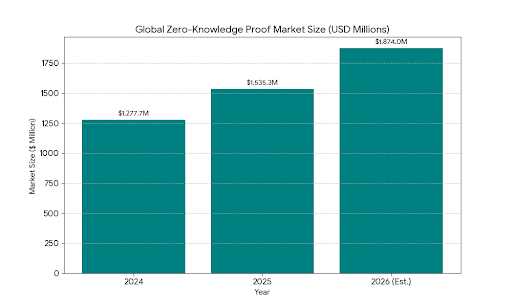
To understand the strategic importance of this approach, it helps to examine three key layers that define modern digital infrastructure: data, compute, and incentives. Data is the starting point. Today’s digital economy runs on enormous amounts of information, yet organizations face growing pressure to protect that data from misuse or exposure. Midnight’s architecture focuses on programmable privacy, allowing sensitive data to remain private while still being verifiable. For example, a user could prove they meet regulatory standards or possess sufficient funds without revealing their identity or account balance. In industries where confidentiality is essential—finance, healthcare, enterprise systems—this capability could become a critical foundation.
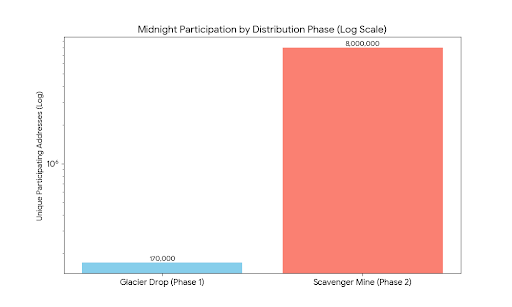
The second layer is compute. Traditional blockchains process transactions in a fully transparent environment, which limits their use for applications involving sensitive information. Midnight aims to expand what blockchains can compute by enabling smart contracts that interact with partially hidden or encrypted data. This means developers can build decentralized applications that operate securely while maintaining verifiable outcomes. The result is a new class of blockchain systems capable of supporting private financial markets, secure digital identities, and enterprise data collaboration without sacrificing the benefits of decentralization.
The third layer is incentives, the economic engine that keeps decentralized networks running. Midnight’s token model aligns the interests of participants who maintain and expand the ecosystem. Validators secure the network through staking mechanisms, developers create applications that generate demand for the platform, and users benefit from services that protect their data while enabling digital interaction. When these incentives align effectively, the network can grow organically while maintaining security and reliability.
Of course, visionary technologies rarely evolve without challenges. Privacy-focused systems often face regulatory scrutiny, especially in financial environments where transparency is important for preventing misuse. Midnight attempts to address this by supporting selective disclosure—allowing information to remain private by default while still enabling authorized access when required for compliance or auditing. Competition also presents a real challenge. The race to develop scalable zero-knowledge infrastructure is intensifying, and success will depend not only on cryptographic innovation but also on developer adoption, partnerships, and real-world utility.
So why is this moment different? The answer lies in a convergence of global trends. Artificial intelligence and data-driven industries are generating unprecedented volumes of sensitive information. At the same time, governments and regulators are introducing stricter data-protection laws. Businesses want the efficiency of blockchain systems but cannot risk exposing confidential information. These forces are pushing the technology industry toward solutions that balance transparency with privacy.
In that sense, Midnight represents more than a new blockchain project. It reflects a broader shift in how digital systems are being designed. The early internet prioritized openness and accessibility. Blockchain introduced decentralized trust through transparency. The next phase may focus on verifiable privacy, where systems can confirm truth without revealing everything behind it. If that vision takes hold, technologies like Midnight could quietly become the infrastructure that powers a more secure and privacy-aware digital economy.
@MidnightNetwork #night $NIGHT #BinanceSquare
