
Waking up, global assets are in a state of wailing, and the capital giants of old European money are quietly showing their fangs.
The global market has just undergone a sudden bloodbath—Bitcoin has plummeted from a high of $73,000 to $63,000, on the verge of breaking the psychological threshold of $60,000.
This is not just a disaster for cryptocurrencies; the three major U.S. stock indices have collectively plummeted, with tech stocks leading the decline, and traditional safe-haven assets such as gold and silver have not been spared.
01 Global Asset Avalanche
In the early hours of September 5, the financial markets suddenly stirred up a storm. Bitcoin fell more than $10,000 in just a few hours, dropping from $73,000 straight to $63,000.
The sharp decline is not an isolated case. The Dow Jones fell more than 500 points, the Nasdaq plunged 2.5%, and the S&P 500 index also broke through key support levels.
Meanwhile, gold prices fell below $1900 per ounce, silver fell even more, and oil prices also declined amid demand concerns.
Market panic spread like a virus, with the fear and greed index plummeting overnight from 'greed' to the 'extreme fear' zone. Global investors are all asking the same question: what exactly happened?
02 The Revenge of Old European Money
Behind this global asset sell-off lies a little-known geopolitical game. According to multiple sources, traditional European capital is conducting a meticulously planned 'financial sanction' against the United States.
Trump's proposed 'Three Divisions of the World' strategy is quietly taking shape. According to the written content of the Trump administration (2025 National Security Strategy), the U.S. will focus on North America and Latin America.
Assuming China's influence in the Asia-Pacific region and Russia's influence in its surrounding areas, while reducing commitments to European security affairs. This strategic adjustment is seen by Europe as a blatant betrayal.
"Europeans have always believed they are America's closest allies until Trump told them: you should face Russia on your own." A senior EU official who wished to remain anonymous said.
The Trump administration's threat to impose tariffs of 10%-20% on European allies at the beginning of this year completely ignited the anger of European capital.
03 The Power of Capital
The influence of European capital in the U.S. market far exceeds common expectations. According to the latest data from the U.S. Treasury TIC, foreign investors hold approximately $30.9 trillion in various U.S. securities.
Among them, the total public and private sector in Europe approaches $10 trillion, a very high proportion. These funds are mainly concentrated in U.S. Treasury bonds, U.S. equities, especially large tech stocks, and direct investments in the U.S.
Europe has long been a stable buyer of U.S. debt and an important support force for the high valuation of U.S. stocks. When European capital begins to withdraw on a large scale, the foundation of the U.S. financial market begins to shake.
"This is not a random market adjustment; this is an organized capital repatriation." An experienced Wall Street trader revealed, "European family offices and sovereign funds are reassessing the risks of American assets."
The cryptocurrency market has become the hardest hit area in this capital withdrawal. Because Trump has the highest approval rating among cryptocurrency investors, European capital chose this place as the primary target for attack.
04 The Chess Game of Three Divisions
Trump's 'Three Divisions of the World' strategy has already formed a clear map. The U.S. will focus on the Western Hemisphere and strengthen its control over the Americas through 'Monroe Doctrine 2.0.'
For Russia, the United States allows it to reclaim part of its traditional sphere of influence in exchange for Moscow not forming a deep alliance with Beijing.
China is being 'encircled' by the U.S. through tariffs and nuclear disarmament agreements for a long-term game, but Beijing will still enjoy a considerable degree of discourse power in its surrounding areas.
This strategy means that the U.S. will reduce its security commitments to Europe, believing that the Russian issue should be resolved by Europe itself. This shift has caused unprecedented strategic anxiety in Europe.
"Old European money will not sit idly by while its security is used as a bargaining chip." A political analyst in Berlin pointed out, "Financial weapons are their most powerful counterattack tool."
Meanwhile, the Democratic Party is also seizing the opportunity to stir the pot, inciting European capital to suppress policies and markets supported by Trump, creating favorable conditions for the upcoming elections.
05 Metaphysical Predictions and Future Trends
If viewed from a more macro perspective, the current market turbulence may only be a prelude to a larger storm.
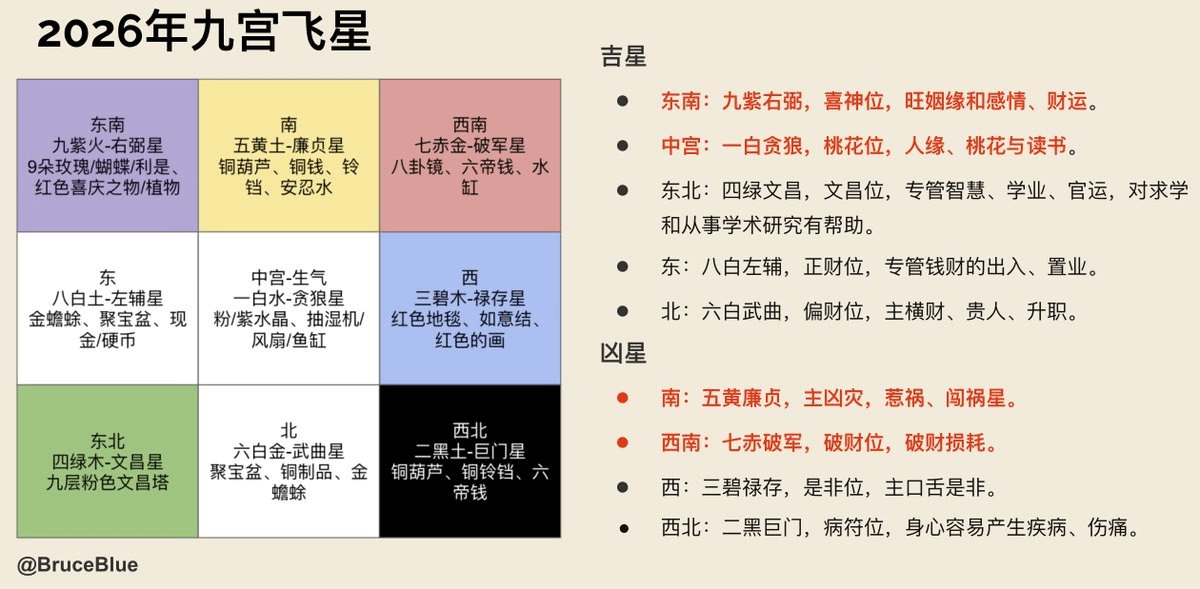
The year of the Fire Horse in 2026, known as 'the year of the Red Horse' in the sixty-year cycle, along with the following year 2027 'the year of the Red Sheep,' constitutes the 'calamity of the Red Horse and Red Sheep,' which has historically appeared during major transformations.
From a metaphysical perspective, the hexagram for the year 2026 is 'Heavenly Fire and Humanity,' symbolizing cooperation and judgment under light. This year may become a key node in the global power structure reorganization.
For the cryptocurrency market, forecasts indicate that the first half of 2026 may face the test of 'fire and calamity returning to the abyss,' as tightening macro liquidity and geopolitical conflicts could trigger a deep correction.
The real turning point may occur in the second half of 2026, as global monetary policy shifts and consensus is rebuilt after the crisis, Bitcoin is expected to emerge from a 'deep V' reversal, starting a new round of rising cycles.
Although this prediction carries a metaphysical color, it reflects a basic reality: we are at a historical turning point where the old order is collapsing and a new order is being established.
When the capital crocodile of old European money bares its fangs, and global assets tremble violently in political games, the only thing ordinary investors can do is perhaps stay clear-headed, reduce leverage, and seek out those long-term values that have been mistakenly killed in market panic.
Significant market fluctuations often herald the arrival of greater changes. The year of the Red Horse in 2026 is galloping towards us, bringing destruction while nurturing new life.
