
Every time a name like Elon Musk, Jeff Bezos, or Bernard Arnault appears in Forbes lists, someone comes out to say:
“This is not the richest man in the world; there are kings and wealthy individuals you do not know.”
And this statement seems clever… but in reality, it is a common economic mistake.
Forbes does not claim to count the gold in the palaces of kings or the hidden money in secret banks.
Forbes calculates assessable financial wealth:
Company shares
Owned shares
Listed assets
Announced deals
Simply means:
The economic power that influences markets, not the buried money.
👑 Yes, there are wealthy kings... but:
Can you sell the king's palaces?
Can you trade its shares on the stock exchange?
Does their wealth affect global markets?
No. While:
▫️Tesla stock shakes Wall Street
▫️The SpaceX deal changes space budgets
▫️Movements of Amazon and Meta affect millions of investors
This is the difference between:
Wealth that is "private" and impactful economic wealth.
🧠 Why is Forbes important?
Because it does not measure who owns more gold,
But those who hold the keys to the global economy.
And that's why: Elon Musk is not the richest because he has cash,
But because he owns:
▫️Companies
▫️Technologies
▫️Markets
▫️And the future.
🧨 In summary
Who says: "Forbes doesn't know the real rich"
It's like someone saying: "The speedometer doesn't know the speed of the car."
The counter does not invent the number... it measures it.
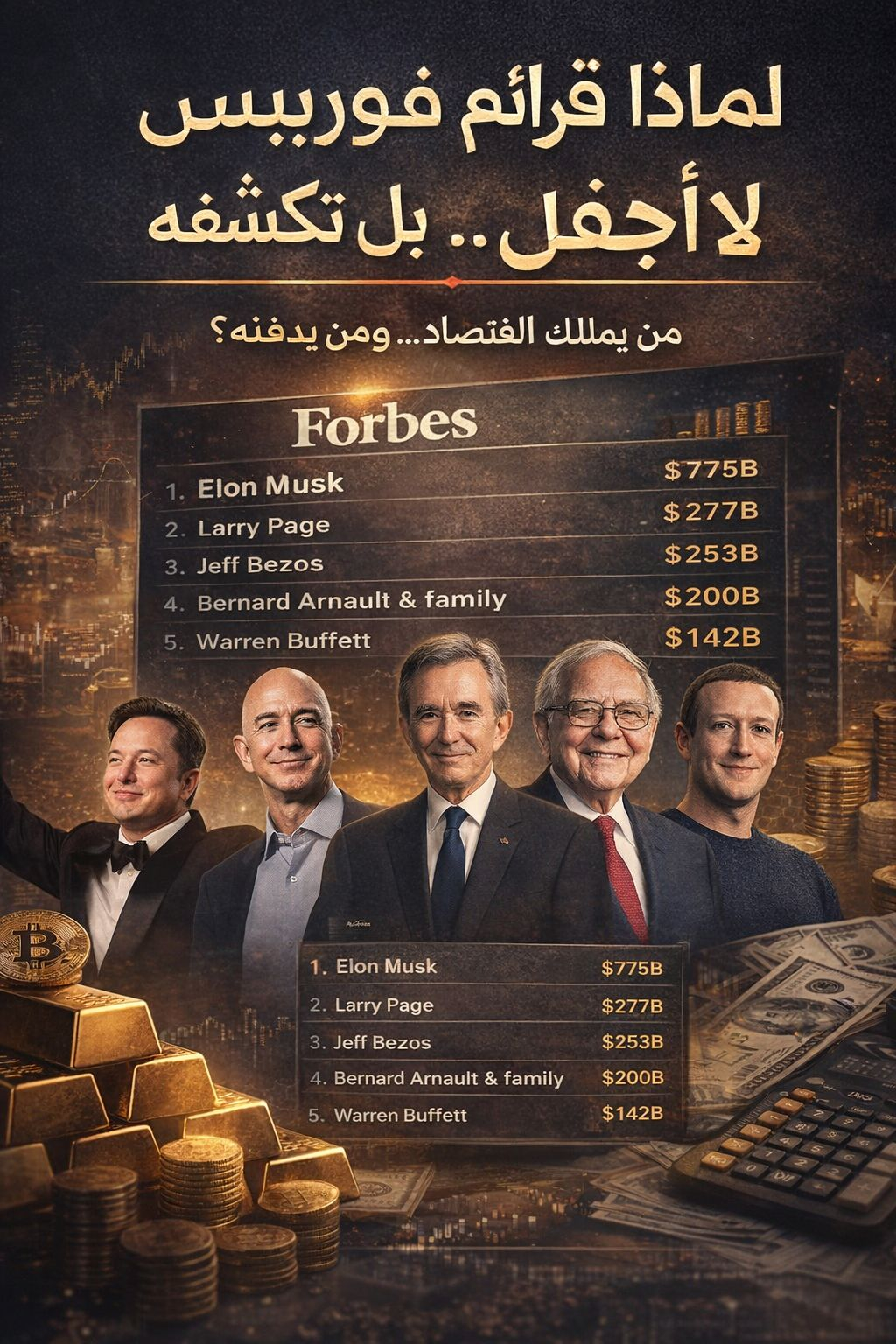
Forbes does not count those who own palaces behind walls, but those who own companies that drive the global economy.
The difference between "rich" and "economically strong" is the same as the difference between someone who owns gold in a vault and someone who owns stocks that shake Wall Street.
Ignorance is not in relying on Forbes... ignorance is in not understanding what it measures.
