
Wall Street tells a logically rigorous fairy tale: $BTC total supply is constant, anti-inflation, is the gold of the digital age. Sounds flawless, right? But looking at this eternally bottomless number should make you rethink this gilded digital gold!
At the beginning of this year, geopolitical risks reached a ten-year high. According to the logic of risk aversion, funds should have poured into Bitcoin. What happened instead? Gold and silver surged because in times of conflict, a physical gold bar can be exchanged for food, medicine, and safety. Meanwhile, $BTC fell!
This reveals a fact: in real life-and-death situations, capital trusts the tangible credit that has survived for thousands of years rather than unstable code.
Barry sees it clearly: the consensus on Bitcoin is extremely fragile. It cannot build rockets, cannot make necklaces, and in times of crisis cannot be exchanged for food. Its only practical use is to find the next buyer. When global liquidity is abundant, this game can be very lively; but when the Fed hits the brakes hard and banks become reluctant to lend, the narrative of this digital gold will shatter instantly. Let me ask: if tomorrow there is a world war, will you stockpile canned food, medicine, and gold, or stockpile a string of potentially inaccessible code?
The crux of the problem is that Bitcoin's value is 100% built on confidence. And confidence is the most changeable thing in the financial market. This fragile confidence is being pushed towards the cliff by a dangerous game.
At the beginning of this year, geopolitical risks reached a ten-year high. According to the logic of safe-haven assets, funds should have flowed into Bitcoin. What happened? Gold and silver surged because in times of war, a physical gold bar can be exchanged for food, medicine, and safety. And fell!
But the new accounting standards implemented in 2026 became the suicide switch for this game. The new rules require that cryptocurrency assets must be measured at their fair market value. This means that for every 1% drop in Bitcoin, the company's profit and loss statement will reflect hundreds of millions of dollars in paper losses.
Barry has drawn a warning line: when Bitcoin falls below $73,000, the balance sheets of such companies begin to bleed; if it drops to $65,000, their credit ratings will be downgraded to junk status.
Wall Street told a logically rigorous fairy tale: the total amount is constant, anti-inflation, it is the gold of the digital age. Sounds flawless, right? But looking at this endlessly deep number, one must ponder this gilded digital gold!
You might say, what does this have to do with me since I don't trade cryptocurrencies?
Dead wrong!! This is Barry's most brilliant insight: cross-border contagion.
Today's DeFi world is filled with a large number of digital tokens pegged to gold. Many aggressive funds use $BTC as collateral to buy these digital golds with leverage. A terrifying transmission chain is formed: Bitcoin crashes → collateral value shrinks → triggers forced liquidation on DeFi platforms → system automatically sells off 'digital gold' tokens → selling pressure spreads to the physical gold markets in London and New York.
Recently, after the gold price hit a new high, frequent flash crashes may not necessarily indicate a problem with gold itself, but rather the liquidation of cryptocurrency traders, which has burned into the real economy through this hidden financial pipeline. It's like a fire at a neighbor's house; you think your firewall is solid but don't realize the sewer and gas lines have long been connected. Your holdings in gold ETFs and precious metal funds may be inexplicably damaged by an unrelated storm.
This reveals a fact: in a true life-and-death crisis, capital trusts the tangible credit that has crossed millennia, rather than the shaky code.
But this is not just an issue of profit and loss; it is also the collapse of the foundation of Bitcoin's network security. The security of Bitcoin relies on the total network computing power. If miners collectively shut down, computing power will plummet, and the cost to attack the entire network will sharply decrease. If the guardians of the network, 'JC', drop from 100,000 to 10,000, is the vault of this 'digital city' still safe? Once trust collapses, it’s irreparable. History doesn’t repeat itself, but it always rhymes.
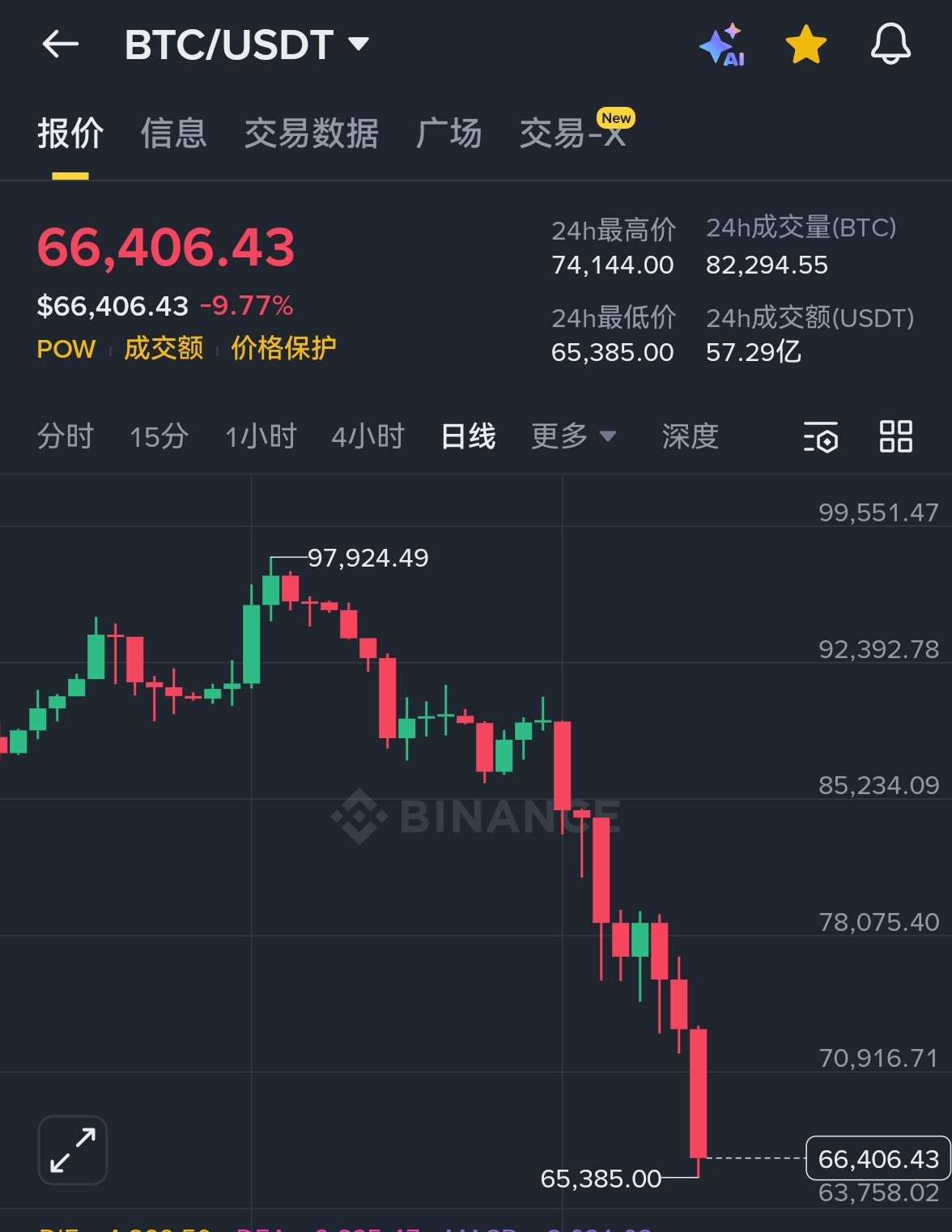
In 2008, Wall Street said housing prices would never fall because land is limited. In 2026, the cryptocurrency world claims that Bitcoin will always rise because its total supply is constant. The logic is exactly the same! The outcome may be no different, or even worse—because at least houses can be lived in, but what is left of Bitcoin once it loses its speculative properties? You might say it can be used for payments! When was the last time you bought something with it? It's volatile; how do you think the person who bought the most expensive pizza feels now?
So how should we respond?
First, do not catch flying knives. In a downtrend, every seemingly cheap bottom fishing could be an entrance to a deeper trap. Do not reach out until the knife has landed.
The second protection of principal. Remember Buffett's iron rule: the first rule is to never lose money; the second rule is to always remember the first rule. Surviving in the financial market is far more important than temporary profits.
Third, believe in common sense and beware of myths. When someone shouts that this time it’s different, that’s when we should be most vigilant. Let’s speak with reality and data!
Now we are witnessing a twilight of faith. In 2008, bricks and stones collapsed; in 2026, it might be code, but the core remains the same: people believe in the myth of eternal growth and pay the price for it!
In the financial market, being awake is always more important than being smart. Smart people are good at dancing in bubbles, but awake people know they must fasten their seatbelts before the storm arrives. #小非农数据不及预期 #BTC市场影响分析


