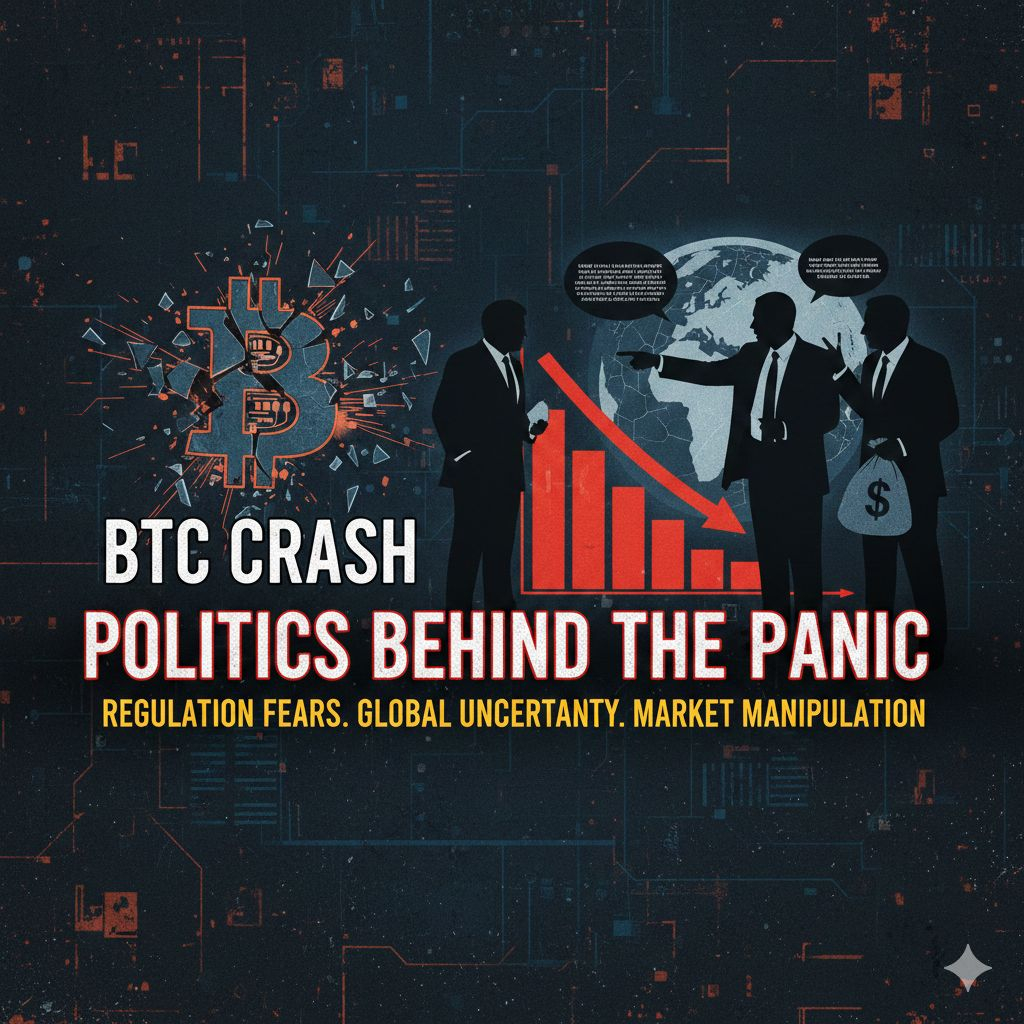
When we look at history, economics, and the recent behavior of the crypto market, a suspicion seems quite reasonable. Let me try to illustrate the point with examples. Capitalism never seizes assets in a straightforward manner. Its real strength is in controlling information, dominating language, and efficiently producing fear. The assets that have been truly valuable in history have been the ones that were first subjected to the most propaganda. Gold, oil, diamonds, uranium, or today's lithium—all follow the same pattern.
Bitcoin is the new addition to the same list.
Initially, it was said that it has no intrinsic value. Then it was called a currency for criminals. Next came the story of environmental destruction. Now it is said that regulation is coming, sanctions are coming, it’s all over. Strangely, these statements become more pronounced just when the market reaches any significant support area.
Is this a coincidence?
When compared to gold, the picture becomes clear.
Once, gold was referred to as unproductive, a metal of the old era. The common people were made to understand that there is no need for gold in the modern economy. What was the result? Retail investors sold, while central banks and corporate funds quietly increased their reserves. Today, that very gold is the last resort in times of crisis.
The same drama is going on with Bitcoin. The only difference is in one aspect—this is outside the state's boundaries.
Fear is created because regulation is difficult.
The biggest crime of Bitcoin is that it does not seek permission from any empire. There is no central bank imprint here; supply cannot be increased overnight by any political decision. This very characteristic is the most uncomfortable for capitalist centers.
So they cannot directly prohibit it. Because technology cannot be banned; only users can be intimidated.
Who is this fear for? For small investors. Those who see the headlines and sell in panic without analyzing.
And who is the opportunity for? Those who know the information in advance. Those who know which news is coming, when it is coming, and how the market will react.
The classic example of the COVID crash of 2020. At that time, it was said that Bitcoin had failed. Yet at that very moment, large funds, corporate treasuries, and institutional investors began to enter. A few years later, they said again, Bitcoin is digital gold.
This hypocrisy is not a mistake; it's a strategy.
The media here is not neutral.
In a capitalist system, the media is rarely neutral. The narrative of those who hold the capital is what is promoted. Therefore, when Bitcoin is in the hands of ordinary people, it is dangerous. And when it gradually gets concentrated in the hands of big players, it becomes legitimate, safe, and an institutional asset.
Language changes, positions change, but the goal does not change—control.
So what should ordinary investors do?
First, learn to separate panic from reality. Second, understand that history never repeats itself exactly, but the patterns do not change. And most importantly, we must ask—why are the very financial institutions that are spreading so much fear quietly accumulating the asset in question?
Finding the answer to this question reveals many hidden agendas.
Final word
Bitcoin is not just a digital asset. It is a question of power balance. Therefore, the struggle surrounding it is not just about charts; it is a political, economic, and ideological battle.
History tells us that the assets are not held by those among whom fear is spread. The question is, will we play that old role again, or will we show the courage to understand reality by sidestepping fear?
This decision will ultimately determine whose asset Bitcoin will remain.