

In the early morning, a huge shock, ETH once again breaks below $2100. Market sentiment is not panicked, but it has clearly started to cool. The price is not the type of 'flash crash' plummet, but rather a slow grind down, as if forcing every high-leverage bull to make their own decisions.
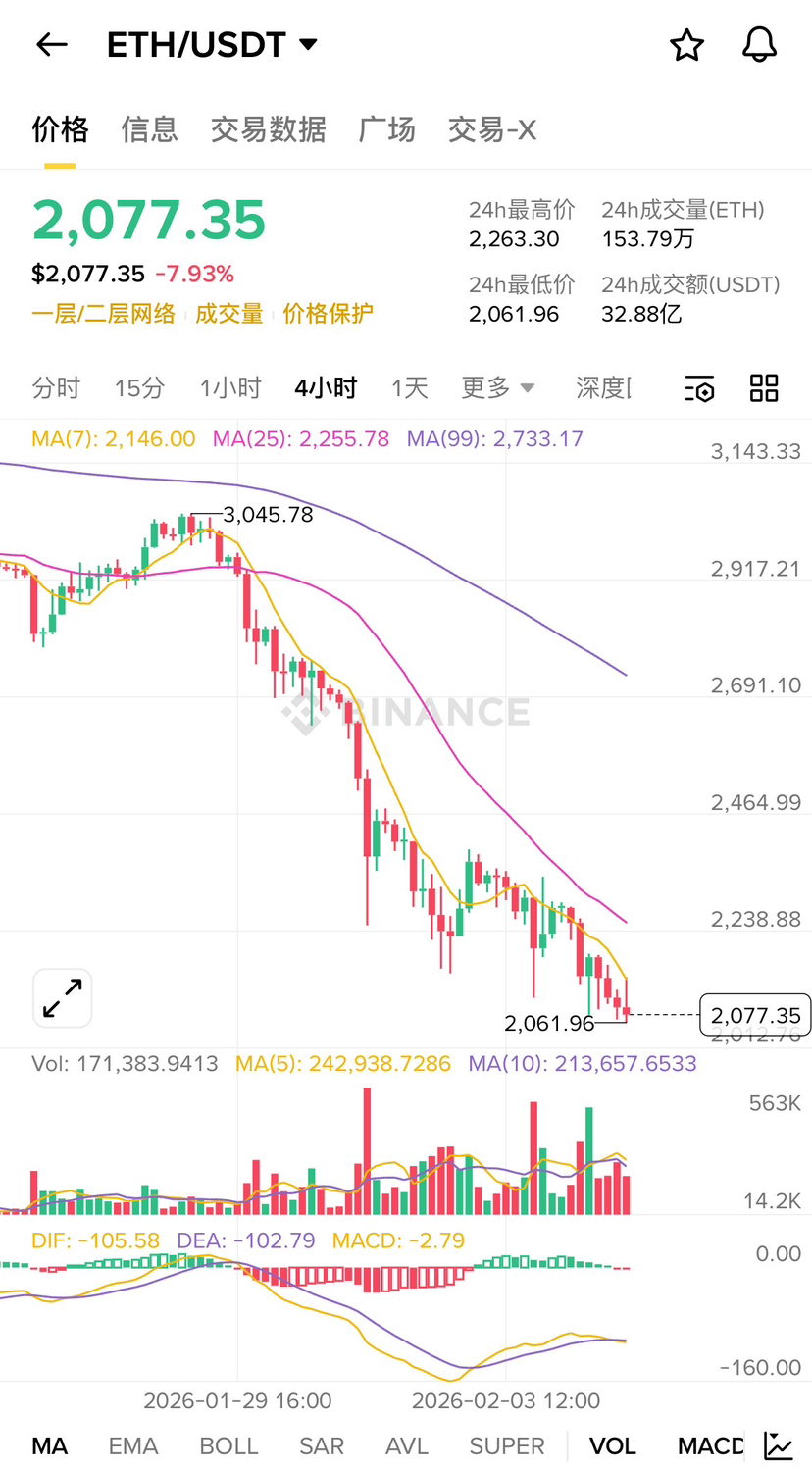
And against this backdrop, Trend Research's operations have been completely brought into the spotlight.
4 days, reduced positions by 190,000 ETH.
This is not a minor adjustment; it is a serious severing of limbs. The only issue left is:
Is this a rational self-rescue, or the first circle of the 'death spiral'?
1. What the market truly fears is not the drop, but being 'forced to sell'.
Many people's first reaction is:
"Is another ETH whale about to collapse?"
But if you take emotions out and only look at the structure, you’ll find that this matter is far from simple.
Trend Research is not the kind of project that relies on narrative to support its valuation, nor is it an ETH treasury-type company; its essence is high-leverage trend bullishness. The core strategy is very clear:
Staking ETH → borrowing stablecoins → buying ETH again, using time and trend to exchange for space.
The problem lies in one point: when ETH fell from 3,200 all the way below 2,300, the time value of this model began to backfire on the principal.
At this point, there are only two choices:
Either bet on a rebound and wait for the market to save you; or cut your positions first and prioritize 'survival'.
Trend Research chose the latter.
Two, 190,000 ETH is not 'surrender', but rather defusing a bomb.
On-chain data is very clear:
Since early February, Trend Research has sold a total of 188,500 ETH at an average price of about $2,260, while repaying about $385 million in USDT loans.
This step is very critical.
Because what it is doing is not simple stop-loss, but actively deleveraging:
The liquidation price has been pulled back from the danger zone to $1,575–$1,680, and the leverage has been reduced from over 2 times to 1.6–1.8 times.
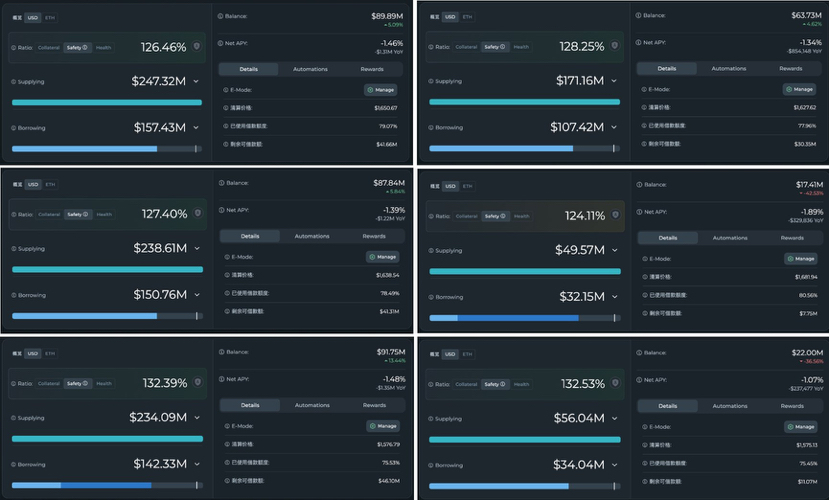
(Data source AI Aunt)
In other words: it is no longer in a state of 'waiting for the market to determine fate'.
This is also why, despite the paper losses being extremely exaggerated, the on-chain monitoring platform has not issued a 'high-risk warning'.
Three, what does a true 'death spiral' look like?
Many people like to call all large reductions a death spiral, but a true death spiral must meet at least three points:
Passive liquidation, not proactive selling.
The sell-off itself directly triggers larger-scale chain liquidations.
The balance sheet cannot restore the safety margin through reducing positions.
Trend Research has not stepped on a single one.
Its selling is proactive, predictable, and controllable in pace;
The decline of ETH is not solely triggered by it—during the same period, the market also faced multiple systemic selling pressures.
Even some long-term holders have chosen to reduce their positions in this range.
So strictly speaking, this is more like a 'soft landing' for high-leverage bulls, rather than a crash.
Four, beliefs haven’t changed, but the market is no longer betting with you.
Interestingly, Trend Research has not changed its stance.
The long-term judgment on ETH remains aggressive: narratives of ETH going over ten thousand and BTC over a hundred thousand still exist. But the difference is—the market no longer pays for 'faith-based bulls'.
The market in 2026 gives trends but not blind optimism;
It gives patience but does not forgive uncontrolled leverage.
You can be bullish, but you must be able to bear it;
You can be wrong, but you cannot be forced to exit.
And this operation by Trend Research essentially acknowledges one point: being bullish too early is wrong; surviving is the only way to qualify for the next cycle.
Five, what signal does this truly release?
It’s not that 'ETH is done for', nor is it 'whale collapse'. Rather, it’s a more brutal and more real signal:
👉 The era of high-leverage narrative bulls is over.
👉 Next, it’s a stage of competing cash flow, position management, and survival capacity.
ETH may oscillate between $2,000 and $2,300 for a long time.
The market will not give you emotional value, it will only slowly squeeze out unreasonable positions.
And those who can truly survive until the next big cycle are never the loudest voices, but those who are willing to cut off part of themselves when it’s time to admit mistakes.
In this market, belief determines how high you can fly, and risk control determines whether you can land safely.
This time, Trend Research chose the latter.

