
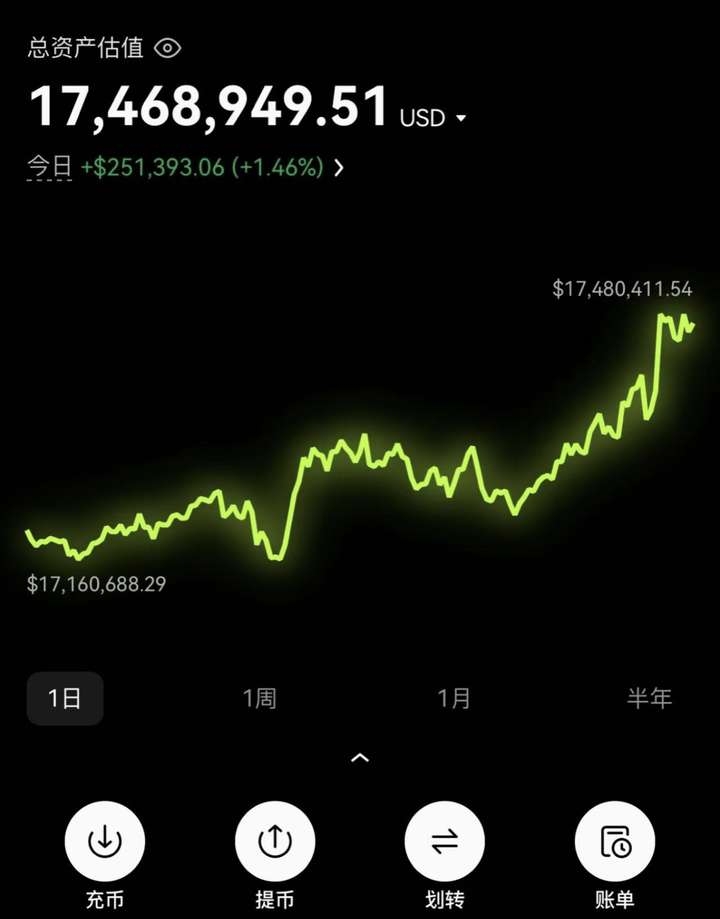
From 200,000 to over 5 million: My 7-year comeback in the cryptocurrency world relying on 'low-key methods'
I am Yan An, from Guangdong, 36 years old, currently settled in Shanghai. Every time I chat with new friends in the circle, they are always curious about how I made these tens of millions — no insider information, no luck with overnight doubling 'early bird projects,' and I can't even understand complex technical indicators. You might not believe it, but I relied entirely on some 'low-key' methods.
Back in the 2018 bear market, I jumped into the cryptocurrency world with a principal of 200,000. When I first came in, I was like a headless fly, listening to people saying 'buy the dip when it falls too much,' so I went all in on a meme coin, only to panic and sell when it dropped 30%; later, I chased the 'hot coins,' getting excited and adding to my position when it rose 5%, but scared and liquidating when it fell 2%. In less than six months, my 200,000 was reduced to only 80,000.
That night, I tossed and turned in my rental apartment in Chengdu, staring blankly at my account balance. My wife advised me: 'If it really doesn't work, just quit and go back to a steady job.'
I gritted my teeth and didn’t back down—losing money was not just about the money; it was about my pride. From that day on, I stopped looking at 'expert analyses' and chasing 'hot concepts,' instead focusing on K-line and volume, slowly figuring out some 'simple patterns'.
In addition to solid technical skills, I strictly adhere to the following 15 ironclad rules:
1. A market crash is a test for quality coins. If the market crashes and your coin only slightly drops, it indicates that the market maker is maintaining the price, resisting further declines, so such coins can be held with confidence, and there will be rewards.
2. If a novice doesn't know how to buy and sell, the simplest method is to hold above the 5-day moving average for short-term trades; if it breaks below the 5-day line, sell. For medium-term trades, hold if above the 20-day moving average; if it breaks below the 20-day line, exit. There are many methods, and the best one is the one that suits you. The difficulty in trading is not the lack of methods, but the execution. If you mindlessly stick to one method, over 90% of people will have no issues. The path to success is simple.
3. Once the main uptrend is established and there is no obvious increase in volume, decisively enter the market. If the volume increases while holding, continue to hold; if there is a decrease in volume and a trend break occurs, quickly reduce your position.
4. When a coin is trending upwards, don’t look at any indicators other than volume; if volume is decreasing or stable, hold; if there is a massive spike in volume, exit. Volume is the soul; volume is water, price is the boat.
5. After a short-term buy, if there is no fluctuation in three days, exit. If the price drops after buying and reaches a 5% loss, exit unconditionally.
6. If a coin drops 50% from a high and has fallen for eight consecutive days, it has entered an oversold channel, and a rebound is imminent; it can be followed.
7. When trading cryptocurrencies, focus on the leaders; only trade the leaders, not the less significant ones. This is because when the market rises, the leading coins rise the most, and when it falls, they are the most resilient. Don't hesitate to jump in; trading cryptocurrencies often goes against human instincts. Don’t buy just because something has fallen significantly, and don’t avoid buying just because something has risen significantly. The things you are most afraid to buy may be the ones that rise the most, while the things you are most eager to buy may be the ones that fall the most. The strong will always be strong. In short-term trading of leading coins, the key is to buy high and sell even higher!
8. Embrace the trend and go with the flow; the buying price is not about being the lowest but about being the most suitable. You won’t gain an advantage just because the buying price is cheap; the market doesn't recognize bottoms. Abandon junk coins; trends are king.
9. Don't let the thrill of profit cloud your judgment. Remember, the hardest thing in the world is how to sustain profits. You must review your trades carefully to determine whether it was luck or skill; a stable trading system that suits you is the way to continuous profit.
10. Don't trade just for the sake of trading. What does that mean? It means if you don't have enough confidence that this trade will be profitable, don't force yourself to open a position. Staying out of the market is an art; those who can buy are students, those who can sell are masters, and those who can stay out are the ancestors. The primary consideration in trading is not profit but capital preservation. What matters in trading is not frequency but success rate!
11. In the speculation market, being reactive is the most erroneous approach. Use your fixed trading system to respond to changes; it’s not about using ten thousand methods, but about applying one method ten thousand times. Inactivity is often the best defense. The times when you are most reluctant to let go are often when you make the most mistakes. Reflect on this!
13. External factors are uncontrollable; seek within yourself. Never blame others for your failures; this is extremely important. Regardless of how far you fall, you must take full responsibility for your decisions. Only by taking responsibility can you face your mistakes and avoid repeating them. True cryptocurrency traders are warriors who dare to confront their mistakes!
14. Listen less to outside rumors, because there is no right or wrong opinion. Often, what you see is what they want you to see, or it’s what you want to hear. When you lose interest in the media or any expert's methods, congratulations! You are not far from entry and success because you might have developed a bit of your own understanding—your belief!
15. You think you're trading the market, but in fact, you're trading yourself. The seemingly glamorous success we see on the surface is merely the result of extreme perseverance and endurance. Behind every greatness lies suffering. Time is the most valuable asset; endurance surpasses intelligence. Natural talent is not important; mindset is crucial!
Do you often feel that you are just one step away from profitability but can't quite grasp it? The truth is quite simple: to become a consistently profitable trader, you don't need to master all techniques; just focus on a few core key points. Today, I will publicly reveal three technical analysis secrets that I have summarized from years of practical experience to help you break through that barrier and truly embark on the path to profitability.
Secret 1: Single technical analysis is useless.
Must be paired with a 'strategy framework'
First, let's clarify a misconception: I'm not saying that technical analysis is useless—it's the foundation of trading. However, relying solely on technical analysis is like knowing only the rules of blackjack without being able to count cards; you'll inevitably lose in the long run.
To give a simple example: in the game of blackjack, understanding the rules is just the beginning; to win money, you must rely on 'card counting'—obtaining a mathematically positive expected value (positive EV) through card counting will eventually help you beat the casino. Technical analysis in trading is akin to the rules of blackjack; while trading strategy is 'card counting'—integrating fixed technical analysis into a set of advantageous rules and using a sufficient number of trade samples to outperform the market over the long term.

Many traders make the mistake of using technical analysis in a piecemeal way: seeing a moving average crossover and going long, seeing an RSI overbought and going short, without a unified framework, resulting in random profits and losses, ultimately leading to overall losses. What’s truly useful is to integrate technical analysis into 'part of the strategy' rather than relying on it alone.
Secret 2: The core of building a trading strategy.
Four elements + four technical analysis tools
My trading strategy is centered around the 'four elements,' paired with four commonly used technical analysis tools—simple and executable, easy for anyone to understand.
Step one: Clarify the 'four elements' of the strategy (none can be missing)
A profitable strategy must have these four points clearly defined, with no ambiguity:
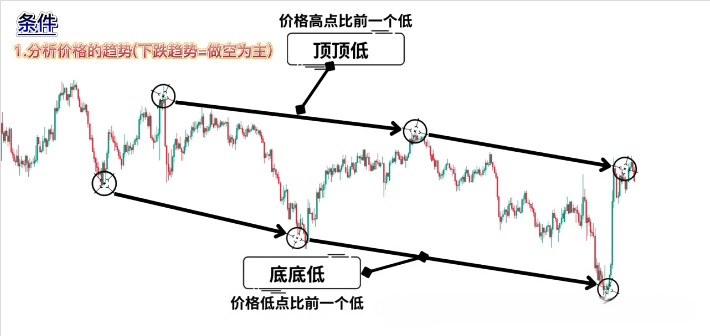
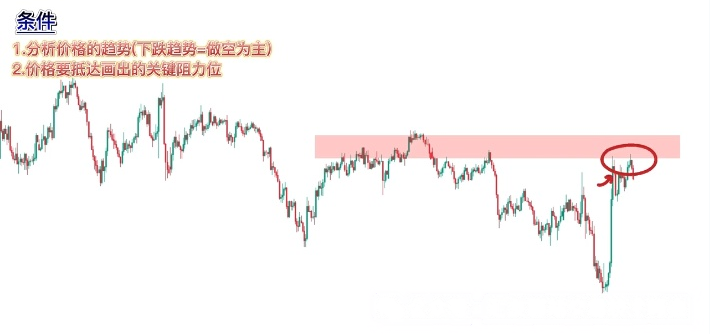
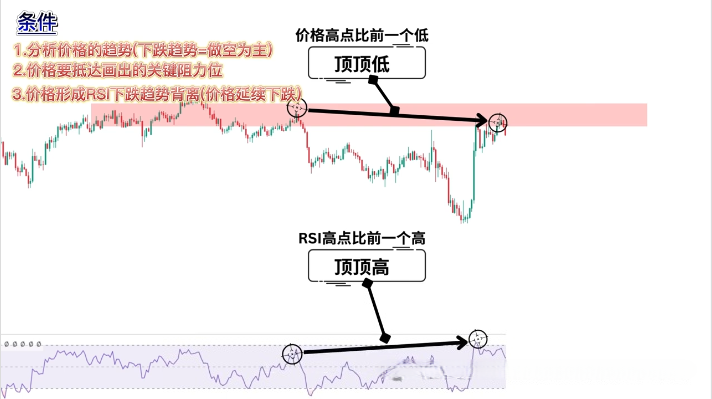
1. Conditions: Prerequisite signals that must be met before entering the market. For example, 'the price is in a downtrend (lower highs + higher lows)', 'the price has retraced to a key resistance level', 'RSI shows divergence', 'forming a double bottom pattern', etc.—only when all these conditions are met will we proceed to the next step of analysis;
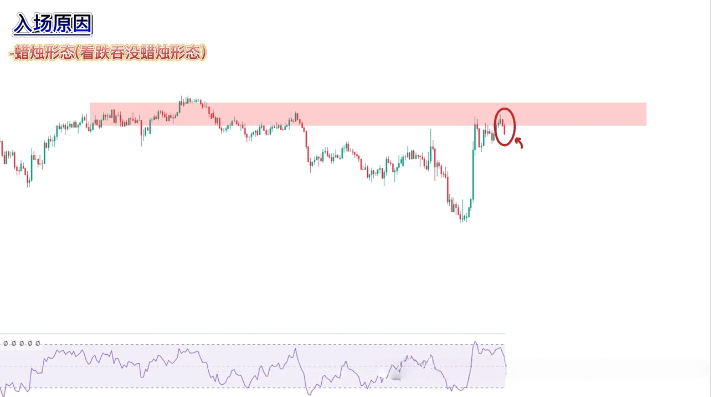
2. Entry reason: The 'confirmation signal' that triggers the order. You cannot just meet the conditions and enter; there must be explicit confirmation, such as 'forming a bearish engulfing pattern at the resistance level' or 'a bullish candle breaking through the neckline.' This step ensures consistency in trading and avoids emotional trading.
3. Stop-loss point: The 'lifeline' that protects your capital. The logic behind a stop-loss is 'when the entry criteria disappear, exit immediately.'
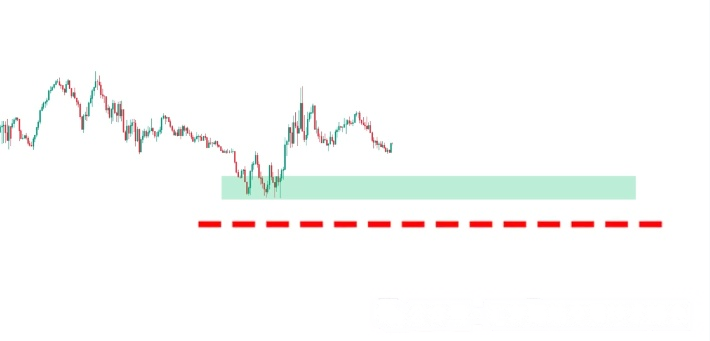
For instance, if you go long at a support level, set your stop loss just below that support level;
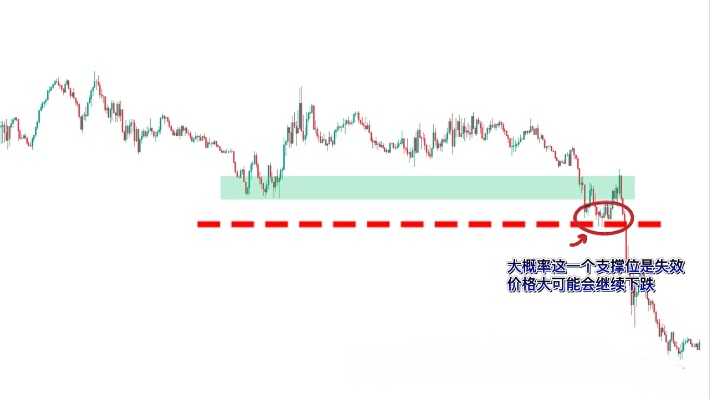
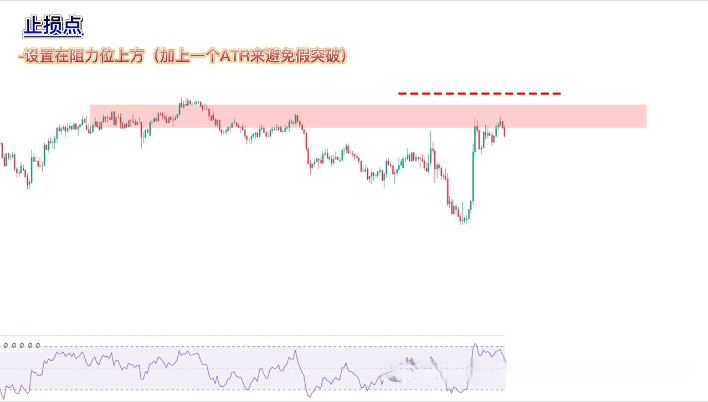
When shorting at a resistance level, set the stop loss above the resistance level +1 ATR. Remember: Stop-loss must be strictly executed; it must not be moved back; and it must not be neglected.
4. Take-profit point: The 'end line' that locks in profits. You can use a fixed profit-loss ratio (I often use 2:1), or use support and resistance levels for taking profits. The core is to have clear rules; you cannot change your take-profit plan arbitrarily due to greed or fear.
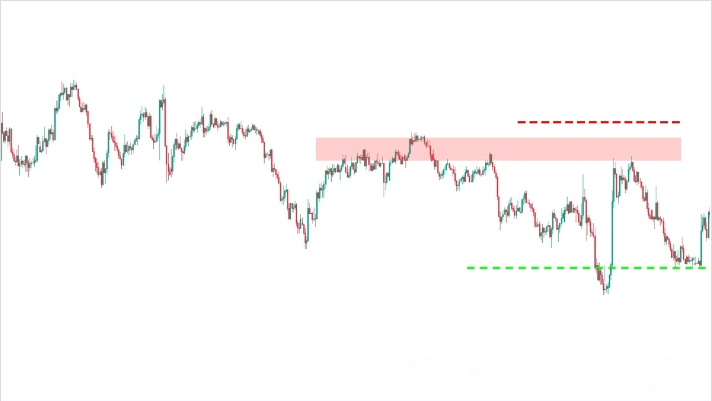
Step two: Pair with four practical technical analysis tools (choose as needed)
I commonly use just four technical analysis tools, which are sufficient to handle most market conditions. You can also choose the ones you're comfortable with:
Trend analysis (market structure): Judging the highs and lows, determining the major direction;
Candlestick patterns: For example, bullish/bearish engulfing, long-wicked candlestick, as confirmation signals for entry;
Key price levels: Support levels, resistance levels, supply and demand zones, find high-probability entry points;
Momentum indicators (RSI): Determine the strength of momentum and divergence signals, assist in confirming trends.
Practical case: Building a short-selling strategy using the four elements + technical analysis
Let’s use a real case to see how this logic can be implemented:
Conditions (all three must be met): ① The price is in a downtrend (lower highs + higher lows);
② The price has retraced to a key resistance level;
③ RSI shows a top divergence (price making lower highs while RSI makes higher highs);
Entry reason: The price forms a bearish engulfing pattern at a resistance level (the bearish candle completely covers the previous bullish candle), confirming the downward momentum;
Stop-loss point: Set above the resistance level +1 ATR;
Take-profit point: Set according to a 2:1 profit-loss ratio;
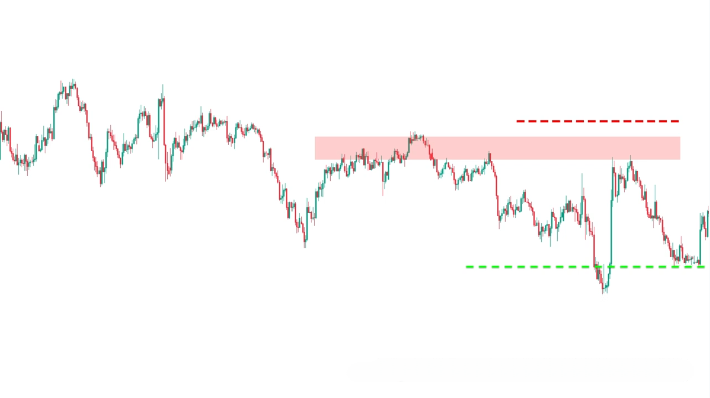
Result: Successfully took profits and exited, with the entire process executed according to the rules, without emotional trading.
Secret 3: No matter how good technical analysis is,
It can't save 'backward trading mindsets'.
This is the most crucial secret: Many traders focus all their energy on learning techniques and changing strategies while neglecting 'trading mindset'—no matter how skilled you are in technical analysis, if your mindset doesn't keep up, you will never become a profitable trader. Here are three psychological techniques that helped me break through my mental barriers:
1. Give up the fantasy of 'quick wealth,' and accept that trading is a 'long-term probability game.'
When I first entered the market, I also thought trading could lead to quick wealth. The result was an unbalanced mindset, frequent heavy positions, and emotional trading, causing my account to dwindle further. It was only later that I realized: trading is not gambling; it is a business that makes money over the long term based on mathematical advantages—you need a profitable strategy, reasonable risk management, and to extend your timeline; profits will come naturally.
Instead of fantasizing about making big money with a few trades, it's better to solidly test strategies, manage risks well, and cultivate the right mindset. This is the path to steady profits.
2. Build confidence through backtesting to get through periods of consecutive losses.
If the strategy you're using hasn't been backtested and you just use it based on a blogger's recommendation or trade based on intuition, you are likely to give up after experiencing consecutive losses.
The core function of backtesting is not to 'prove that the strategy can make money,' but to 'help you understand the strategy': its win rate, profit-loss ratio, what the maximum consecutive losses are, under what market conditions it is effective, and under what conditions it fails. Understanding these will prevent you from panicking when you encounter consecutive losses in real trading—because you know this is normal volatility of the strategy and not that your analysis was wrong.
At the same time, backtesting can make you more disciplined, maintain consistency in trading, and avoid changing rules due to emotional fluctuations.
3. Good risk management is necessary to survive in the market.
The essence of trading is 'survive first, then talk about making money'—even if your skills are excellent, you will inevitably encounter losses; that is a given. The difference lies in: Those who manage risks well can retreat unscathed after losses; those who do not manage risks well will lose most of their capital in one go.
My risk management iron rule: The risk of a single trade should not exceed 1%-2% of total capital. For instance, if you have 100,000 in your account, the maximum loss per trade is 1,000-2,000. Even if you experience 5 consecutive losses, you'll only lose 5%-10%, and your account will still have a chance to recover; but if the risk per trade is 10%, 5 consecutive losses could wipe out half your capital, making it very hard to recover.
Remember: risk management is not about limiting your profits; it’s about protecting your ability to stay in the market long-term and make money based on the mathematical advantages of your strategy.
Summary: The core of profitability.
It is a triple resonance of 'technique + strategy + mindset'.
The three secrets shared today can actually be summarized in one sentence: technical analysis is the foundation, strategy framework is the skeleton, and trading mindset is the soul.
Many people lose money because they focus solely on 'technical analysis', ignoring strategy and mindset. True professional traders do not rely on complex indicators or precise predictions but on:
Integrate technical analysis into the 'four elements' strategy framework to ensure consistency in trading.
Give up the illusion of quick wealth and accept that trading is a long-term probability game.
Build confidence through backtesting and protect your capital with risk management.
When you manage to accomplish these three points, you will find that profitability is actually a natural result of 'consistent execution'. You will truly understand why some people can maintain profits while others are stuck in losses.
This is the trading experience that Yan An shared with everyone today. Often, because of your doubts, you miss out on many opportunities to make money. If you don’t dare to boldly try, interact, and understand, how will you know the pros and cons? You must take the first step to know how to proceed from there. A cup of warm tea, a piece of advice; I am both a teacher and a friendly conversationalist for you.
Meeting is fate; knowing each other is destiny. I firmly believe that those destined to meet will eventually connect, and those who miss each other are simply not meant to be. The path of investment is long, and temporary gains or losses are merely the tip of the iceberg. Remember, even the wisest can make mistakes, and even the least wise can sometimes succeed. Regardless of emotions, time will not pause for you. Pick up the frustration inside and stand up again to move forward.
The secret manual has been given to you; whether you can achieve fame in the market depends on yourself.
Everyone must save these methods, share them widely. Friends who find them useful can forward them to more cryptocurrency traders around them. Follow me for more insights in the crypto world. After being through the rain, I’m willing to hold an umbrella for the retail investors! Follow me, and let’s walk together on the crypto path! 66