Overview — Buy Zones
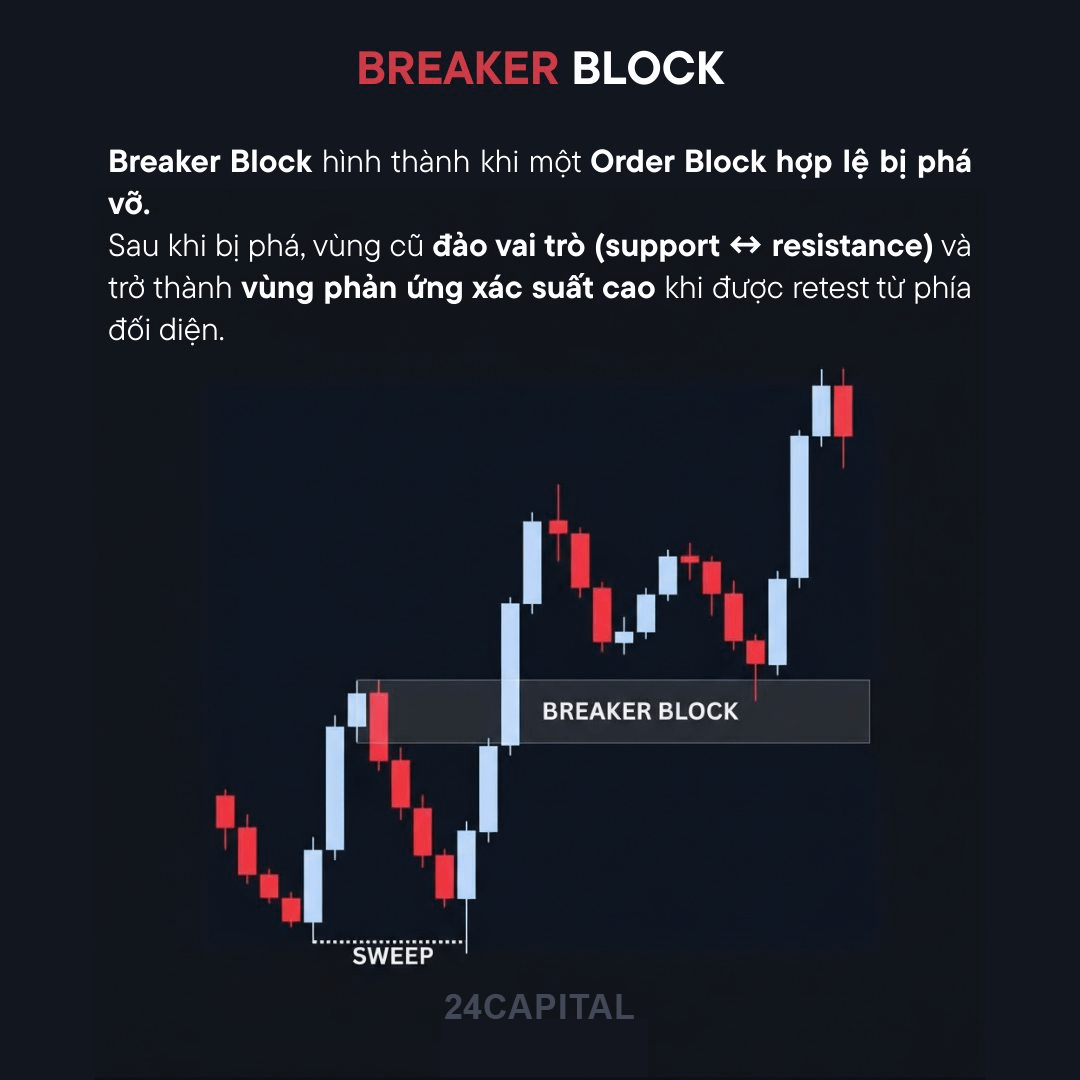
In SMC, Buy Zone is not a cheap price area.
Buy Zone is where: The organization has previously placed large positions and has reasons to defend that position when price returns.
Standard SMC thought order:
- Identify market structure (Market Structure): HH – HL or LH – LL.
- Identify BOS / CHoCH (breaking structure).
- Find the price area that creates that structure break → that is the Buy Zone.
Four core types of Buy Zones:
- Demand Zone
- Order Block
- Breaker Block
- Flip Zone
Order Block — Entry signal
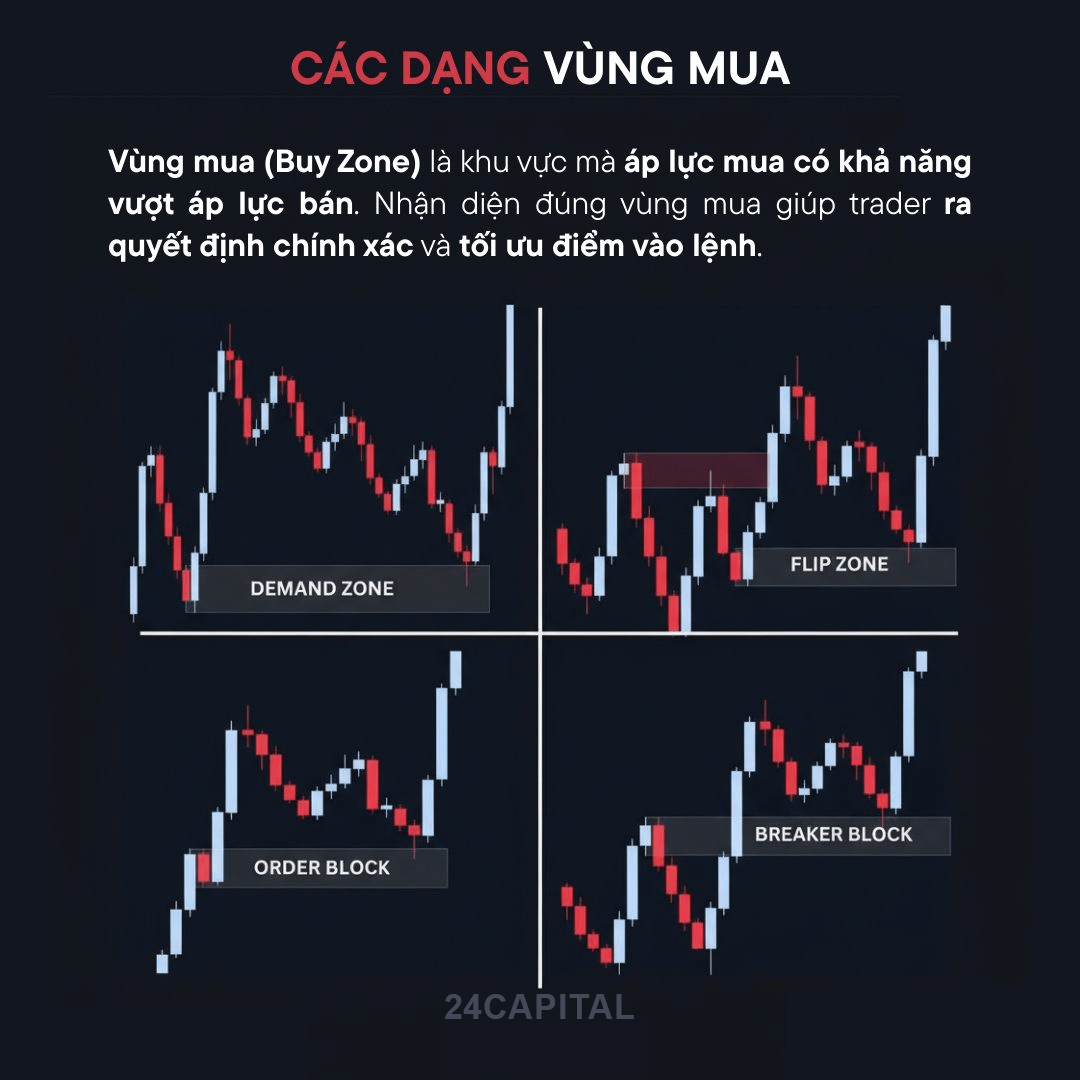
Order Block is the last candle against the trend before the market creates an impulsive move breaking structure (BOS).
This indicates:
- Before breaking structure, the organization had accumulated positions at that candle.
- The impulse afterward is the result of large volume that was entered beforehand.
Conditions for a 'standard' OB
- After OB there must be a clear BOS.
- Impulse leaving OB must be strong and decisive.
- OB is at the starting point of displacement.
Entry logic
When price returns to OB: The organization tends to defend the price area that has entered.
Demand Zone — Demand area from price imbalance (Imbalance)
Different from OB
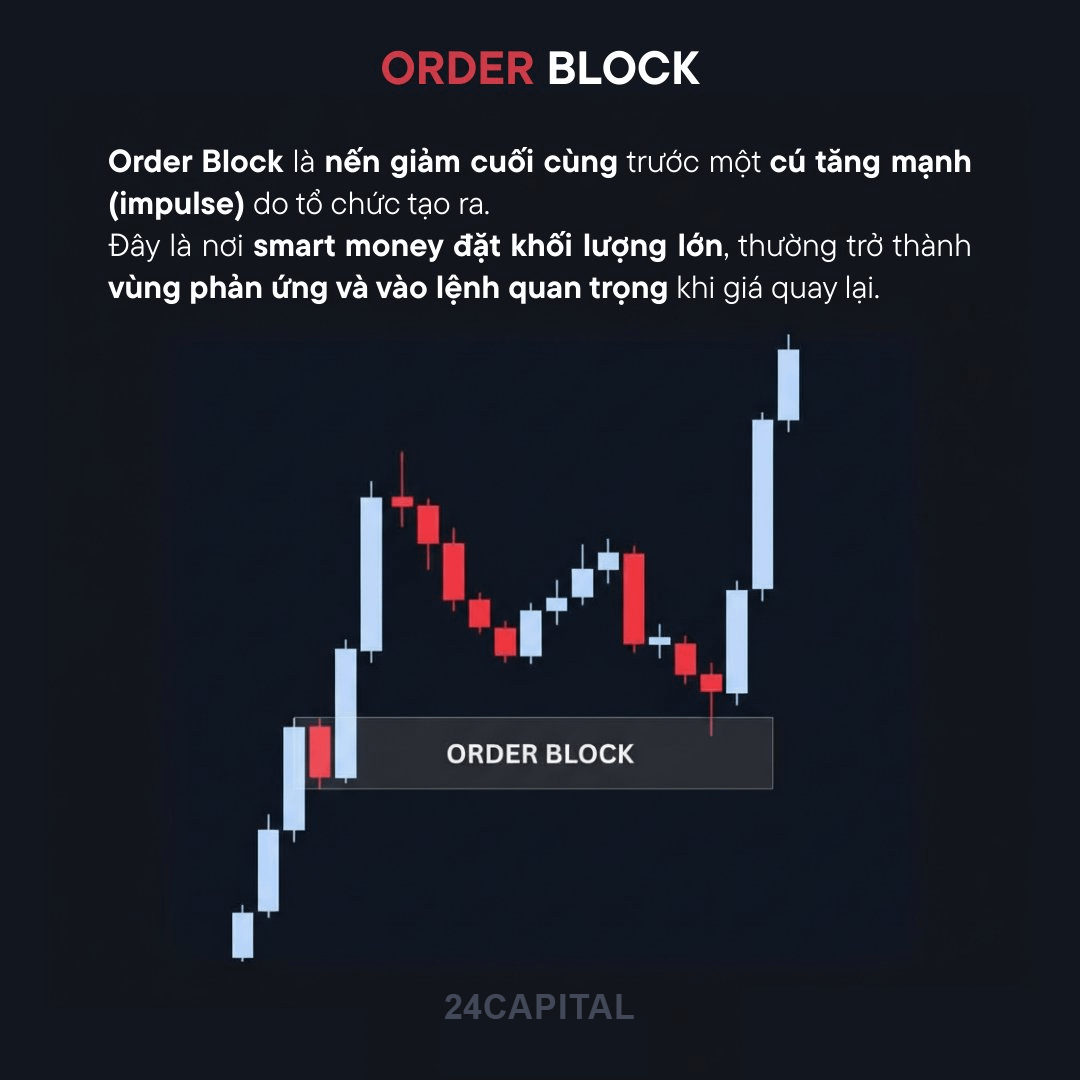
Demand Zone focuses on: Price area that creates supply and demand imbalance (imbalance / displacement)
Not necessarily a specific candle like OB.
Identification characteristics
- Price leaves the area with strong displacement.
- May leave FVG (Fair Value Gap).
- There is usually a BOS beforehand.
Nature of cash flow
When price moves away too quickly:
A portion of the buy order has not been fully matched.
When price returns → the remaining order is activated.
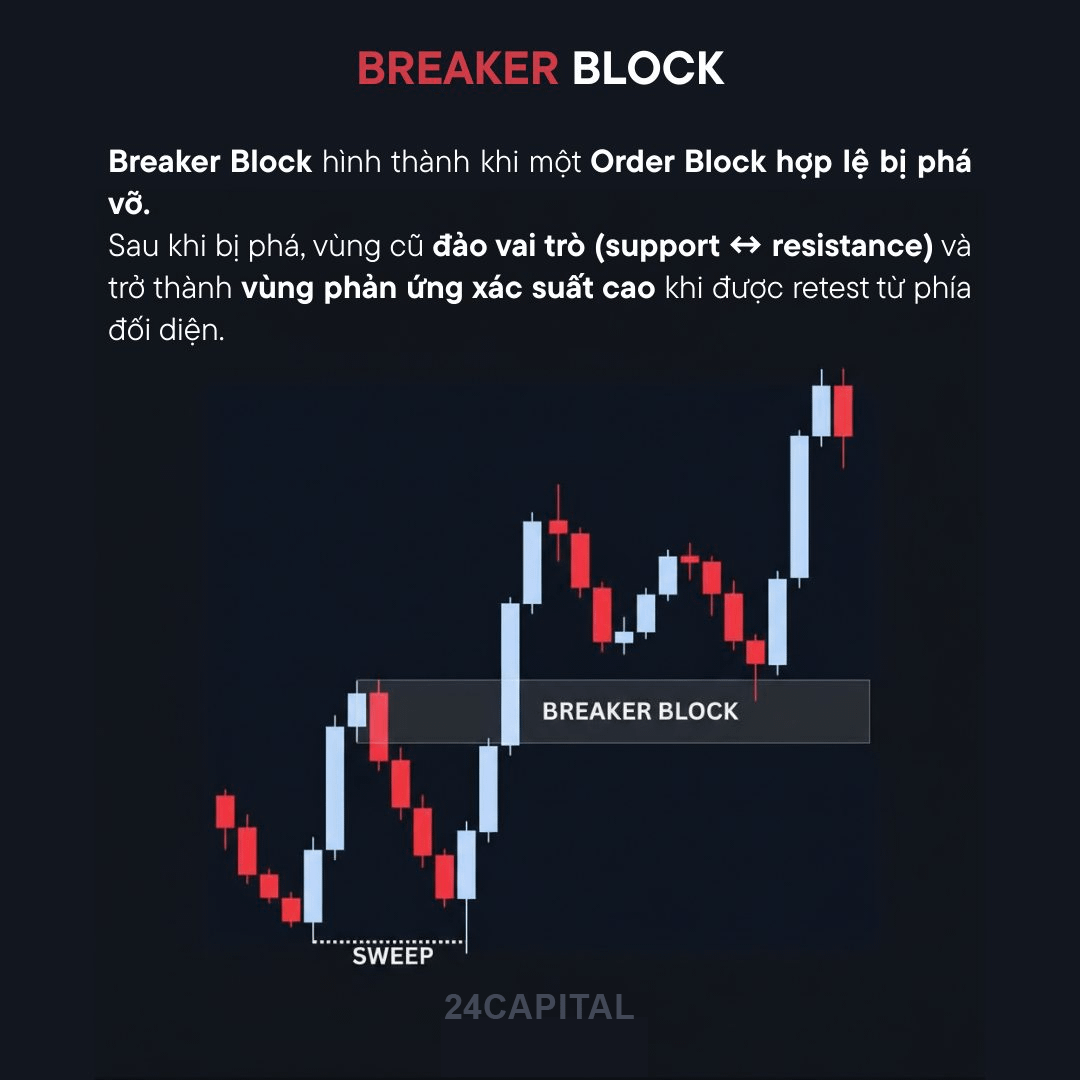
Breaker Block — When Order Block fails
Logic behind
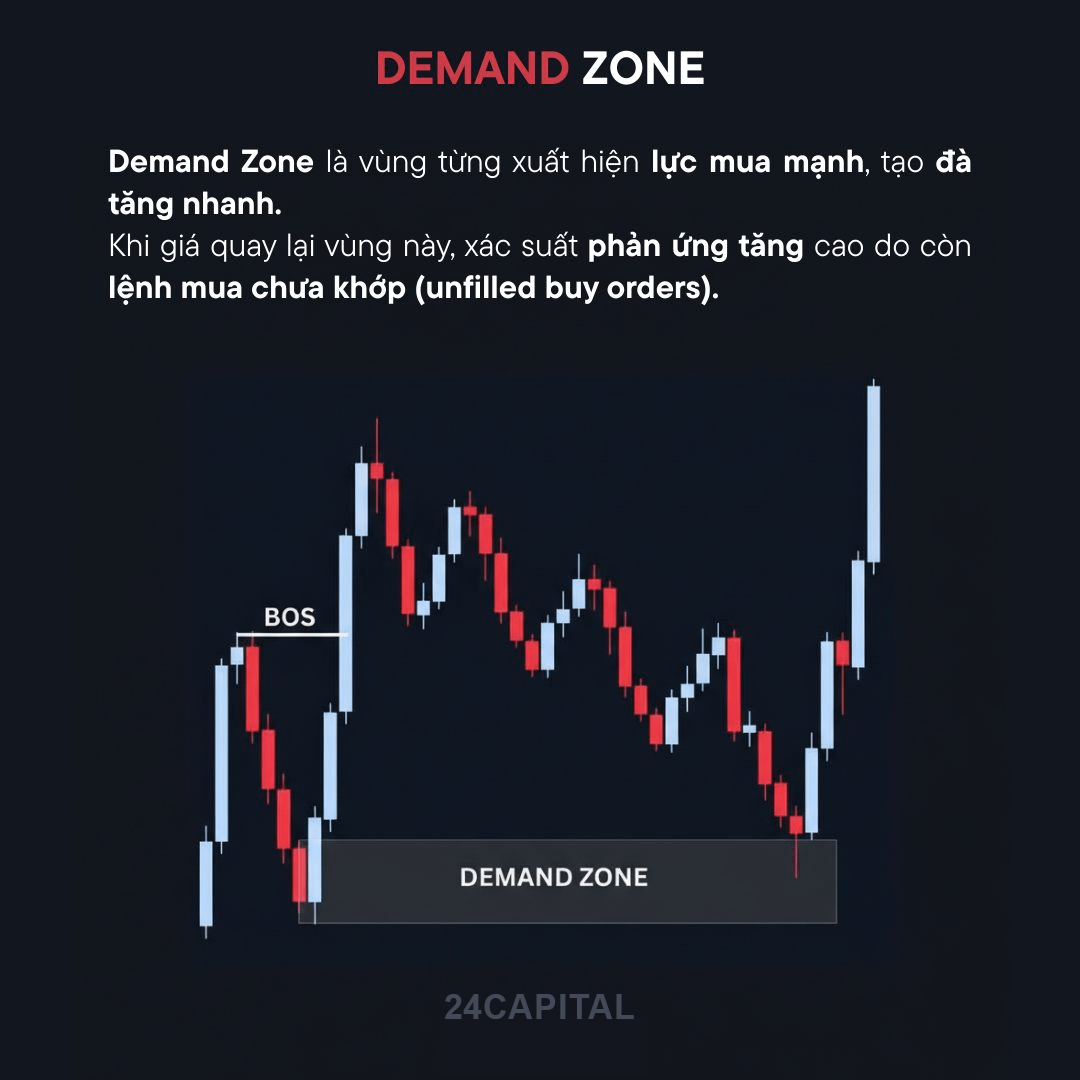
Breaker forms when:
- Initial OB does not hold the price.
- Price sweeps liquidity through OB.
- Then returns to retest from the opposite side.
What does this say?
- The old OB has been used by the organization as a liquidity trap.
- That area now becomes a new entry point in the opposite direction.
Support >< Resistance flip according to liquidity logic.
Flip Zone — Sign of change in market control
Flip Zone always comes with:
- BOS or CHoCH
- Change from HH-HL → LH-LL or vice versa.
Meaning
The price area used to be:
- Support → now becomes resistance
- Resistance → now becomes support
This represents:
Control has switched sides (buyers vs sellers).
Application
Flip Zone is very strong for:
- Continuation trend orders
- Or confirmation points for reversal after CHoCH.