
 Do you think you were hacked by a quantum computer? Wrong, you are the one who sent your head!
Brothers, we entered the cryptocurrency circle to make money, not to be philanthropists. But every day, there are people watching their coins being transferred from their wallets, and the reason is not some high-tech hacking, but because you clicked on a damn link or took a screenshot of the mnemonic phrase and saved it in your album.
Don't laugh, this might be you tomorrow.
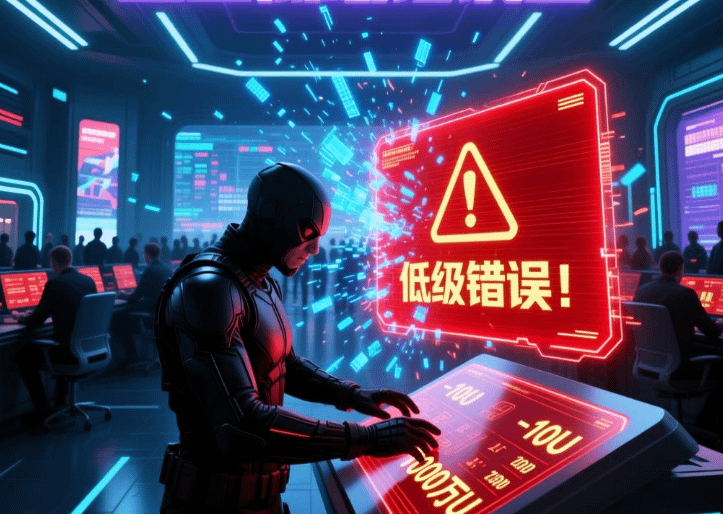
Today's article does not talk about fancy codes but how to survive in this 'dark forest'. (All practical tips, recommended to save)
Level 1: Guard your 'lifeline' (private key security)
The private key is like your bank card password + USB security token + ID card. Whoever has it is the owner of all your assets.
1. Hardware Wallet: Buy a safe for your assets
Many newcomers store private keys in computer documents, WeChat collections, or even cloud storage. This is like hanging your house key on the doorknob.
You need a hardware wallet (like L....r, T...r).
Principle: It is a device that cannot connect to the internet. The private key is always locked inside, responsible only for signing, not for going online.
Benefit: Even if your computer is infected with 100 viruses, hackers can't steal the private key stored in the hardware.
Warning: Hardware wallets must be bought from the official website! Don't save a few bucks by buying used ones on Taobao or Xianyu; they may have been tampered with, and your funds could be stolen as soon as you deposit.
2. Brain Wallet: Don't test your memory
Some people think they are smart enough to remember a complicated password. Don't be foolish!
What you think is random: 'I_Love_Bitcoin_2026'
Hacker's Dictionary: Instant break. Passwords chosen by humans are not random enough, and brute force cracking is a matter of minutes. Plus, if you forget or slightly misremember a letter, your money could vanish forever.
3. Paper Wallet/Metal Plate: The most reliable physical backup
Write down your mnemonic (the 12 or 24 words) on paper or engrave it on a metal plate.
Separate backups: Make two copies, one in your home safe, and one at your parents' house.
Don't take photos! As soon as you take a photo, it might be uploaded to the cloud, or read by input methods or photo apps. Write it down by hand instead!
Level 2: Identify the 'ghosts' disguise (anti-phishing)
Today's scammers are better at psychology than you are.
1. Fake Links: Really looks like the real thing
You receive an email: 'Metamask Reminder: Your wallet needs verification, or it will be frozen.' You panic and click in; the webpage looks exactly like the real one. You enter your mnemonic for verification... Congratulations, your money is gone.
Remember: The official will NEVER, EVER ask you to enter your mnemonic on a webpage! Anything that asks you to input it is 100% a scam.

2. Airdrop Trap: Cutting corners can lead to big losses
Suddenly, there are some unknown coins (NFTs or Tokens) worth thousands in your wallet. You want to sell them for cash. The moment you authorize the transaction, you give away your wallet permissions, and your real money (USDT, ETH) will be instantly transferred away. Strategy: Don't touch unknown coins! Pretend you didn't see them.
3. Fake Customer Service: Overly enthusiastic strangers
If you ask a question in a group, and immediately an 'administrator' privately messages you: 'Dear, need help? Please click this link to fix it.' They are all scammers! Administrators won't privately message you or ask you to do anything.
Level 3: Practical life-saving rules (zero-trust principle)
How to ensure absolute security?
Even if you're a tech novice, as long as you follow these iron rules:
Multisig Wallet (2-of-3): Conditional large holders can set up a multisignature. A transfer requires agreement from 2 out of 3 devices. Don't worry if you lose one phone.
Separate large and small amounts: Use a 'hot wallet' (for small change) for daily transactions; store large funds in a 'cold wallet' (never connected to the internet, only deposits allowed).
Regular Drills: Try once a year to see if your backup mnemonic can restore your wallet. Don't wait until you actually lose it to find out you've misspelled a word.
Revoke Authorization: Regularly use tools like R....e.cash to check which websites you’ve given permission to withdraw your coins, and revoke all unnecessary ones!
Summary: In this circle, only the paranoid can survive.
Operational security (OpSec) is not about making you paranoid but about giving you **'confidence'**. When you have done all this: hardware isolation, physical backups, zero-trust anti-phishing, you will sleep soundly at night.
Remember: Your assets only belong to the one who holds the private key. Protect it well.
(Do you find this lifesaving guide useful? Click 'View' and share it with your crypto friends to help them save millions!)👇

------------I---------am-------the--------boundary--------line--------------
Disclaimer: The content of this article is intended to share business economic models and disseminate knowledge, not to provide any specific advice. The author does not participate, invest, operate, recommend, share, or privately analyze any projects. Before making any decisions, we strongly advise you to conduct independent research and analysis and make informed decisions based on your personal circumstances.
If you like this content, feel free to like, follow, comment, and share for more technical analyses and more 🌹 #sol #bnb #eth #btc #黑客


