

Gained the second prize in the new concept composition on platform x 🥈, earning twice as much as the S&P 500, can't help but admire it!
Retail investors panic and lose money, he takes advantage of the panic to arbitrage!
In specific details, he takes advantage of the 12-month tariff to cause market fluctuations:
Since the beginning of last year and continuing to now, the script has been playing out, on November 1, the target is some EU member countries, only 21 days away from the announcement of the tariff policy, this timing may sound very familiar, as it is an important part of the playbook.
Afterwards, the S&P 500 futures expanded losses to -3.5% before the weekend close.
Trump always starts with punitive and threatening messages, which is part of his negotiation strategy. And it works for him. The confrontation with Dongda in October ended with a new trade agreement that lifted restrictions on rare earth exports that were damaging to Beautiful Country. This time, the announcement was made on Saturday, and the market futures wouldn't open until Monday night because Monday is a federal holiday. The market's reaction is likely to be accompanied by similar emotional sell-offs, but given the time to digest the news, the impact may not be as severe. This is all part of the tariff playbook that we will outline next.
Tariff playbook script: In 2025, our investment strategy nearly doubled the returns of the S&P 500, mainly because we capitalized early on the volatility of asset prices during the trade war.
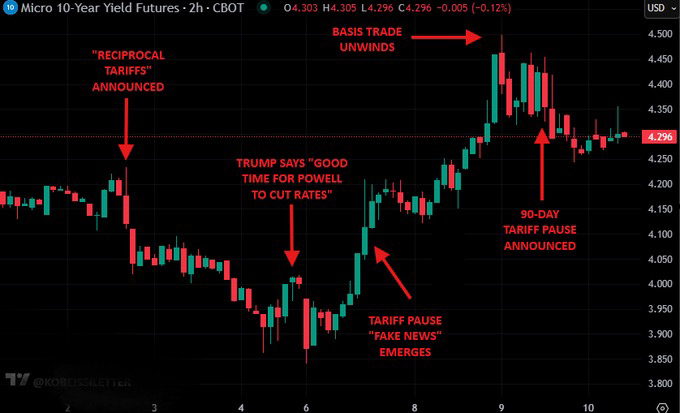 Below, we outline the precise strategy we used to achieve this: a comprehensive step-by-step playbook to understand the trade war:
On Friday, Grandpa Trump released a cryptic message hinting at tariffs on specific countries or industries. The market declined due to rising uncertainty. This time, the threat was to impose tariffs on Denmark starting on Friday.
Later that same day, or shortly thereafter (this time on Saturday), a large new tariff is announced, usually 25% or more.
On Saturday and Sunday, he repeatedly doubled down on the threat of tariffs to exert pressure while the market was closed, maximizing psychological impact.
Over the weekend, countries targeted by the new tariffs typically respond publicly or express a willingness to negotiate.
On Sunday evening at 6 PM ET, when futures reopened (this time on Monday night), the stock market futures fell in the initial emotional reaction to the tariff headlines.
On Monday and Tuesday, continue publicly applying pressure, but investors begin to realize that the tariffs have not yet taken effect and are still scheduled to take effect in a few weeks, such as on February 1.
By Wednesday of the same week, bargain hunters intervened and triggered a rebound, but this trend often fades and leads to further declines. This is usually where smart money starts to buy in.
The following weekend, about a week later, news is released that discussions are ongoing and he is working with leaders targeted by the tariffs to resolve issues.
On that Sunday evening at 6 PM ET, futures opened significantly higher as optimism returned, but the gains faded when the cash market opened on Monday.
After Monday's opening, senior officials like Treasury Secretary Bessent appeared on live television to reassure investors and emphasize progress toward an agreement.
In the following 2-4 weeks, various members of the government continue to tease progress on the trade agreement.
Announce a trade agreement, and the market hits a new record high.
Repeat step #1.
Of course, this is not a guaranteed roadmap, but based on our experience, almost all flare-ups of trade wars since January 2025 have followed a roughly similar path. Note: This time, Grandpa's plan to acquire Greenland is certainly a bigger demand than merely scaling back some export controls with Dongda. Therefore, the playbook may be more cumbersome, but it will follow a similar sequence of events. Timing is key: the entire negotiation strategy revolves around timing and pressure. He provides 2-3 weeks of lead time before tariffs take effect to allow for an agreement to be reached. The goal is for these tariffs to never really take effect; he wants a deal. This also explains why these announcements are increasingly made over the weekend when the market is closed. And he will push threats to the edge. That's why they work;
