
TD sequence signal is lit up, short-term recovery is expected
Solana (#sol ) was accurately marked by the TD sequence indicator at the local top that appeared in early January, followed by a sharp price drop. However, the downward trend has come to an end, and the indicator has now issued a new buy signal. The timing of this signal is crucial—it appears after the funds have been exhausted, rather than during the distribution phase, which means that seller strength may be weakening.
It is important to note that this does not equal a trend reversal. It is more like the market has entered a short-term recovery phase, and sellers have temporarily lost control. The positive response of the SOL price also confirms this, but the best effect of the indicators is based on the premise that the market structure remains relatively balanced, and currently, the market is still in a mixed state.
Price stabilization, rebound hindered
SOL has made a strong rebound from the support level of $100 and is currently recovering to around $104, indicating that buyers are still actively entering the market. However, the overall market structure still reflects a declining regression trend, limiting the upside potential. Although the price is above the regression mean, this mean has previously rejected rebounds around $120 and $146 multiple times, making the current rebound seem more like stabilization rather than a strong breakout.
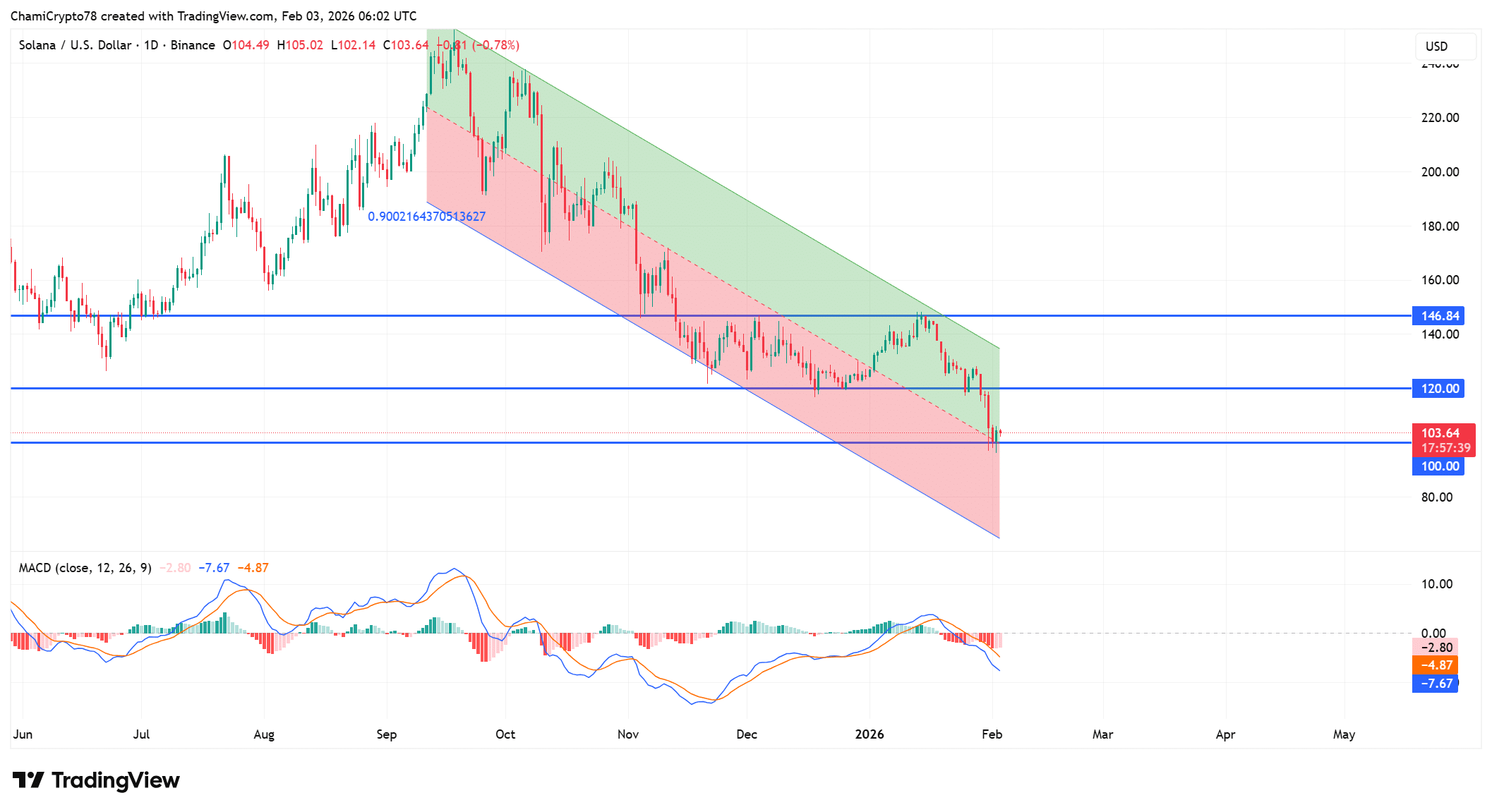
As long as SOL holds the $100 support, the rebound remains valid. However, if it fails to return above the regression mean, the increase may be limited to a correction phase. The MACD indicator remains below the zero line, confirming an overall bearish structure, but the histogram is tending to flatten, suggesting that selling pressure is easing, providing technical support for recovery.
Spot buying drives the rebound
In spot trading, buyers still dominate the market, indicating that even though prices are facing downward pressure recently, traders are still actively buying. Unlike the initial stage of the decline where aggressive buying was hindered, the current buying is more effective, suggesting that selling pressure is diminishing and a recovery trend is beginning to emerge.
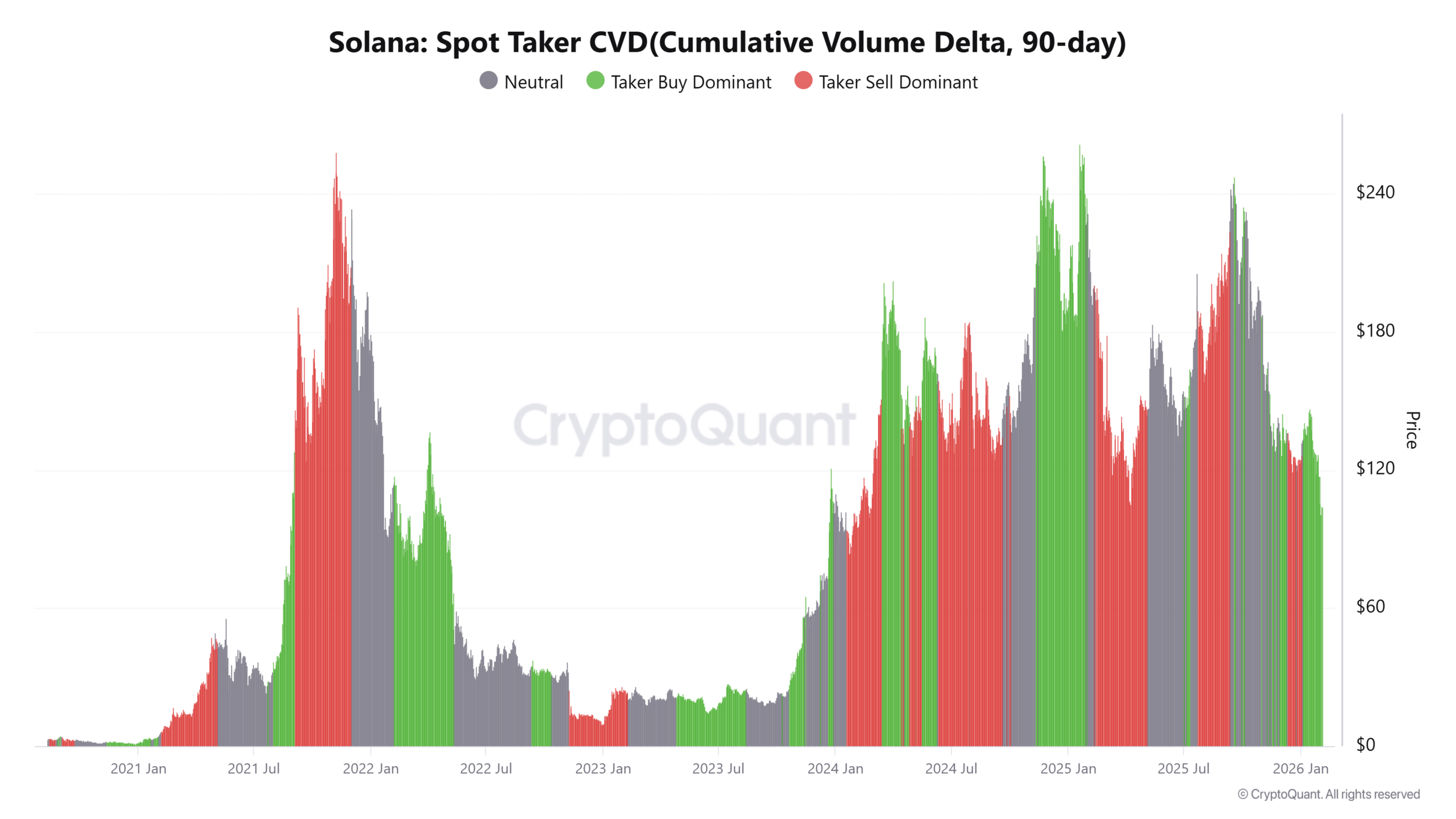
Although buyers are dominant, sellers are still active near regression resistance, so short-term rebounds may be controllable rather than explosive increases. As long as buyers continue to dominate, prices may maintain a slow upward trend instead of experiencing sharp pullbacks.
Exchange capital outflow supports stabilization
Recently, the net outflow of SOL in spot trading remains negative, even as prices recover, with approximately $52.4 million of SOL leaving exchanges. This indicates that holders are more inclined to hold long-term rather than sell during price increases. The reduction in outflow has decreased the supply available for immediate sale, lowering the risk of a pullback, and combined with strong buying, provides support for price stabilization.
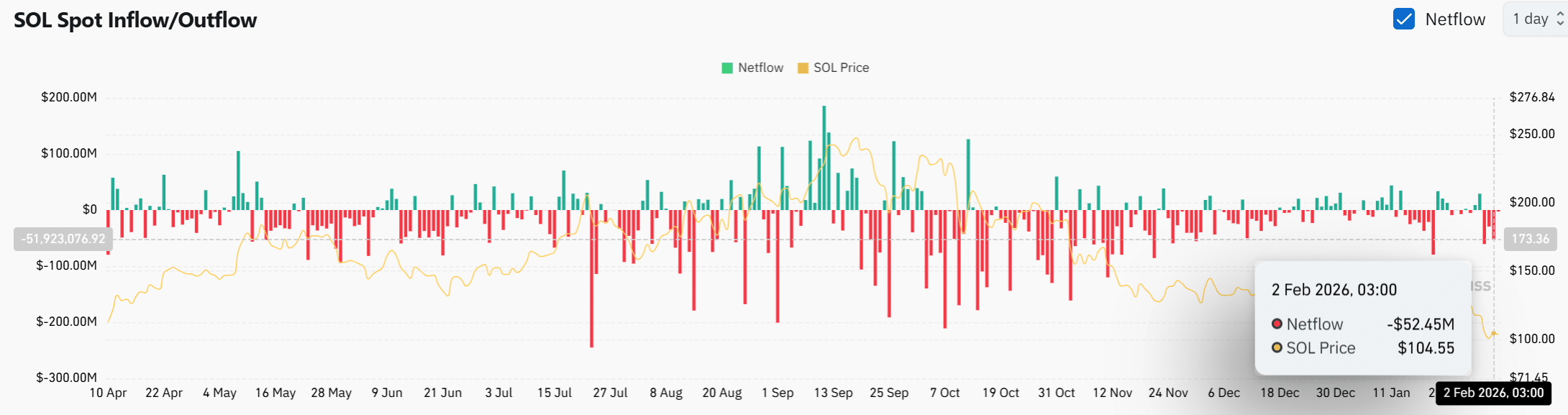
As long as the net outflow remains negative, the downward trend is difficult to sustain, which also supports the current controllable recovery structure.
Summary
The recovery of Solana is robust rather than an emotional rebound, aided by TD buy signals, weakening market momentum, strong spot demand, and continuous outflows. However, prices are still limited by declining regression resistance, and in the short term, it seems more like a stabilizing rebound rather than a trend reversal.
To achieve sustained growth, SOL needs to regain key regression mean levels, and holding the $100 support is crucial for maintaining recovery. Overall, the recovery is robust, but the subsequent trend still depends on whether buyers continue to dominate the market.#solana
