Introduction: why this rebound matters
The recent GoldSilverRebound was not a calm technical bounce that only chart watchers noticed. It was loud, fast, and emotional, the kind of move that forces everyone in the market to reassess positioning. Gold and silver did not drift lower and politely recover. They dropped hard, flushed confidence, and then snapped back with authority. Moves like this rarely happen in quiet environments. They usually appear when leverage, expectations, and macro pressure collide at the same time.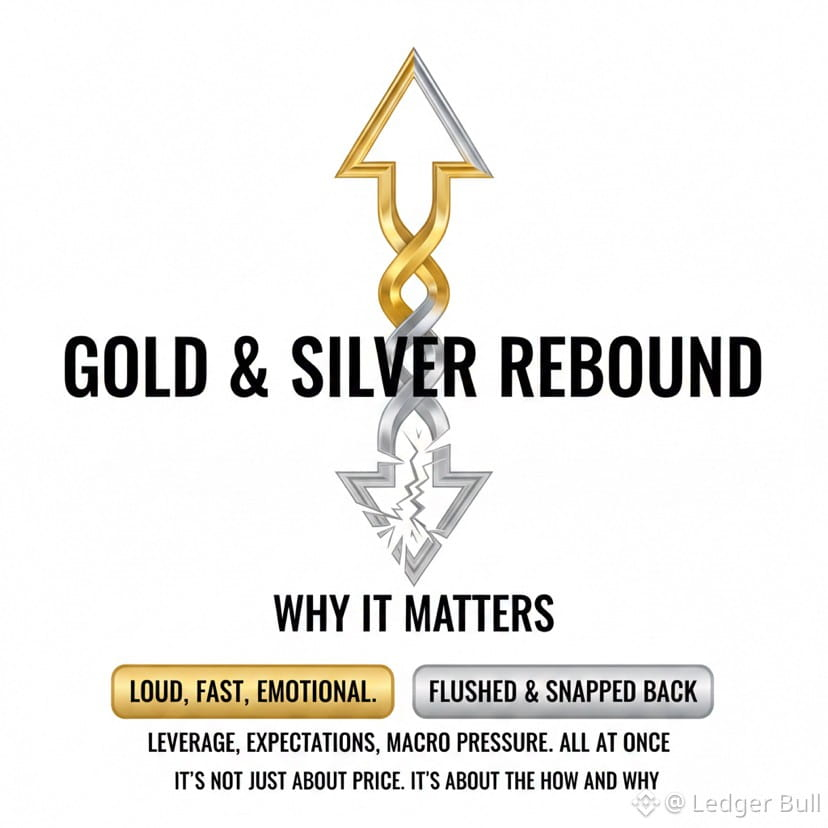
This is why the rebound deserves a deeper look. Not because price went up, but because of how and why it happened.
The setup before the fall
Before the selloff, gold and silver had become comfortable trades. Momentum was strong, sentiment was confident, and positioning had grown heavy. When markets reach that stage, they become fragile. They no longer need bad news, only a reason for participants to reduce risk.
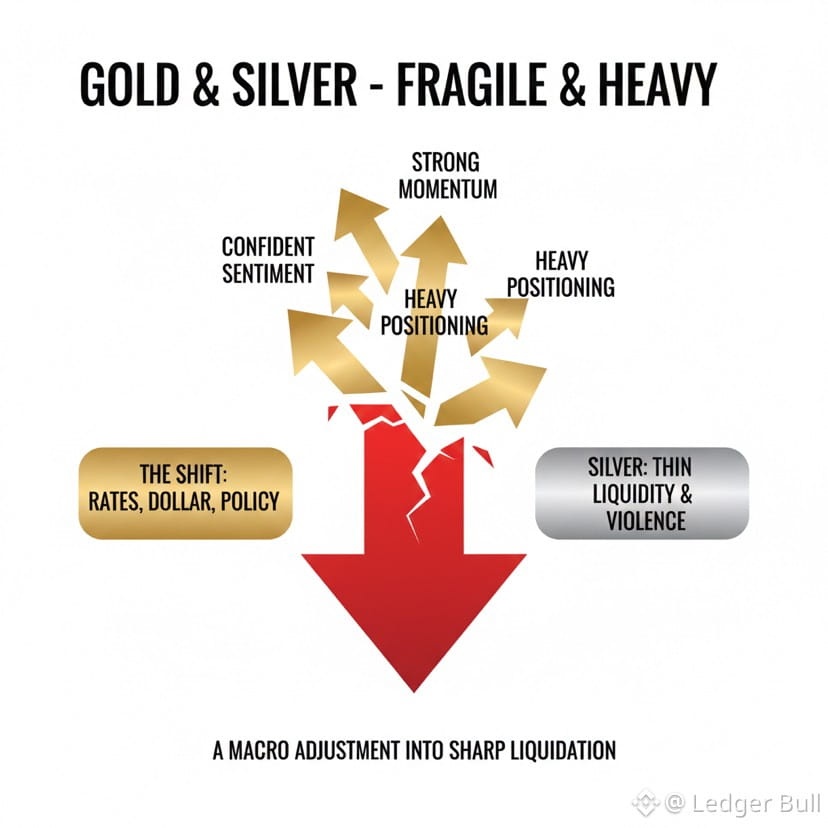
That reason came through shifting expectations around rates, the dollar, and policy direction. Once that narrative shifted, even slightly, the reaction was exaggerated. Gold fell not because its long-term role disappeared, but because traders who were positioned for smooth continuation were suddenly forced to defend or exit.
Silver followed the same path but with more violence. Its thinner liquidity and dual nature magnified the move, turning a macro adjustment into a sharp liquidation.
The mechanics of the selloff
This drop had the signature of forced selling rather than thoughtful distribution. Stops were triggered. Margin pressure increased. Traders were pushed out rather than choosing to leave. That distinction is important because forced selling tends to end abruptly.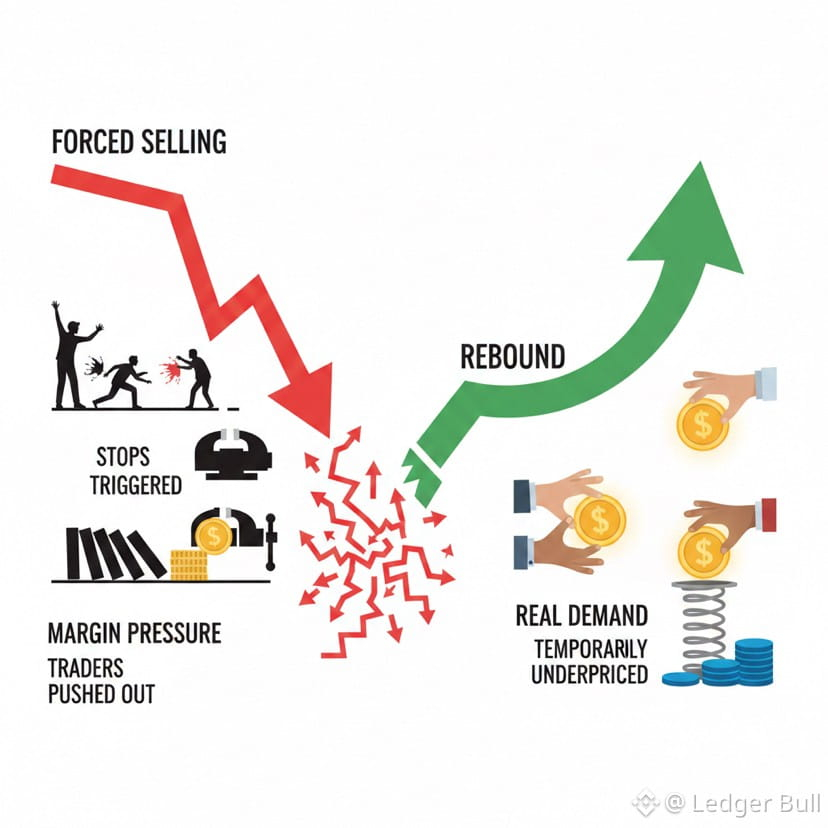
Once the bulk of that pressure is released, the market often finds itself temporarily underpriced relative to real demand. That is the moment when rebounds are born.
Why buyers stepped in so fast
The rebound did not come from hope. It came from exhaustion. Sellers ran out, and buyers who had been waiting finally got the entry they wanted. Gold, in particular, has a deep pool of participants who do not chase strength but respond aggressively to weakness.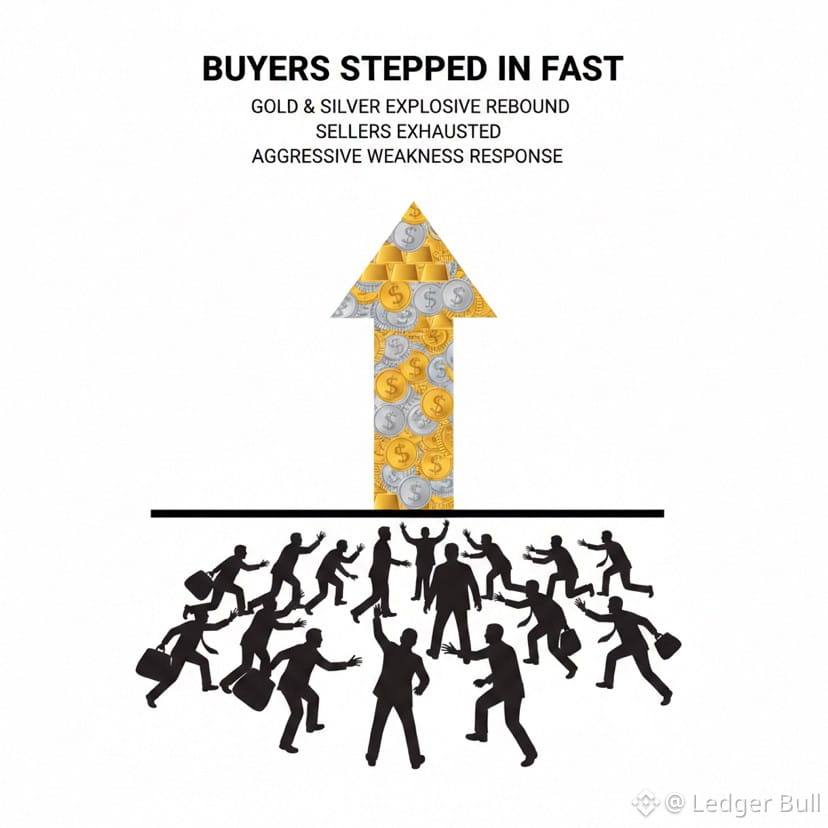
These buyers are not all traders. Some are long-term allocators. Some are physical buyers. Some are institutions looking for balance in uncertain conditions. When price falls fast enough, all of them show up at once, and that creates the kind of vertical bounce the market just witnessed.
Silver benefited from that flow but added its own acceleration. Once silver turns, it rarely moves gently. Its rebounds feel explosive because supply dries up quickly and price has to jump to find sellers.
Gold and silver are not the same trade
Gold is a macro mirror. It reflects confidence in policy, stability in currencies, and the direction of real yields. When gold sells off sharply and rebounds just as sharply, it often means the macro environment is unstable, not resolved.
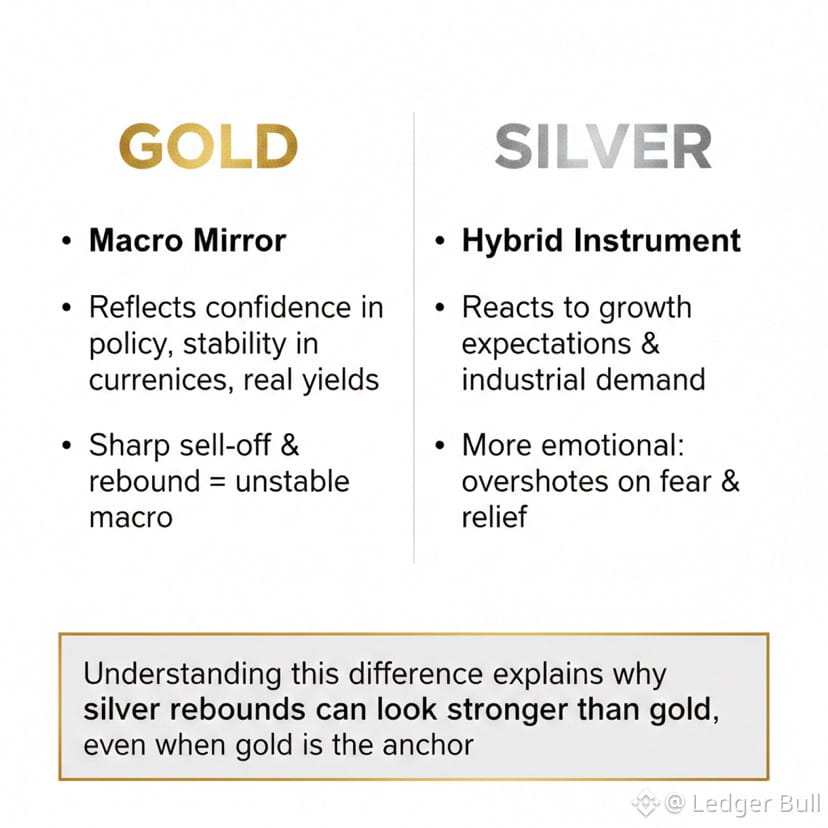
Silver is a hybrid instrument. It listens to the same macro signals as gold but also reacts to growth expectations and industrial demand. That makes silver more emotional. It overshoots on fear and overshoots again on relief.
Understanding this difference matters because it explains why silver rebounds can look stronger than gold rebounds, even when gold is the anchor holding the structure together.
What makes a rebound healthy
Not all rebounds deserve trust. A healthy rebound shows restraint after the initial bounce. Price holds higher levels. Volatility cools slightly. Buyers defend dips instead of chasing spikes.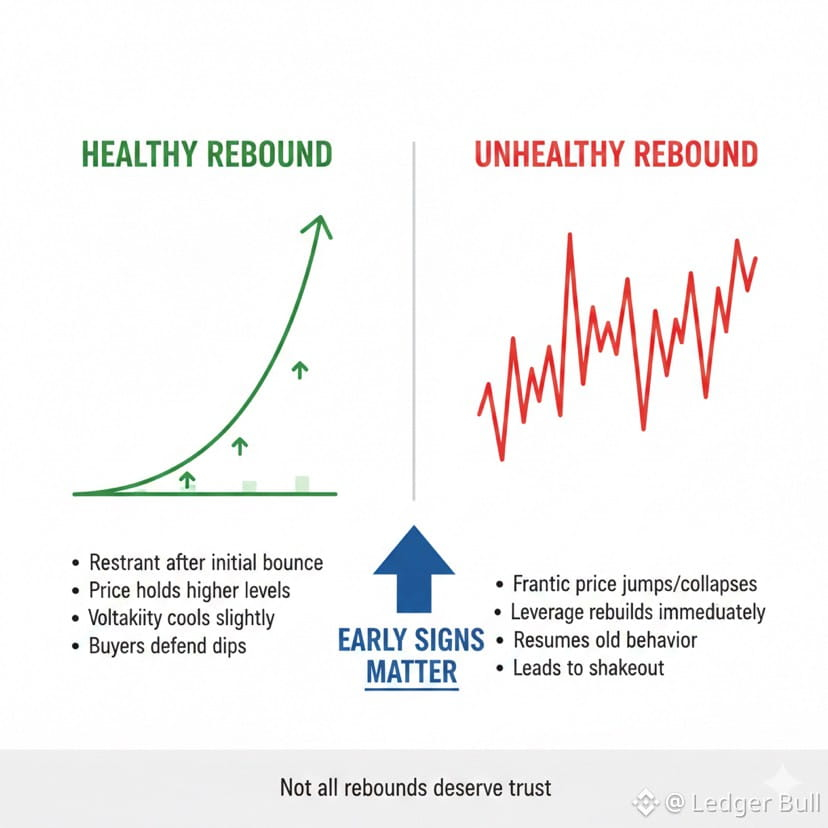
An unhealthy rebound feels frantic. Price jumps, then collapses. Leverage rebuilds immediately. The market tries to resume the old behavior without resetting. That usually leads to another shakeout
The early signs matter more than the headline gain.
The role of the dollar and rates
Gold does not move in isolation. The direction of the dollar and the path of rate expectations remain the biggest external forces. When the dollar strengthens aggressively, gold feels pressure. When yields rise faster than inflation expectations, gold struggles.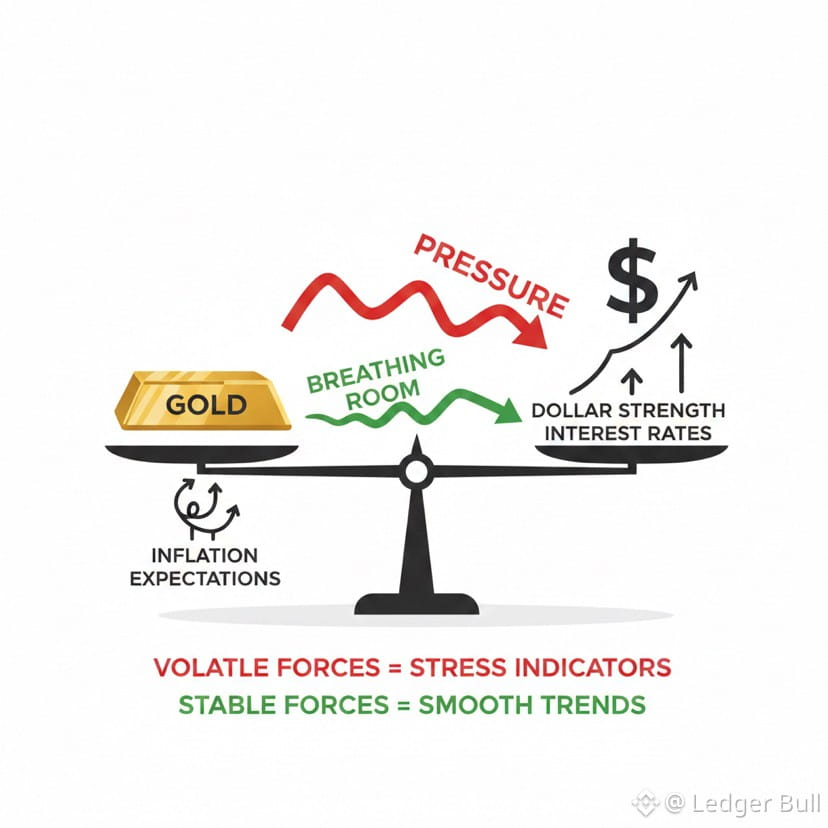
If those forces stabilize, gold gets breathing room. If they remain volatile, gold and silver will continue to behave like stress indicators rather than smooth trends.
Possible paths from here
One path is continuation. The market flushed excess, found real demand, and now rebuilds for another move higher. This path usually comes with consolidation, not instant upside.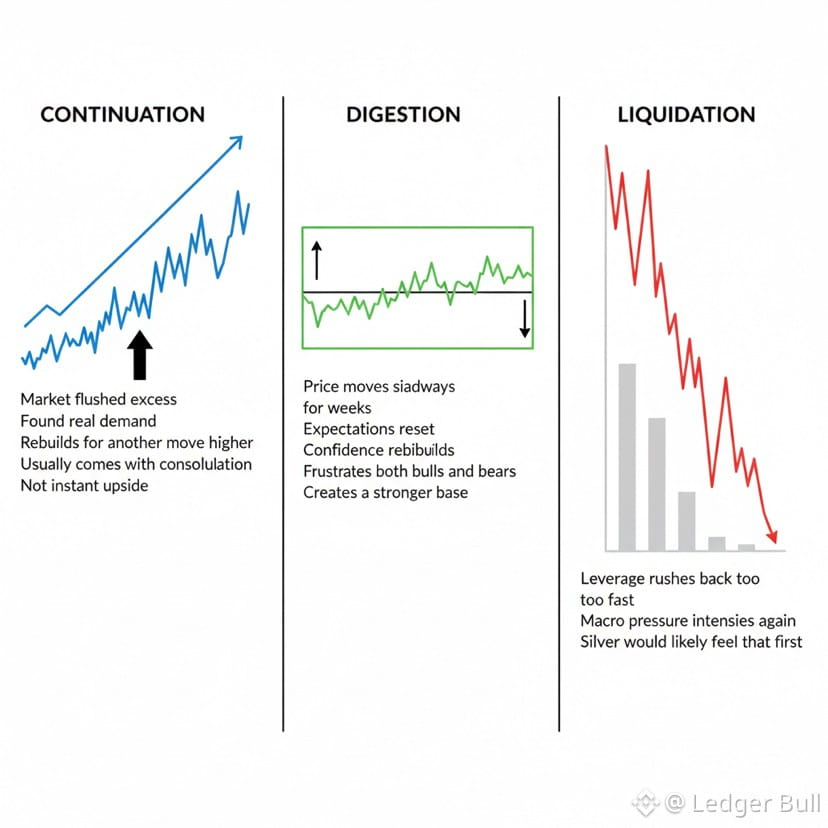
Another path is digestion. Price moves sideways for weeks while expectations reset and confidence rebuilds. This frustrates both bulls and bears but often creates a stronger base.
The final path is another liquidation. That happens if leverage rushes back too fast or if macro pressure intensifies again. Silver would likely feel that first.
What the rebound is really telling us
The most important message of the GoldSilverRebound is not direction, it is sensitivity. The market is highly reactive. Liquidity is uneven. Confidence can flip quickly. Gold and silver are acting less like sleepy assets and more like active signals.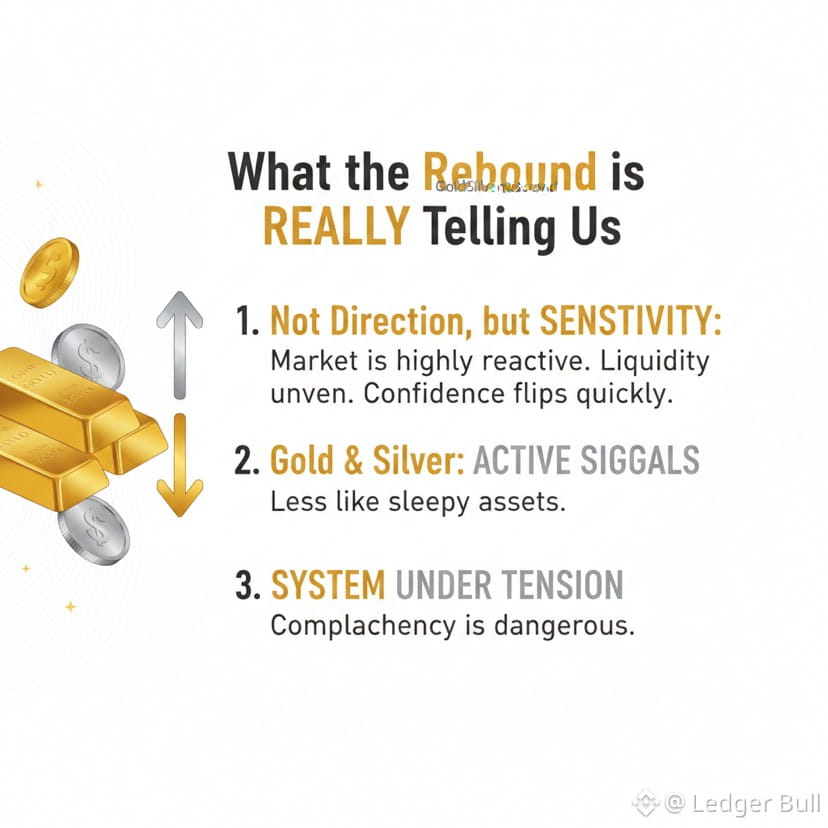
When metals move like this, it usually means the broader system is under tension. That does not automatically mean collapse, but it does mean complacency is dangerous.
Let’s go
This rebound does not invalidate the long-term role of gold and silver. If anything, it reinforces it. Sharp drops followed by sharp recoveries are typical of markets that are still relevant, still watched, and still heavily used as hedges and expressions of macro belief.
GoldSilverRebound looks less like the end of a story and more like a reminder. These metals do not move quietly when confidence is fragile. They move fast, they punish crowding, and they reward patience.