
Panic emotions are at an all-time high, and the crypto market is experiencing a collective 'stampede'.
The recent crypto market can be described in one sentence: emotions collapsed first, leading prices to plunge.
As the fear and greed index rapidly declines, market sentiment has clearly lost control, and cryptocurrencies are undergoing a severe correction.
As of the time of writing, Bitcoin (#BTC ) has already fallen to around $74,500, and the total market capitalization of the entire crypto market has also dropped in sync, hitting a low not seen since April 2025. Many investors are exclaiming: this drop came quickly and fiercely.
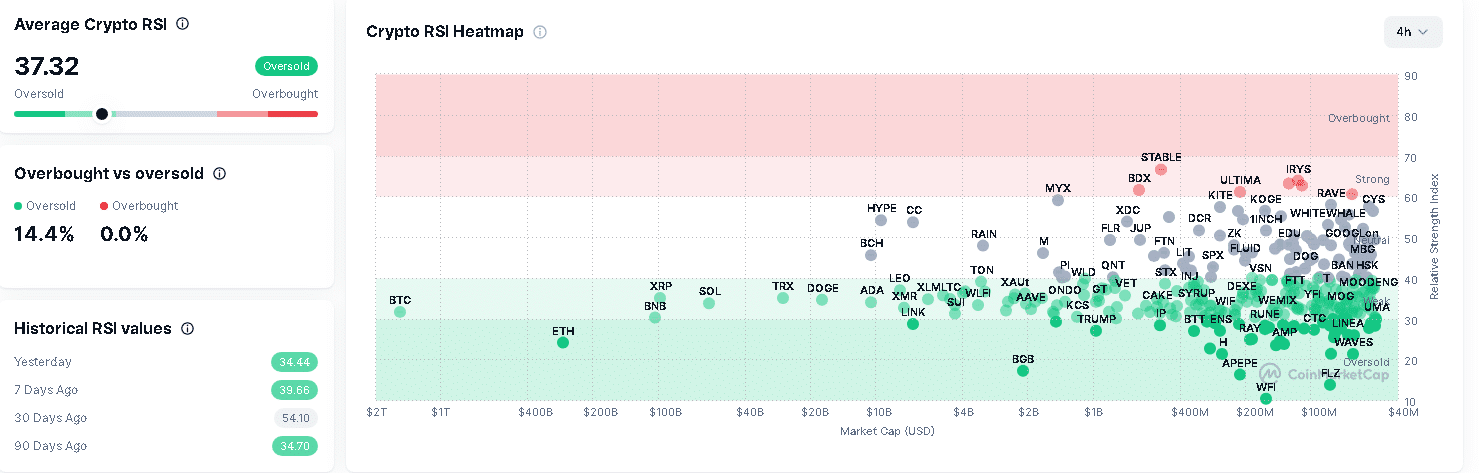
From a technical indicator perspective, most mainstream cryptocurrencies' RSI has fallen into deep oversold territory, with only a handful still in the 'overbought' category. The continuous selling pressure has completely thrown off the market rhythm, and the sense of direction is extremely weak.
Has Bitcoin bottomed? The market is still looking for answers.
A key indicator is sending strong signals—
The Fear and Greed Index has plummeted from the 'Fear' range of 29 directly to 'Extreme Fear' of 14, hitting a new low in nearly six weeks. This indicates that retail sentiment has hit rock bottom.
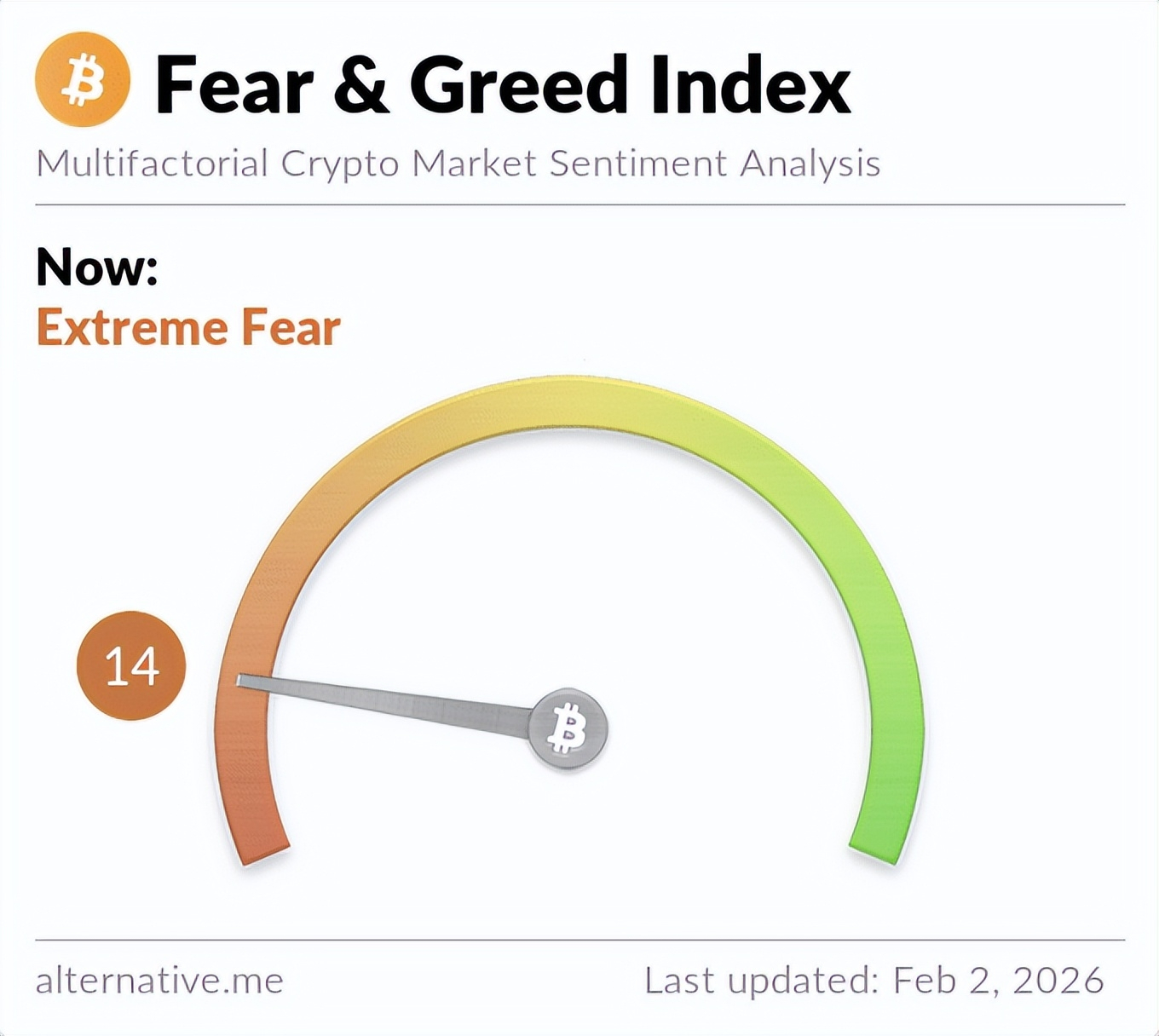
But the question is: once sentiment hits bottom, will the price necessarily reach the bottom?
Currently, the answer still leans towards caution.
The overall market remains weak, with the average RSI still hovering below 50. Although a short-term rebound may occur at any time, this rebound is more like 'catching a breath' rather than a trend reversal.
Bitcoin's RSI has dropped below 30, indicating a typical state of extreme overselling; Ethereum (ETH) has not been spared either. Currently, about 14.4% of crypto assets are in the oversold range, and market uncertainty remains very high, which is also a significant reason for the continued tension in investor sentiment.
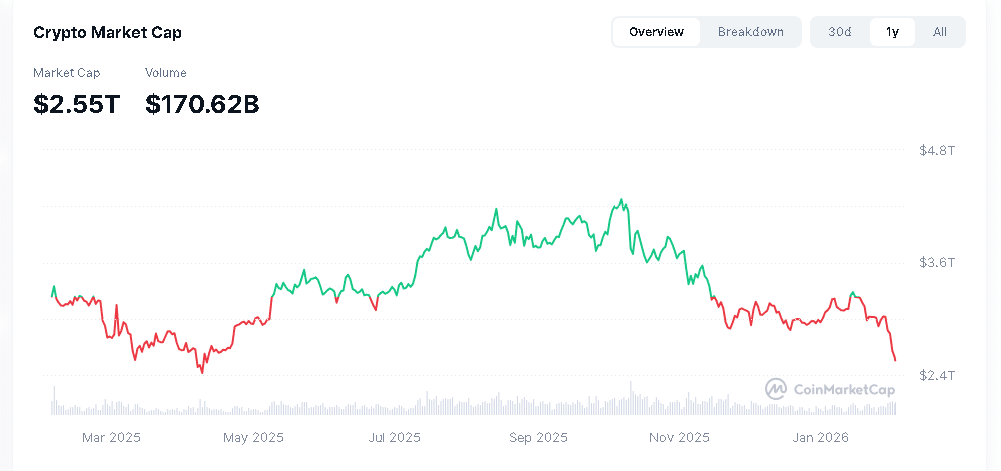
The total market capitalization has fallen to 2.55 trillion USD; is the bottom near?
From an overall scale, the total market capitalization of the crypto market has fallen back to about 2.55 trillion USD, significantly reduced compared to early 2025 and close to the low point in April.
This position does indeed evoke thoughts of a 'stage bottom'.
If funding sentiment eases slightly, a technical rebound would not be surprising.
But looking at it another way, once this range is lost, the market may face a deeper round of decline, and short-term volatility should not be underestimated.
What factors could change the situation?
For the market to stabilize, it cannot do without 'external forces'.
On one hand, if regulatory policies like the Clarity Act gradually become clear by 2026, it will help alleviate long-term uncertainties and reignite institutional and long-term capital confidence.
On the other hand, if the Federal Reserve starts a rate cut cycle before 2026, a recovery in liquidity would undoubtedly be a significant positive for the crypto market.
On the contrary, if there is no action from the policy side for a long time, the volatility may continue.
Data shows that in late January, the net outflow of Bitcoin funds reached 890 million USD, with about 10,000 BTC leaving the market, indicating that some funds are choosing to wait and see or withdraw.
In addition, the flow of ETF funds is also crucial. Only sustained positive inflows can truly restore market confidence, rather than relying on emotional rebounds to 'hold on'.
Written at the end.
The current crypto market has only one keyword: fragile.
Bitcoin has fallen below 75,000 USD, and panic sentiment is spreading quickly; caution is still needed in the short term.
Whether a real recovery can be welcomed next depends on two core factors:
Whether regulation is clear and whether institutions are willing to bet again.
Before the answer emerges, the market may still have to undergo a difficult period of volatility.#BTC何时反弹?

