
#稳定币 not just a payment tool
You may have always thought that stablecoins are just 'digital cash' in the crypto world, used for transfers, payments, or trading. But in reality, their role goes far beyond that. A recent report pointed out that dollar-backed stablecoins are quietly becoming a new tool for the U.S. to expand its monetary influence — and they also allow real dollars to stay domestic, without easily flowing out.

Dollar Stablecoins: Behind-the-Scenes Secrets
The report from Rabobank mentioned that when foreign companies want dollar stablecoins, U.S. issuing institutions typically convert this demand into the purchase of government bonds. In other words, companies receive digital dollars, while the actual dollar funds flow back into U.S. government accounts, providing financial support for the fiscal deficit.
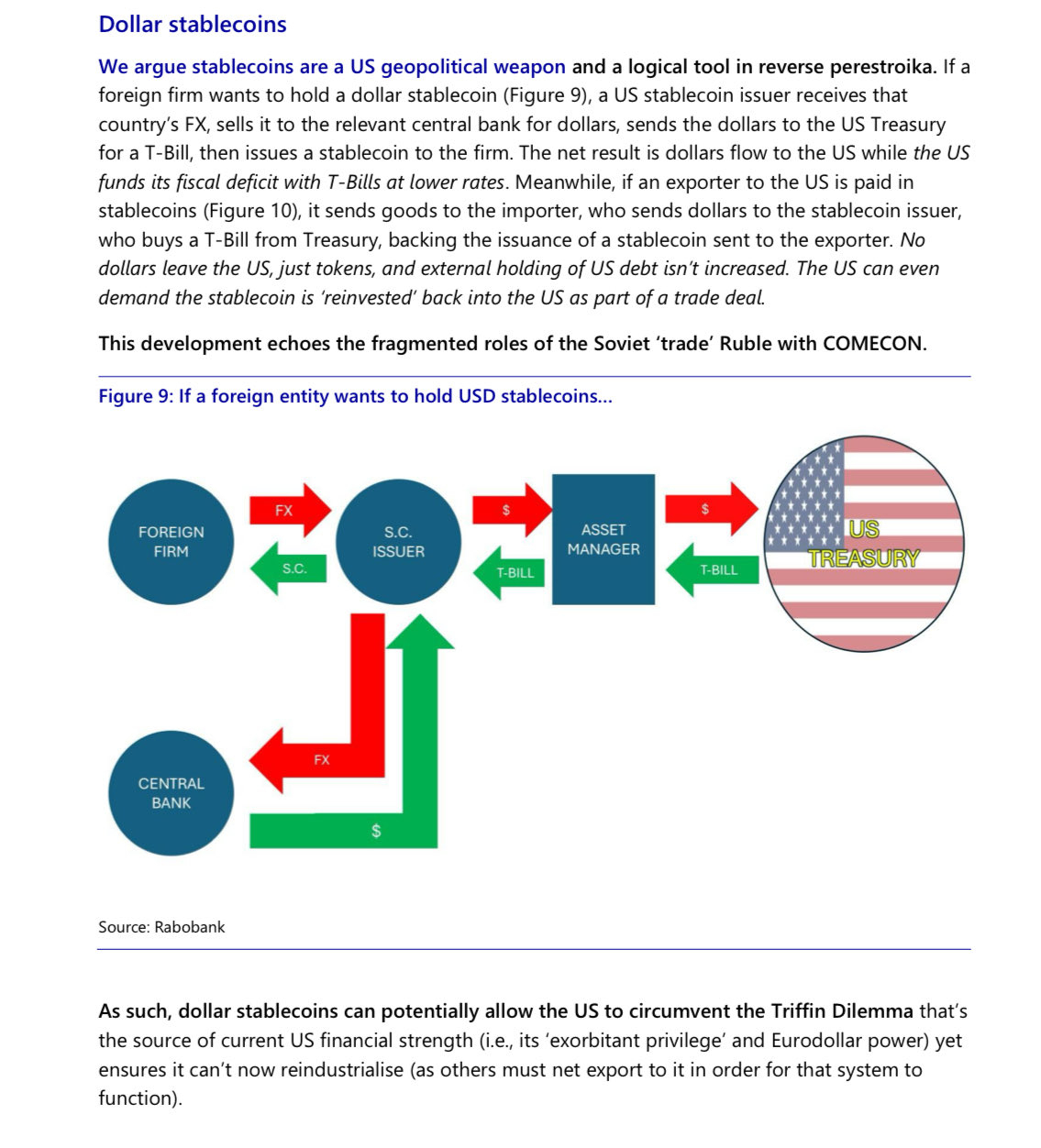
In trade scenarios, this mechanism is even more clever. US importers pay overseas exporters with stablecoins, but the dollars actually remain in US Treasury bonds. In other words, dollars 'go abroad' in digital form, but real control still lies in the hands of the United States. This is somewhat like the trade rubles of the Soviet era, but it is more modern and efficient.
Non-US dollar stablecoins are on the rise
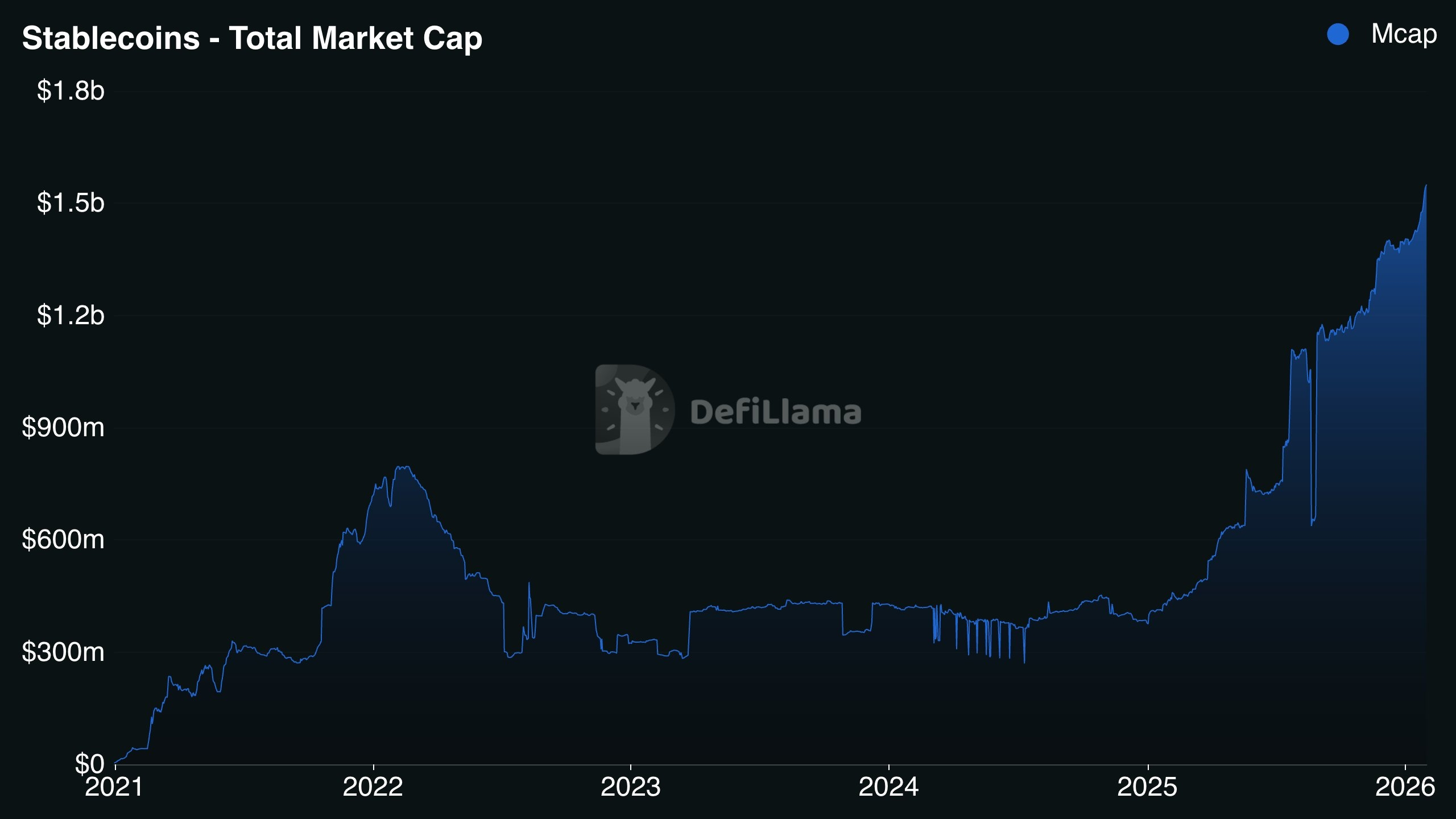
Of course, US dollar stablecoins are not the only option. In recent years, non-dollar-pegged stablecoins have been gradually gaining market share. For a long time, over 99% of stablecoins were pegged to the dollar, but now that proportion is declining.
In the past year, the supply of non-US dollar stablecoins has surged by 260%, with a total market value of about $1.55 billion. Although they are still much smaller compared to US dollar stablecoins, their importance cannot be ignored, especially in global trade and cross-border payments.
Crypto Cards: Making Stablecoins Everyday
The growth of stablecoins is not only reflected in the investment market; they are quietly integrating into our daily payments. The most typical example is cryptocurrency cards. Once, these cards were just niche toys, but now the market size has reached $18 billion.
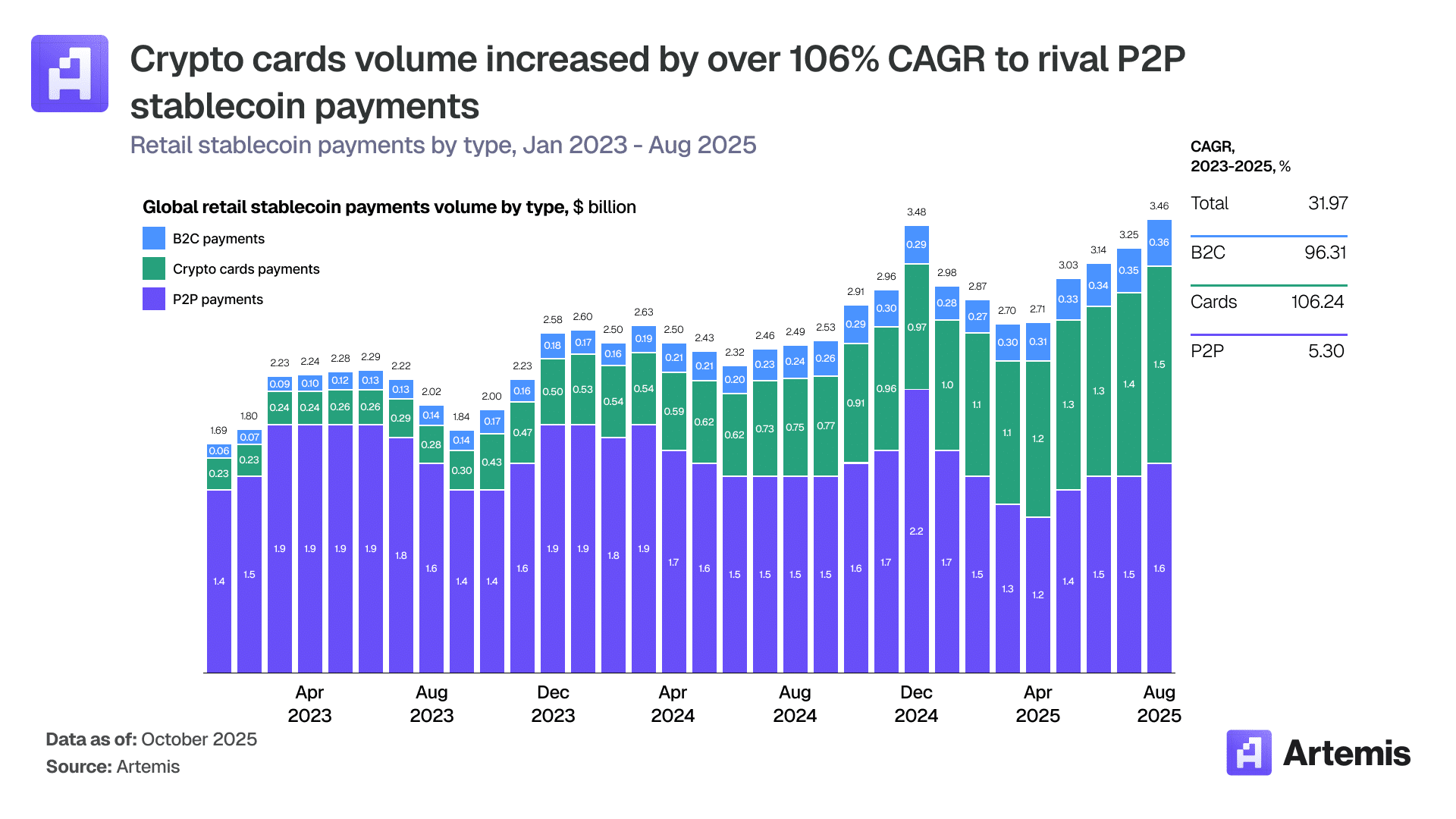
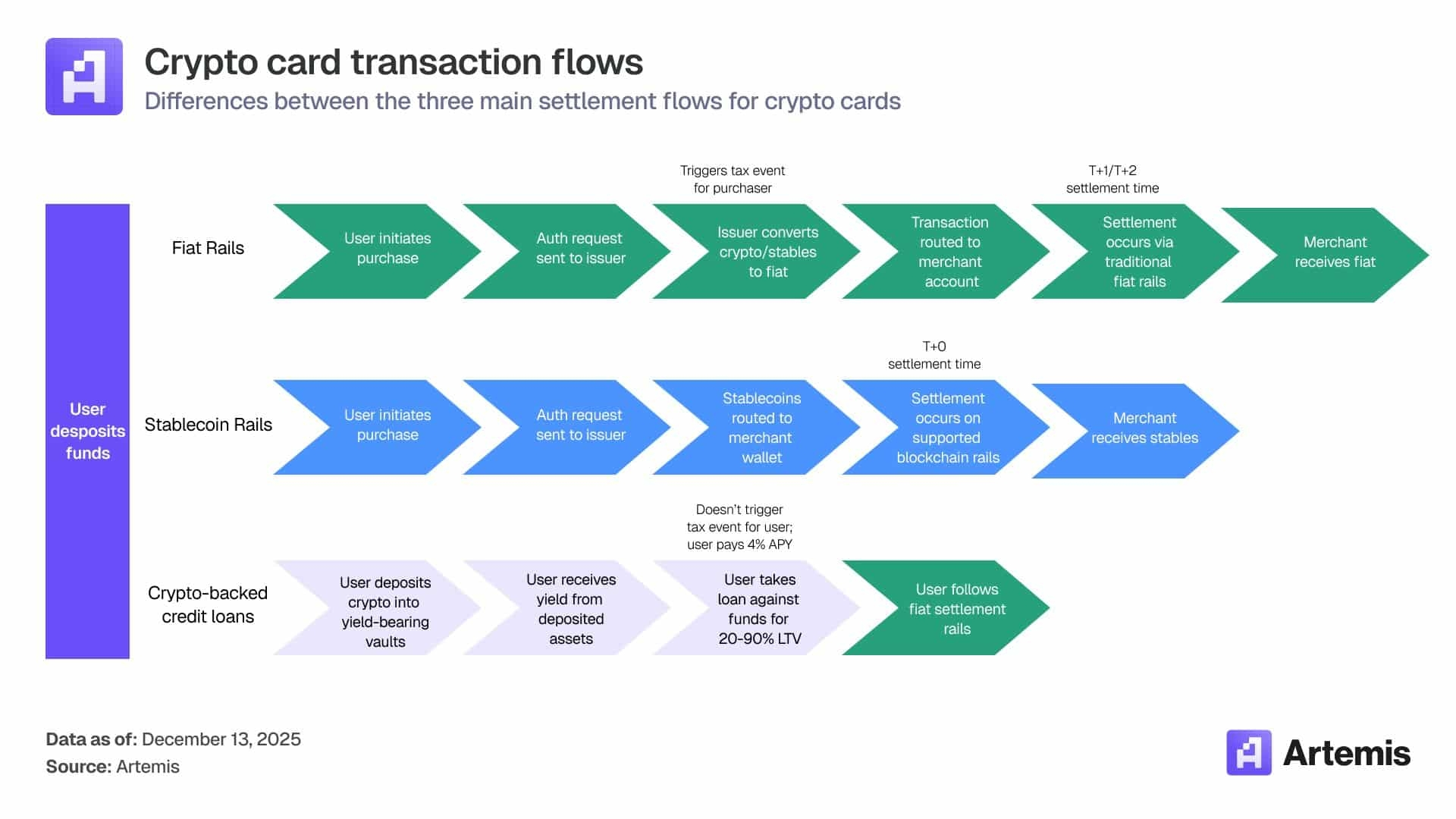
The growth in trading volume is even more astonishing: at the beginning of 2023, the monthly trading volume was about $100 million, and now it has surpassed $1.5 billion, with an annual growth rate exceeding 100%. Interestingly, these crypto cards are not meant to replace Visa or Mastercard; they simply run on top of the existing payment networks. The funding source behind them is stablecoins completing transactions, while card organizations handle settlement and collection. In simple terms, at the moment you swipe your card, what seems like a regular payment is actually digital dollars quietly flowing.
Digital Dollar: A New Way to Export Power
Overall, US dollar stablecoins allow the United States to export monetary influence without actually 'sending dollars abroad.' At the same time, with the popularity of crypto cards and everyday payments, the usage scenarios for digital currencies are becoming increasingly rich. Stablecoins are not just financial instruments; they are becoming new weapons in global currency competition.
In the future, when you swipe a crypto card or make a cross-border payment with stablecoins, you may not even realize it— the digital dollars in your hands are actually helping the United States 'quietly export power.'