
Last night I was sitting at the table trying to figure out where all my digital photos and work files are actually supposed to be stored. You know how it is when you suddenly realize that the "cloud" is not actually a cloud, but just someone else's computer that you pay for every month. I started studying Walrus because I wanted something more permanent that didn't look like another trap with a monthly subscription.
It took me some time to figure out their payment system because it doesn’t resemble a typical credit card bill at all. I realized that using this system, I’m not just renting a folder — I’m actually purchasing a specific segment of the network for a certain period of time.
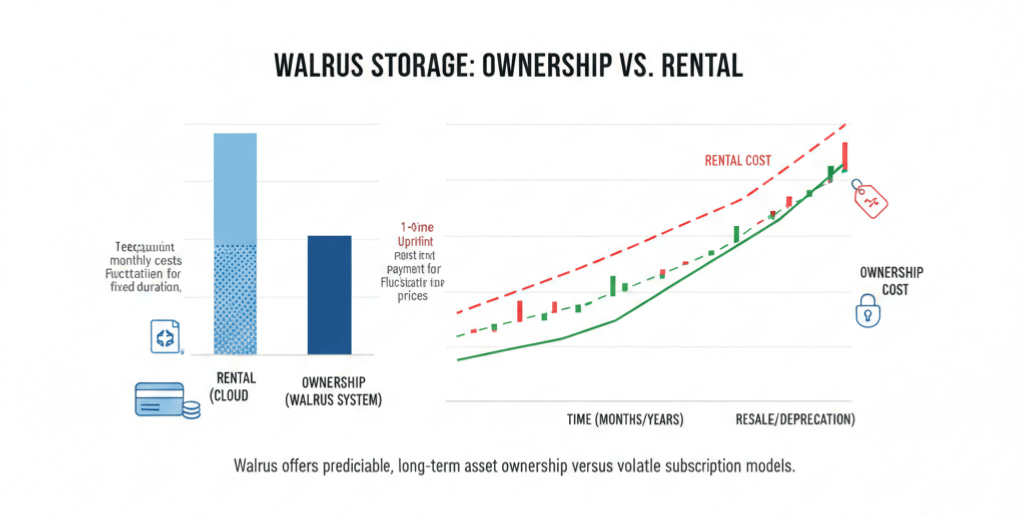
At first, it’s a strange feeling — to think of storage as a physical resource that can be owned or traded. I learned that in the Sui blockchain, these things are called 'storage resources', and they have a clear start and end date. You simply tell the system how much space you need and for how many months or years. It turned out that I can even split these resources or resell them if I change my mind. It’s more like owning a plot of land than renting a locker in a gym.
> «The network storage must be a resource you own, not a service you rent».
>
How the price is formed
How the price is determined becomes very interesting if you dig deeper. One might think there’s some 'boss' who sets the rate, but in reality, it’s voted on by the people who hold the servers. Each of them submits their proposal: what price they think is fair and what volume of data they can handle. The system analyzes all these votes and chooses a price that the majority agrees with. It's similar to how a group of friends chooses a restaurant for dinner, settling on an option that fits the budget of most.
I was worried that the price might change right after I uploaded my files. But in reality, as soon as you purchase storage, the price is fixed. You pay upfront and don’t have to worry about tokens becoming more expensive or providers getting greedy next month. I like knowing that my files are safe for the next two years, and I don’t have to check my email waiting for a notification about a price increase. It gives me peace of mind that you just can’t get from traditional tech giants.
> «Prepayment for your digital space protects you from the whims of a volatile market».
>
Deposits and Responsibility
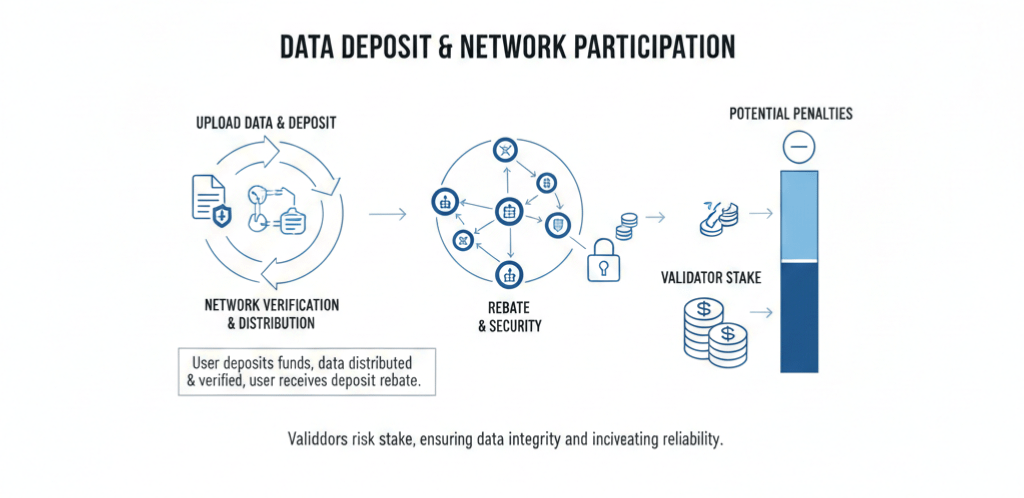
One moment initially confused me — this is the deposit when recording data. When I upload a file, I pay a little more in the form of a deposit that can be refunded. Over time I realized: this is a way for the system to encourage me to be a 'good neighbor'. If I send my data to all the different parts of the network myself, it helps the system work faster. When I do this, part of the deposit is returned to me. It's like a deposit for a glass bottle that you get back when you return it for recycling.
Sometimes I wonder: what if the people holding the servers just leave or turn off their machines? The system has rules under which they are required to keep their promises. If they try to delete data or stop confirming its existence, they are penalized. They risk their own money because they have to post their tokens as collateral. It makes me feel better knowing that there is a real price for their laziness or negligence regarding my data.
> «The network only works when those who hold the data have more to lose than you».
>
A Look into the Future
I've noticed that I can extend the storage term if it's about to expire. It's a simple renewal process that allows you to keep the data where it is without the need to move it. They even allow you to see future prices in advance, so you can plan. Of course, the system is not yet perfect — paying for two years upfront can be a hit to the wallet. I've heard that in the future they may change this to make payment more convenient, but for now, it works like this.
Working with Walrus feels like participating in a grand experiment about how we value our digital lives. We have become so accustomed to getting things 'for free' in exchange for our privacy or eternally paying for things we never own. This technology made me realize: I want more control. I want to know exactly where my files are and how much they will cost me over the coming years. It's a bit more complicated than just pressing a button on a big corporation's service, but it feels more honest.
> «True ownership of data requires a system that cannot change the rules mid-process».
>
Ultimately, I just want to know that my photos from five years ago will still be there in another five years. I don't want to rely on a company that could delete my account or double the prices. Even considering the need for training and upfront costs, I believe this compromise is worth it. It's about creating a stable and fair foundation. I’m starting to see that it’s not just about storage — it’s about building a better way of life online.
> «We are moving towards a world where our digital footprints belong to many, not just a few chosen ones».
>
I'm really curious to see how the secondary market for these 'storage shares' will evolve over time. It would be cool to see people trading space like any other asset. For now, I'm just glad to have a place for my data that feels safe and predictable. It makes the digital world a bit more like the real one — where things have their place and value that makes sense.

