
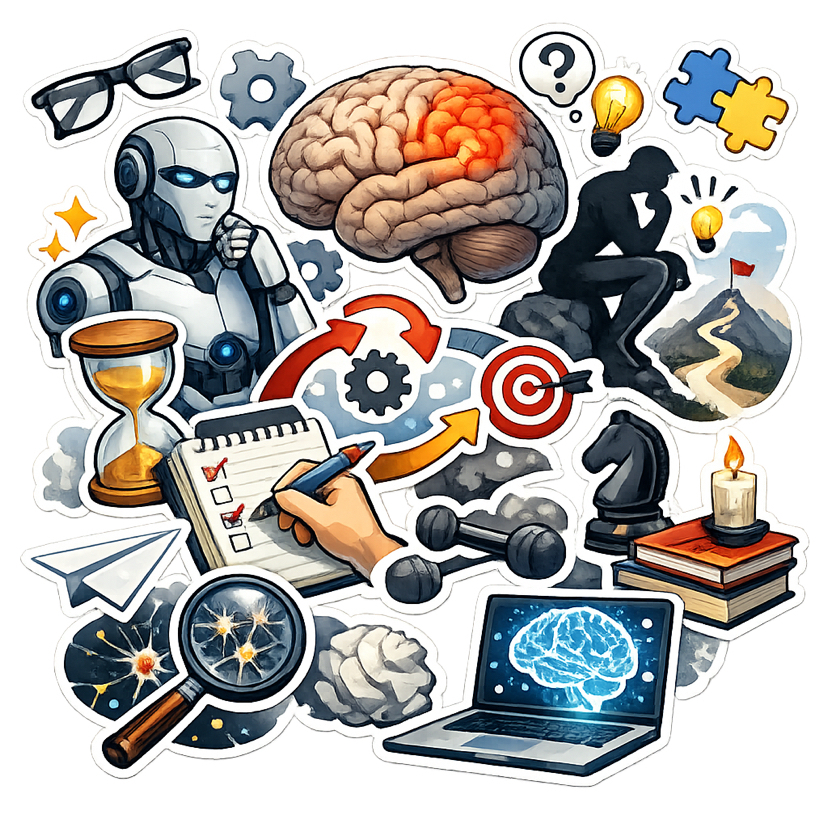
The prefrontal cortex (PFC) - the center of planning, self-control, and meaning - does not break down suddenly. It gets lazy. And the laziness of the brain is the quietest path to losing mental autonomy.
Good news: PFC can be trained within the digital world without going to a monastery and without throwing away your smartphone.
1. Use AI as a trainer, not as a crutch
Bad habit:
'Tell me how to do it right'
Good:
'Here’s my version. Find the weak spots'
📌 The rule is simple:
first think for yourself — then ask AI.
It makes the PFC:
• formulate hypotheses
• hold the structure of thought
• withstand uncertainty
AI in this case is not a brain, but a sparring partner.
2. Train delayed decision-making (the most underrated skill)
PFC dies from instant answers.
Practice:
• don't answer immediately
• don't make decisions in the moment
• let thoughts 'stay overnight'
Even 12–24 hours dramatically improve the quality of thinking.
It trains:
• impulse control
• strategic thinking
• intrinsic autonomy
If the decision can wait — it should wait.
3. Write by hand (yes, seriously)
Handwriting:
• activates PFC
• slows down thinking
• restores cause-and-effect relationships
Not a diary 'about feelings', but:
• plans for the week
• arguments 'for' and 'against'
• questions without answers
📝 10 minutes a day — and it's already neurotraining.
4. Plan further than the algorithm lives
Algorithms live 'now + a little bit'.
You are not.
Practice:
• one a month ask yourself:
'What am I doing for my version of myself in 5 years?'
PFC loves long horizons:
• 3 years
• 5 years
• 10 years
It's not about goals, but about direction.
Without direction, the brain relinquishes control to external systems.
5. Leave unresolved questions
AI aims to close Gestalts.
PFC grows on openness.
Example:
• 'What do I really think about this?'
• 'Why did this affect me?'
• 'Where am I lying to myself?'
Don't seek an answer immediately.
Carry the question with you.
📌 Unresolved questions are weights for thinking.
6. Minimum instructions, maximum principles
Instructions relax the brain.
Principles are tense.
Instead of:
• 'How to act correctly'
Ask:
• 'By what principle do I want to live?'
PFC is about values, not life hacks.
7. Create, not just consume
Creation is:
• choice
• responsibility
• risk
Even:
• text
• scheme
• concept
• idea
Not necessary for publication.
Enough for intrinsic authorship.
Conclusion: a humane structure of psyche is practice
AI is not an enemy.
It is a test.
If thinking:
• disappears → you gave it away
• is enhanced → you use it correctly
The prefrontal cortex does not require a monastery.
It requires effort, pauses, and meaning.
In the age of AI, humanity is not a given.
This is daily intellectual hygiene.