
Do not view stability as some sort of supreme myth. I have been immersed in the trading field for eleven years, fully dedicated for seven of those, enjoying a carefree lifestyle that is almost insulated from stress. The income brought by this stability far exceeds what ordinary office workers can reach, but to be realistic, it does have an upper limit and is by no means the infinite wealth that some people fantasize about.
After six years of seasons, I gradually explored a trading path that fits my own under the guidance of a master. While I can't say I've joined the ranks of the wealthy, stable profits are already within my grasp, enough to easily surpass over ninety percent of my peers.
Long ago, I realized the enormous aid that an excellent trading system provides to investors. At the same time, I am also aware that blindly investing without systematic guidance is no different from losing repeatedly in a gambling arena. However, constructing an effective trading system is no easy task. A truly excellent trading system often goes against human nature; it requires you to abandon greed and fear, remain calm and decisive, reject subjective assumptions, and strictly execute established strategies.
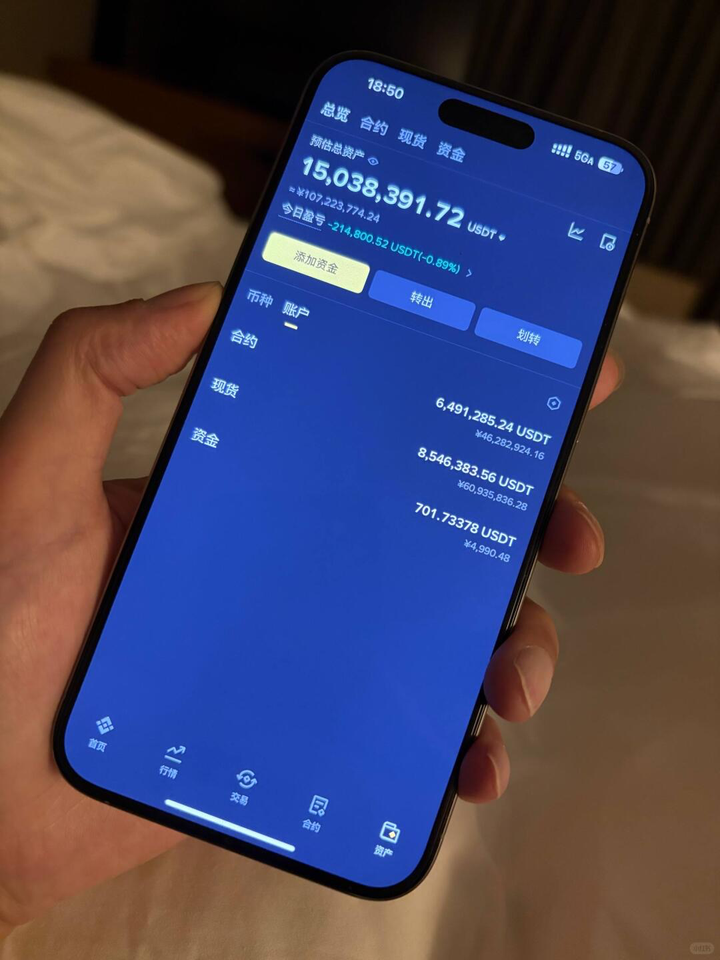
In addition to solid skills, I am very strict in sharing the following 15 rules:
Article 1: Preserve the principal to survive long in the market.
The principal is the lifeline and must be held tightly! Many people overlook risks in pursuit of high returns and end up suffering heavy losses.
Article 2: As long as you are not greedy, making a profit is actually quite simple.
Maintain a stable mindset; earning a little less can actually make it easier to accumulate wealth.
Article 3: Focus on investing, do not go all in, follow the trend.
Do not blindly diversify investments, avoid putting all funds in, and adjust strategies according to market trends.
Article 4: Avoid heavy positions, do not stubbornly resist, and trade less.
Control your positioning, do not stubbornly endure losses, and trade moderately.
Article 5: Enter calmly, exit decisively, and stop-loss must be firm.
Do not rush to buy; sell decisively, and set the stop-loss line and strictly execute it.
Article 6: The profits in the market are endless, but losses can be bottomless.
Do not be greedy for the money that cannot be earned endlessly, but losses can potentially deplete everything.
Article 7: Once a stop-loss is triggered, exit immediately.
Stop-loss is the protection of your account and should not be hesitated.
Article 8: For long-term and short-term, securing profits is the most stable strategy.
Whether trading long or short, ultimately, ensure that you secure your profits.
Article 9: The unchanging truth of the market is that extremes will reverse.
No matter the rise or fall, there is a limit, and it will inevitably reverse.
Article 10: Do not operate if there are no opportunities; missing out is not scary.
Do not force yourself to seize every opportunity; being able to seize part of it is enough.
Article 11: Waiting for the right opportunity is more important than operating blindly.
Do not rush to find trading opportunities; patiently wait for more favorable conditions.
Article 12: After achieving the goal, stop trading, conserve energy and avoid greed. Exit timely after completing daily targets to retain energy for the next trade.
Article 13: Stop-loss is set by oneself, while profits come from the market's grace.
Stop-loss is the investor's responsibility, while profits are the market's rewards.
Article 14: Wealth comes from waiting, not from frequent operations.
The best investments are often made through patient waiting, not through constant operations.
Article 15: When the mindset is weak, strictly executing the strategy is most important.
Desire can easily get out of control in trading; only strict execution of the strategy can achieve unity of knowledge and action.
These rules seem simple, but they are not easy to execute. Only those who can truly do it will become the final winners!
The above '15 rules for trading cryptocurrencies' are the essence I have gained through years of trading with real money. I sincerely feel they are useful and share them with everyone, hoping that after reading, you can absorb them well in combination with your own operations, helping you significantly in the cryptocurrency world and avoiding years of detours.

Many people will tell you 'how to make profits,' but very few will say 'what absolutely cannot be done.' In fact, trading is like cultivation; removing bad habits will naturally lead to good results—reducing mistakes can accelerate your progress more than blindly learning skills. Today, I will summarize six things that you must stop doing starting from today, based on the pitfalls I have encountered and the common mistakes of many traders, to help you become a consistently profitable trader.
1. Stop fantasizing 'how much can this trade earn'
First think 'how much will I lose'
I dare say that the vast majority of traders have experienced this: before entering a trade, they calculate 'what can this trade earn' and, when the price nears the stop-loss, they actually delete the stop-loss, hoping for a price reversal, resulting in even greater losses and a complete collapse of their mindset. Later, I realized: the core of trading is 'to survive first,' think 'how much can I lose at most' and 'where is the stop-loss' before entering, rather than fantasizing about profits. This way, you can maintain rationality and not be blinded by greed.
The terrifying aspect of this mindset is that it can make you blind—only seeing the good side of trading while completely ignoring the risks, even thinking 'this trade cannot lose.' In the end, it will only lead to one result: removing the set stop-loss point, unable to accept the fact of loss. Once the market reverses, it turns from profit into huge losses.
In my early years, I fell into this trap: calculating how much I could earn before a trade, and when the price was about to hit the stop-loss, I directly deleted the stop-loss, hoping for a price reversal, resulting in increasing losses and a complete breakdown of my mindset. Later, I understood: the core of trading is 'to survive first,' think 'how much can I lose at most' and 'where is the stop-loss' before entering, rather than fantasizing about profits; this way, you can maintain rationality and not let greed cloud your judgment.
2. Stop constantly switching trading strategies
Focus on optimizing one
Many traders are like 'strategy collectors': they find one strategy, make some money for a few weeks, and once they start losing, they immediately discard it for the next one. They always think 'the strategy is not working' but never consider 'did I execute it well?' or 'is the market fluctuating normally?'
I do not oppose having multiple strategies for different markets, but I absolutely oppose 'frequently changing strategies.' A strategy that has been proven effective, even if it fails in the short term, is likely due to a change in market rhythm, or that you made a mistake; the win rates and profit-loss ratios of new strategies are unknown, which is equivalent to giving up an existing advantage and jumping into a pit again.
The correct approach is: focus on one core strategy. When it fails, first review—did you not follow the rules? Has the market trend changed? Or does the strategy have blind spots? Optimizing it and completing it is ten times more reliable than switching to a new strategy. The advantage of trading comes from long-term accumulation; frequently changing strategies will only keep you in a 'trial and error' mode, preventing you from establishing your core advantage.

3. Stop guessing the tops and bottoms of prices
Only earn the money planned.
Many traders always think about 'buying at the lowest point, selling at the highest point,' continuously analyzing and placing orders to precisely catch the top and bottom, resulting in either missing out or getting trapped.
I used to be frustrated by this in my early years: there was a trade that I exited according to plan, and looking back, I could have doubled my profits if I had waited another 30 minutes. But now I understand: trading doesn’t require making all the money; just making the money within the plan is enough. Profits not included in your trading plan do not belong to you; greed will only confuse you.
In your trading plan, the entry point, stop-loss point, and take-profit point are all clear—this is based on technical analysis of high-probability opportunities. No matter how enticing the market moves are beyond this range, do not touch them. Market trends are ever-changing, and you cannot capture all fluctuations; focus on the opportunities you can grasp, and trading will become systematic and mechanical, maintaining consistent profitability.
4. Stop all-in trading
Single trade risk should never exceed 1%-2%
This is the easiest mistake to make that can lead you to exit the trading market—putting most or even all your funds into one trade, hoping to make a quick large profit.
I have seen too many traders like this: the account has little money, yet they want to earn 10,000 or 100,000, thus taking on a risk of several thousand in a single trade. The consequences of this practice are severe: once they incur losses, their emotions will collapse, leading to either revenge trading or a tense mindset, fearing making mistakes again; even worse, a few consecutive losses can lead to a direct liquidation of the account, losing all the hard-earned money.
The primary goal of trading is 'long-term survival.' Only by surviving can one have the opportunity to make money through strategies and compound interest. The correct mindset is: think 'how much can I lose at most' before entering a trade, rather than 'how much can I earn.' My iron rule is: the risk of a single trade must not exceed 1%-2% of total capital. Even if you lose five times in a row, the account will only lose 5%-10%, still leaving room for recovery.

5. Stop setting 'unattainable profit goals'
Set more 'ability improvement goals'
"This month I earn 10,000" "This year I earn 100,000"—many traders have set such profit targets, but in trading, these clear profit goals are actually pitfalls.
Because the market is ever-changing: some months have high volatility and many trading opportunities; some months have low volatility and few good opportunities. If you forcibly pursue profit targets, during months with fewer opportunities, you will engage in revenge trading to meet the targets—amplifying positions and entering low-quality signals, ultimately leading to greater losses.
I have long stopped setting profit targets, replacing them with 'ability improvement goals': for example, 'optimize entry signals this month to improve win rates,' 'learn a new strategy to cope with volatile markets,' 'improve risk control rules to reduce unnecessary losses.' These goals allow you to focus on 'improving yourself' rather than 'focusing on money,' which can naturally lead to profits.
6. Stop over-trading
Better not to trade than to engage in low-quality trading.
Many beginners, after learning a bit of technical analysis, become excited and stare at the charts all day, entering trades at any sign, regardless of the quality of the opportunity, thinking 'doing one more trade will earn a bit more.'
But the fact is, over-trading is the 'killer' of capital accounts. Trading without strict rules is emotional trading—earning today, losing tomorrow, appearing busy but actually losing continuously. When you experience consecutive losses, you will also self-doubt and continue switching strategies, falling into a vicious cycle.
You must understand: you cannot earn all the money from the market. The key to profit is 'seizing high-probability opportunities,' not 'seizing more opportunities.' A strategy centered on rules, reasonable risk control, a good mindset, combined with a sufficient number of trading samples, is the foundation of profitability. When faced with uncertain signals, it’s better to give up than to engage in low-quality trades—doing one less trade might save you from a loss.

Summary: The essence of trading
It is "less mistakes + consistent execution"
These six things are lessons I and countless traders have learned with real money. In fact, trading is not difficult; the challenge lies in overcoming human weaknesses such as greed, fear, and luck, and stopping the bad habits that ruin your trading career.
Starting from today, try to:
Before entering a trade, do not think about profit; first consider the risks.
Focus on one strategy and do not change it easily.
Do not guess tops and bottoms; only earn the money planned.
Strictly control risks; never go all in.
Set more ability goals and fewer profit goals.
Reject over-trading; only engage in high-quality opportunities.
When you eliminate these bad habits and combine them with solid strategies and a stable mindset, you will find that profitability is actually a natural outcome—you have already surpassed 90% of the losing traders and are on the path to stable profitability.
This is the trading experience that Yan An shares with everyone today. Many times, you lose many money-making opportunities due to your doubts. If you dare not try boldly, how can you know the pros and cons? You must take the first step to understand how to proceed. A warm cup of tea, a piece of advice; I am both a teacher and your chatty friend.
Fate brings us together, and knowing each other is a parting. I firmly believe that those fated will meet after a thousand miles, and those who miss will part by Heaven's will. The journey of investment is long; momentary gains and losses are just the tip of the iceberg. One must know that even the wisest will have some mistakes, while the foolish will have some gains. Regardless of emotions, time will not stop for you. Pick up the troubles in your heart and stand up again to move forward.
The martial arts secrets have been shared with you; whether you can gain fame in the Jianghu depends on yourself.
These methods should be saved by everyone. If you find them useful, feel free to share with more people trading cryptocurrencies around you. Follow me to learn more valuable insights from the crypto world. Having been through the rain, I would like to hold the umbrella for you, dear traders! Follow me, and together we will walk the path of cryptocurrency!