
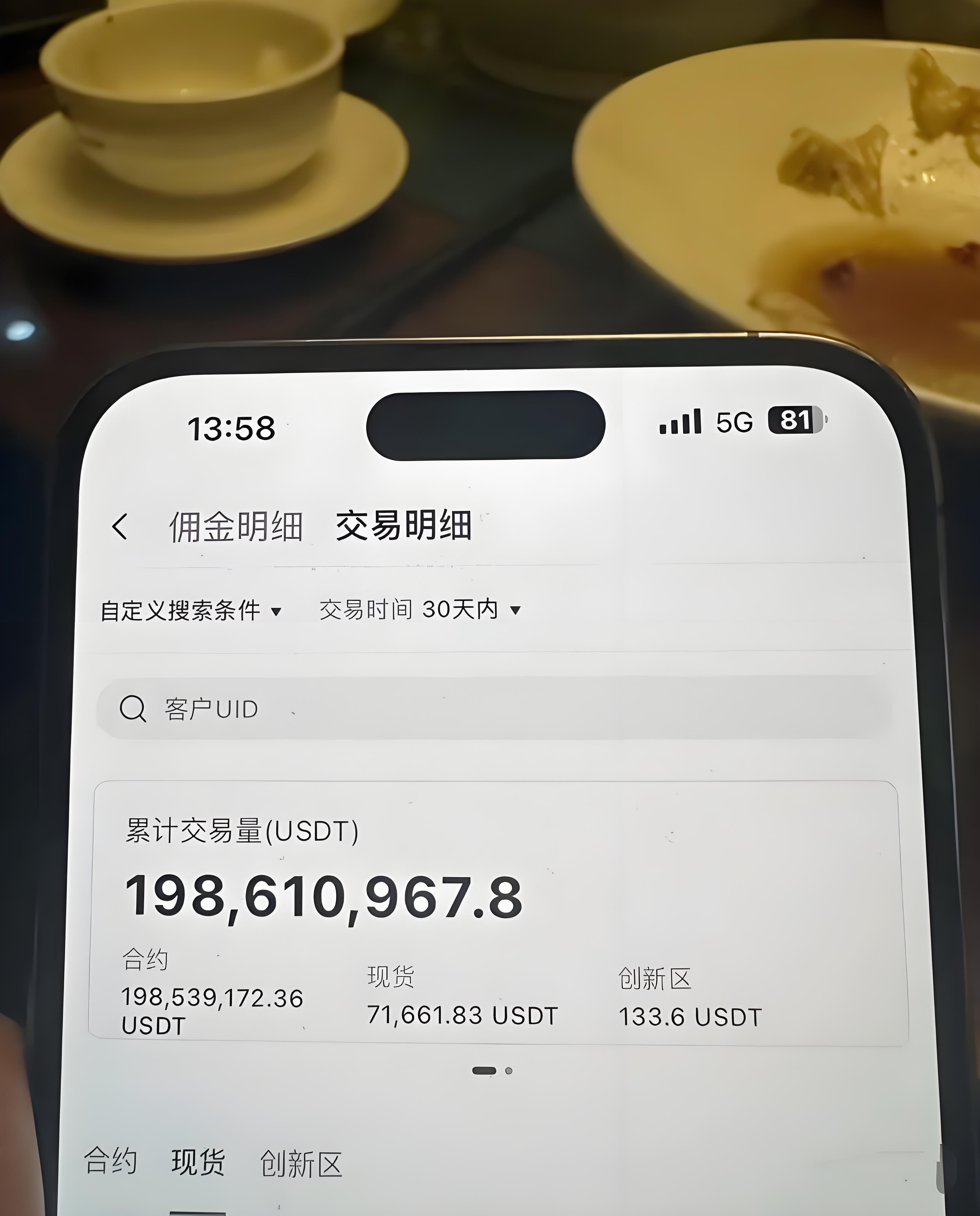
I've been trading cryptocurrencies for over 11 years, and this year, 2026, marks my 11th year as a professional trader. Currently, my stable monthly income is in the seven figures, and my annual income is in the eight figures, all relying on this trading strategy with a win rate of 90%.
A method I've personally tested: Last year, in less than a year, I turned an initial capital of 50,000 into nearly 90 million.
If you plan to invest in the cryptocurrency space, please take a few minutes to read my answer word for word, as it may save your life and your family.
Thousands of once-happy families ultimately fell apart due to the pursuit of an unattainable dream of making a fortune in the cryptocurrency space. I believe the reason I can continue on this trading path is that I've been dedicated to learning, focusing not only on understanding the fundamentals, but also on analyzing news and researching technical indicators.
And the formation of a self-stabilizing profit trading system!
If you have been in the trading circle long enough, you must have seen two extreme statements: one is that small funds can't grow big at all; the other is that you can achieve financial freedom by casually catching a wave of the market.
ToriTradez's experience proves that both of these statements are invalid.
Starting from $5,000, accumulating to achieve $500,000 in trading profits, this path is neither mythical nor easy. It relies not on luck, nor on constantly guessing the correct direction, but on an extremely restrained, repeatable, and risk-first trading system.
She is not a 'talented trader'.
Many people think that traders who can make money in the long run must come from privileged backgrounds, have impressive educational qualifications, and possess logic that crushes the average person. But the fact is, Tori's starting point had almost no 'advantages'.
Without a financial background, without prestigious school credentials, life wasn’t smooth in the early years. Trading was not her dream but emerged after a forced life restart.
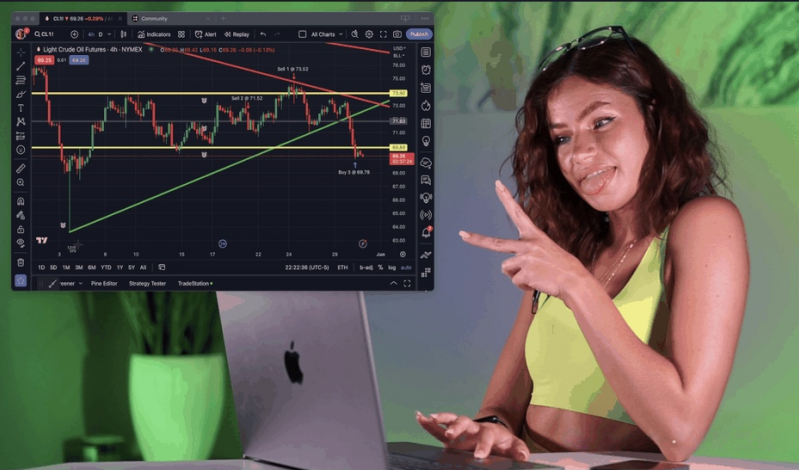
She later repeatedly emphasized a saying: 'Trading is not about IQ, but a skill that can be trained.'
What truly changes everything is not a single windfall, but a year of 'not earning anything' training. Before formally trading with real money, she did something that most people are unwilling to do—spend an entire year only doing simulated trading.
This year, the only goal is not to make money but to clarify 'trading'.
What she does every day is also very simple:
✔ Study market structure
✔ Practice execution, not looking at profits and losses
✔ Shift focus from 'prediction' to 'reaction'
✔ Continuously eliminate unnecessary indicators and thoughts#币圈起伏落袋为安
At the beginning, she also made almost all the mistakes that new traders make, such as watching too many markets, switching too many cycles, and trying to catch everything.
The result is stagnation.
Real breakthroughs come from an anti-intuitive principle: less is more.
The turning point is not a perfect trade, but a complete 'subtraction'.
She only did three things:
First, only trade a very small number of markets
No longer focusing on dozens of varieties, but concentrating on the targets you are most familiar with and structured.
Second, only retain necessary time periods
Top-down analysis, but the execution period is fixed, eliminating back-and-forth chart switching that creates anxiety.
Third, only pursue the best-level structural opportunities
Without structure, there is no trading.
Since then, every order she placed looked extremely similar. Trading began to become boring, but the account curve started to look healthy.
The key to survival: treat the 'worst-case scenario' as the norm
A severely underestimated truth is that the vast majority of traders do not lose due to liquidation, but due to self-doubt after long stagnation.
Tori has also gone through this stage.
Starting with $5,000 in real trading, the account has been in a long cycle of: earning a little and then returning to the starting point; just when feeling it, it gets pushed back.
In those years, she worked full-time while squeezing time to trade. The emotional pressure was huge, but she set a bottom line from the very beginning: not to give up.
Her risk perspective comes from a very relatable analogy: just like when you cook in the kitchen, you must have a fire extinguisher. Not because you catch fire every day, but because once a fire breaks out, you must survive.
In trading, this 'fire extinguisher' is the stop loss and safety line.
In her structured trend line system, there is no ambiguous space:
✔ Entry, determined by the action line
✔ Exit, determined by the safety line
✔ Once the price damages the structure, trading immediately ends
Not because she is pessimistic, but because she is professional enough.
How to trade breaks, retracements, and rebounds based on structure
Her core trading system is actually very simple. Achieve low-risk trading with structured trend lines: a complete method for breaks, retracements, and rebounds.
One of the biggest misunderstandings in trading is thinking that 'good opportunities must be complex'. But the reality is the opposite—many of the lowest-risk, most repeatable trades come from an extremely simple system: trend lines + structure + strict risk management.
Why trend line trading is effective
Trend lines are not predictive tools. They are a visual representation of market structure. When the price respects a trend line, it conveys a message; when the price effectively breaks below or above the trend line, it conveys another message.
The entire strategy is built on one core principle: let the price tell you when to act.
Foundation: top-down analysis framework
Every trade must start from a top-down analysis, meaning first looking at the larger cycles and then gradually drilling down to the execution cycle.
The typical analysis order is:
❍ Monthly line
❍ Weekly line
❍ Daily line
❍ 4 hours
❍ 1 hour
❍ Lower execution cycle (e.g., 5 minutes)
In each cycle, you need to draw trend lines, capturing as many valid touchpoints as possible, ensuring the price never crosses the trend line. All trend lines must resonate with each other and have structural consistency. The structure itself is crucial.
Rules for correctly drawing trend lines
There is no ambiguous space here; the rules are clear and strict.
Downward trend line
✔ Must tilt overall downward
✔ Must connect multiple high points
✔ Price cannot cross the trend line
Upward trend line
✔ Must tilt overall upward
✔ Must connect multiple low points
✔ Price cannot cross the trend line
As long as the price crosses the trend line, that trend line becomes immediately invalid. The role of the trend line is to 'constrain the price', not to let the price cross freely.
Action line and safety line
Before the trend line is broken, it is neutral. Once an effective break occurs, the broken line becomes the action line; the corresponding structural line becomes the safety line.
The action line is responsible for telling you: when to enter; the safety line is responsible for telling you: when to exit.
This step completely eliminates subjective judgment and guessing.
What kind of trading is called 'low risk'
A low-risk trade must possess:
❍ Clear and definite entry and exit points
❍ Controllable and relatively small downside risk
❍ Obviously asymmetric upside space
If your feeling about potential losses is more like 'paying a fee', it indicates that your trading structure is correct.
Stop loss position (non-negotiable)
Your stop loss is always placed on the opposite side of the safety line, never directly on the safety line; it is your 'fire extinguisher' in trading. Once the price effectively breaks the safety line, trading immediately ends, with no exceptions.
Basic principles of risk management
For most traders, the risk per trade is controlled at 1%–2% of the account funds. For example, a $3,000 account has about $60 in risk. This is easy to understand.
Risk limits can be adjusted with experience, but consistency always takes precedence over aggressiveness.
Core trend line trading pattern
All patterns use the same system; the only change is the entry method.
1. Trend line breakthrough
✔ Price effectively breaks the action line
✔ Enter when the breakthrough occurs
✔ Exit when the price breaks the safety line
This is the foundation of the entire system and the most core pattern.
2. Double touch / triple touch trend line breakthrough
✔ This pattern is used to assess the degree of respect for the trend line before a price break.
✔ The more touchpoints, the stronger the structure
✔ Rules are consistent, execution is consistent
✔ Mainly used for more in-depth structural analysis and statistical tracking
3. Breakthrough and retracement
✔ Price breaks the action line
✔ Then retrace from the opposite direction to that trend line
✔ Enter upon confirmation during the retracement
✔ Exit rules are still determined by the safety line
This pattern usually offers tighter risk control.
4. Rebound pattern
✔ The price has not broken through the trend line
✔ Price rebounds at the trend line
✔ The same trend line acts as both the action line and the safety line
✔ Exit when the price finally breaks below/above the line
This is an advanced variant used selectively only in specific environments.
She hardly watches the market: trading transforms from 'number games' to real returns.
Another point that is hard for outsiders to understand is that based on her self-constructed trading system, she does not stare at the screen all day. Analysis is completed in advance, key positions are set with alerts, and she only trades when conditions are met. Ultimately, she can complete almost all trades on her phone.
Trading no longer dominates life but begins to serve life. What truly allows the account to break through is 'first pay yourself a salary'. When the account finally breaks long-term stagnation and reaches a stable range, she did one very crucial thing: set a basic capital, and all profits above that are withdrawn.
By the end of 2022, after the account size broke $100,000, the profit speed increased significantly. But the reason was not that she changed to a stronger strategy, but that the same system was continuously and stably executed under a larger position.
Scale is the result of consistency, not a goal.
In Tori's view, success is not equal to luxury cars or extreme profits. Success may simply be stabilizing a few hundred or thousand dollars a month, gaining a bit more time freedom, and no longer being led by market emotions.
As long as expectations meet reality and methods are clear, anyone can become a 'successful trader'.
Summary
The effectiveness of this strategy lies in its clear rules, minimalist structure, repeatability, and risk-priority design.
Her trading philosophy is that the advantage of trading is never in complexity. The real advantage comes from discipline.
If you can draw the structure line, if you are willing to follow the rules, if you put risk first—then this path from $5,000 to $500,000 is at least clear in terms of method. The rest is left to time.
This is the trading experience shared by Yan An today. Often, you lose many money-making opportunities because of your doubts. If you don’t dare to try boldly, to engage, to understand, how will you know the pros and cons? You will only know how to proceed with the next step after taking the first step. A warm cup of tea, a word of advice, I am both a teacher and a friendly conversationalist.
Familiarity is fate; knowing is separation. I firmly believe that fate leads to recognition, while separation is destined. The journey of investment is long, and temporary gains and losses are only the tip of the iceberg along the way. Remember, even the wisest can make mistakes, while the unwise may find gains. Regardless of emotions, time does not stand still for you. Pick up your burdens and stand up again to move forward.
The martial arts secrets have been given to you; whether you can become famous in the world depends on yourself.
These methods must be collected, and friends who find them useful can share them with more people trading coins around them. Follow me for more crypto insights. After being rained on, I’m willing to hold an umbrella for the retail investors! Follow me, and let’s walk together on the crypto path!