
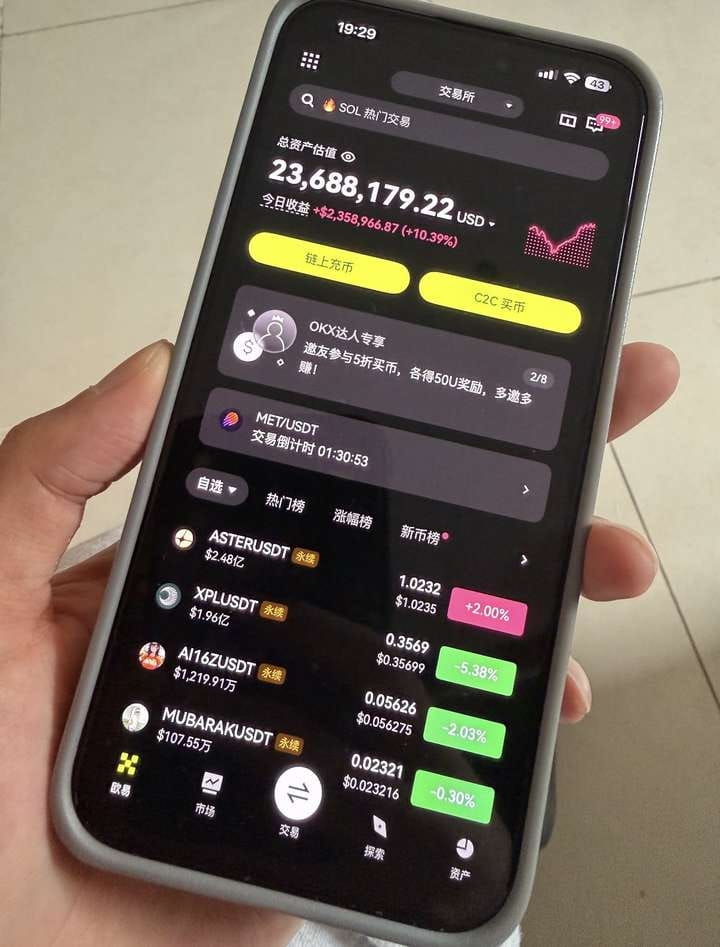
I once thought I was an undaunted captain in the sea of cryptocurrencies, until that "312 Black Swan" caused my sinking. 1500万仓位在半小时内清零,手机屏幕的冰冷触感至今难忘。
But despair is often the catalyst for wisdom, suddenly realizing: the essence of contracts is probability gaming. Using the remaining 800,000 principal, combined with "movement
"Arbitrage Hedge Model", in February this year, achieved an asset leap to 2.18 million in 60 days, an increase of 272900%!
Now, I share this "Storm Navigation System" free of charge—learning to dance with risk in the cryptocurrency world is the true way to survive.
In the cryptocurrency circle, true experts may not necessarily have great skills; I strictly adhere to market iron rules:
One, risk control is the lifeblood
Stop-loss and take-profit ingrained in DNA
Cut losses at 10% and run as soon as you hit your target! The volatility in the cryptocurrency market is like riding a roller coaster; even big players get liquidated because of greed. For example, the page mentions, 'If losses reach 10%, you must sell'; otherwise, you might go from losing 1,000 to losing 10,000.Understanding position management
Total capital divided into 5 parts, with a maximum investment of 1 part each time! The 'capital divided into 5 parts' strategy on page 3 can allow you to lose up to 10% of your total capital even if you make 5 mistakes.
For example, if you trade with 10,000 capital, buy a maximum of 2,000 each time.Choosing the wrong exchange can lead to disaster
Only use the three major exchanges: Binance/Huobi/OKX; the small platforms have over 60% chance of running away! Page 5 reminds that 'certain international exchanges have run away with funds' in a bloody case.
Two, capital management is more important than technology
Iron rules for investing spare cash
You can only enter the market with money that you can afford to lose! The counterexample mentioned on page 5 is too real: a colleague took a mortgage down payment of 200,000 to trade cryptocurrencies and almost got divorced after a liquidation.Diversifying investments for safety
60% buy BTC/ETH as 'savings', 30% engage in liquidity mining, and 10% gamble on altcoins. The '60-30-10' allocation method mentioned on page 8 is a cure for the anxiety of losing everything.Leverage contracts = self-destruct button
95% of those who trade contracts have experienced liquidation! Page 7 directly states: 'Newbies touching leverage in the first 6 months is like giving away money'.
Three, a stable mindset is essential for winning
Chasing highs and lows is a disease that needs treatment
The market maker pulls up 50% to trick you into buying, then slams down 80% to harvest. The anti-routine taught on page 5: use a dollar-cost averaging method to buy 500 worth of BTC every week, ignoring fluctuations.Reject FOMO (fear of missing out)
Don't be jealous when you see others getting rich, as page 4 wisely states: 'Not every opportunity should be seized'
For example, if someone shouts, 'Tomorrow it will rise 10 times,' 99% of the time it is a trap.Don't trade when tired, it turns into an ATM
Staying up late to watch the market will definitely lose money! The golden quote from page 1: 'Trading when your eyelids are heavy is more random than tossing a coin.'
Four, learning ability determines survival time
Learn to walk before running
Use 1,000 to buy USDT for practice, understand the entire process of 'buying coins - transferring to wallet - selling coins' before playing big. The beginner plan on page 5 is very practical.Spend 30 minutes charging every day
Binance Academy tutorials + CoinGecko for market trends, transforming from a newbie to an experienced trader in 3 months. Page 7 suggests 'continuous learning to keep up with the market.'Airdrops are the safest way to get free stuff
Like in 2024, a certain NFT airdrop earned 5,000 for free, but be wary of fake events asking you to transfer money first. The 'zero-cost harvesting strategy' on page 5 has been tested and proven effective.
Five, the life-saving advice of seasoned investors
In a bull market, don't think of yourself as a god
Page 1's heart-wrenching reminder: 'The money earned in a bull market may be a gift from the market, not because you are truly amazing.'Dollar-cost averaging in a bear market is the way to go
Bitcoin drops to $30,000? Invest $500 weekly, and next bull market it will double directly. The 'downward dollar-cost averaging method' on page 9 can help average costs.Three major characteristics of pyramid scheme coins
Signal callers + capital preservation promises + recruiting for commissions, if you encounter them, black them out! Page 8 exposes the 'airdrop coin' trick: the white paper boasts, but in reality, it's useless.

Mastering price action allows you to see through the market's 'hidden cards'—predicting whether the price will likely rise or fall next. Today, I will share 4 price action techniques that I frequently use in practice, which can be directly applied in both trending and sideways markets to help you pinpoint entry points and avoid traps.
Skill 1: Failure test
Seize the reversal opportunities after large funds 'wash the market'
Failure tests are extremely common and reliable signals in price action; they can occur in uptrends, downtrends, and sideways movements. The core logic is simple: the price attempts to break through/break key levels (support/resistance) but ultimately fails, and this 'failure' itself is a trading signal.
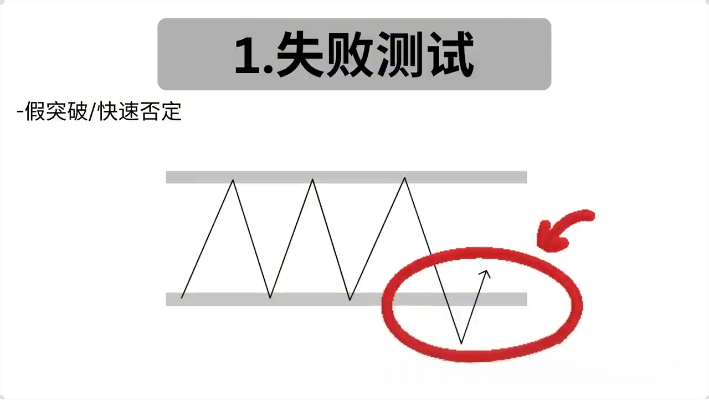
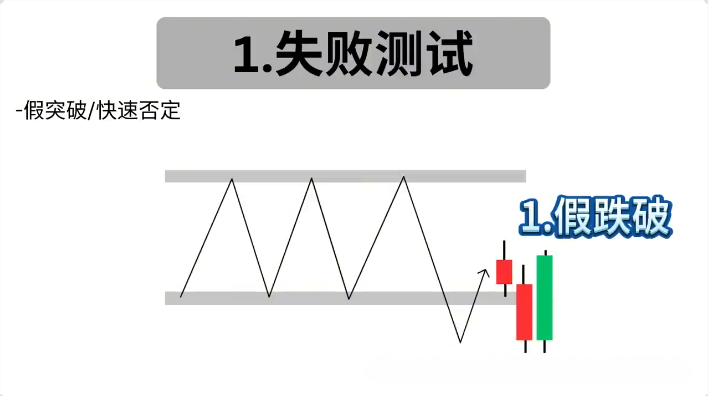
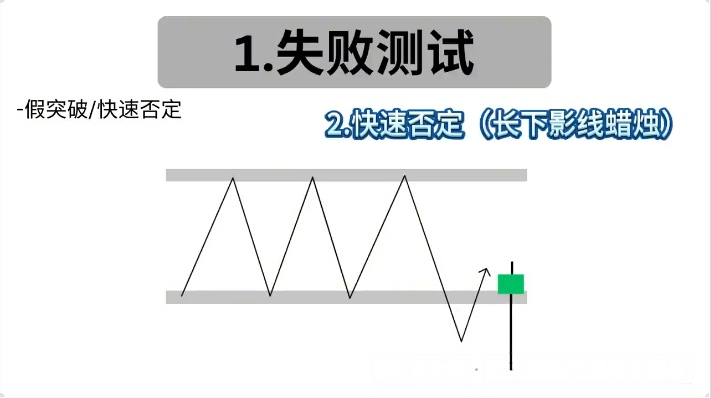
It mainly falls into two types:
False breakouts/breakdowns: the price breaks below support (or breaks above resistance) but quickly returns above (or below) the key price level, composed of multiple candlesticks;
Quick denial: the price instantly breaks support (or breaks resistance), but quickly rebounds, forming a candlestick with a long upper/lower shadow.
The underlying capital logic (understanding it will lead to trust)
Why does the price likely reverse after a failure test? In fact, it's large funds (smart money) 'harvesting retail investors':
Below key price levels (such as support levels), there are often many retail investors' stop-loss orders—large funds will deliberately push the price down to trigger these stop-loss orders (gaining liquidity), then subsequently push it up, causing retail investors to miss out or get trapped.
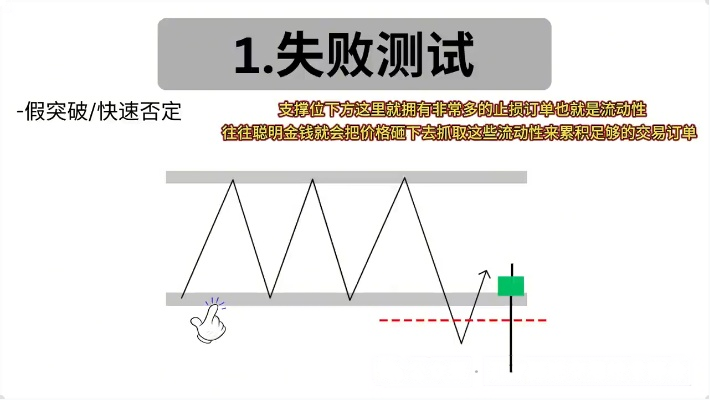
Practical case: shorting opportunities in a downtrend
Look at this practical chart: the price is in a clear downtrend (lower highs + lower lows), and we look for short opportunities along the trend.
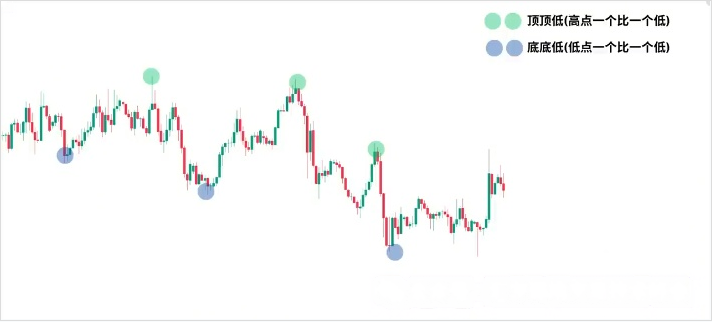
First, find key price levels: there is a 'support-resistance switch level'—previously tested multiple times without breaking, indicating strong resistance;
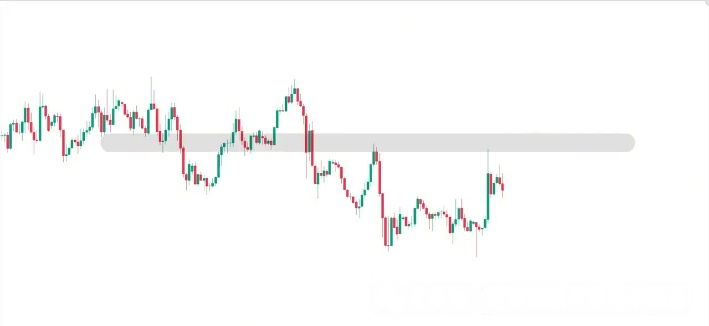
A failure test signal appears: the price attempts to break this resistance level but forms a 'long upper shadow candlestick (inverted hammer)'—this is a typical 'breakout failure', indicating strong selling pressure above;
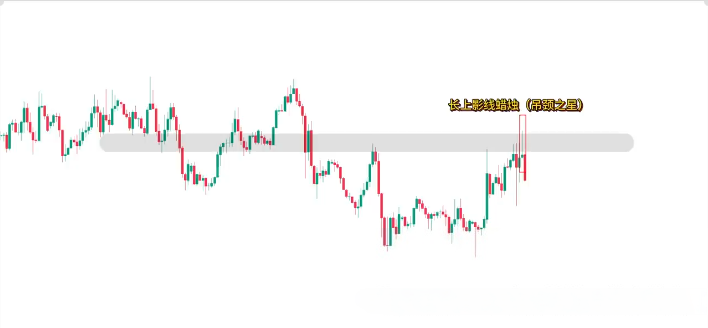
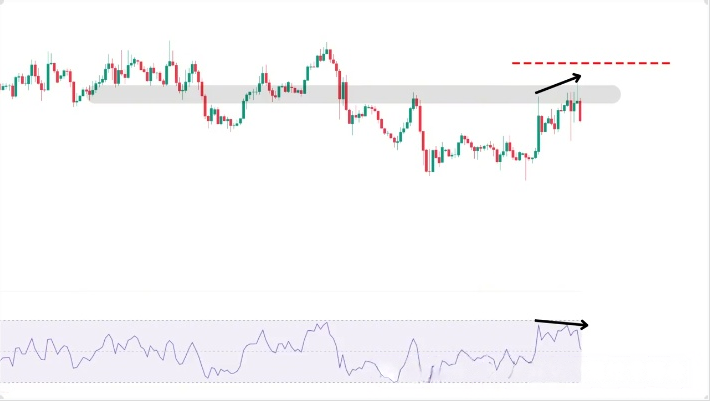
Multi-signal verification: then a large bearish candle appears (confirming downward momentum), while RSI forms a top divergence (the price makes a new high, but RSI does not, indicating a decrease in upward momentum);
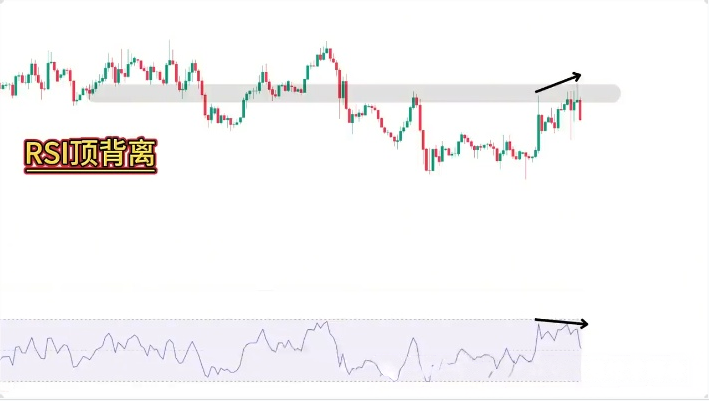
Entry + risk control: go short after a large bearish candle has completely formed, setting the stop-loss above the previous high + 1 ATR (to avoid being swept out by a false breakout), and set take-profit according to a fixed risk-reward ratio.
Skill 2: Brewing before a breakout
Predict key price level breakouts in advance
If you like to do breakout trades, this skill can double your win rate; even trend traders can use it to accurately capture trend continuation nodes.
What is 'brewing before a breakout'? It means that when the price approaches key levels (resistance/support), it no longer fluctuates significantly but starts to consolidate slightly—this is accumulating momentum for the breakout.
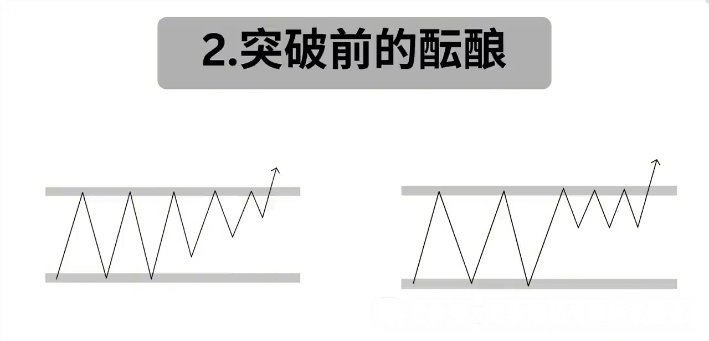
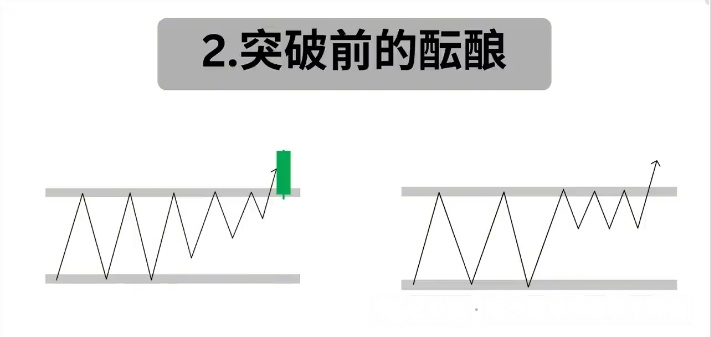
For example:
In a sideways market, the price slightly consolidates below the resistance level, building momentum for a breakout [right side of the chart];
In an uptrend, when the price approaches a resistance level, it forms a small structure of 'higher lows', which is also a brewing signal [left side of the chart].
Core verification of effective breakouts
Just having a brewing is not enough; during a breakout, two conditions must be met to avoid false breakouts:
Breakout candlesticks are 'momentum candles': for example, large bullish candles, large bearish candles, with sufficiently large real bodies;
Accompanied by high trading volume: increasing trading volume indicates that the breakout is due to real funds entering the market, not just a bluff.
Practical case: going short on a breakout in a downtrend
Look at this case:
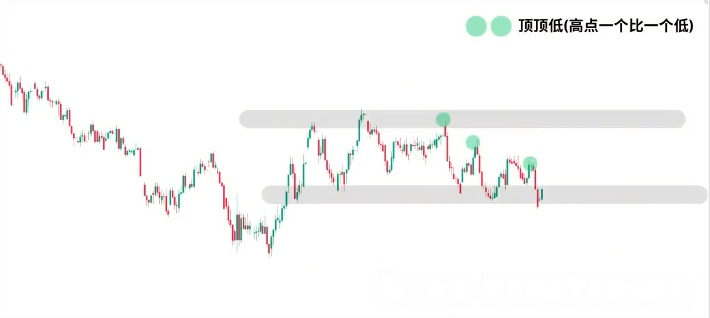
The price first declines, then enters a sideways consolidation, beginning to 'brew' near the support level—weakening rebound strength, forming a small structure of 'lower highs' (a typical sign of downward brewing).
Aggressively entering the market: when the price breaks support with a large bearish candle, go short immediately;
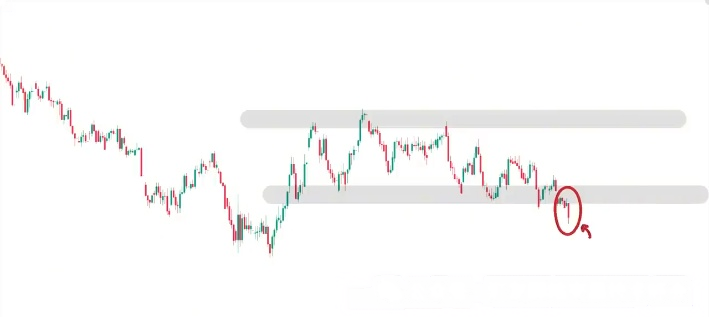
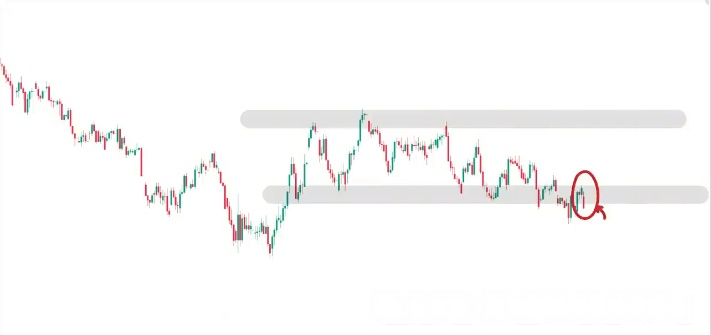
Conservative entry: wait for the price to pull back to 'support turning into resistance', appearing in a bearish engulfing pattern (gap down + large bearish candle), confirming that the resistance is effective before going short.
Skill 3: Weak three consecutive hits
Reverse warning at the end of the trend
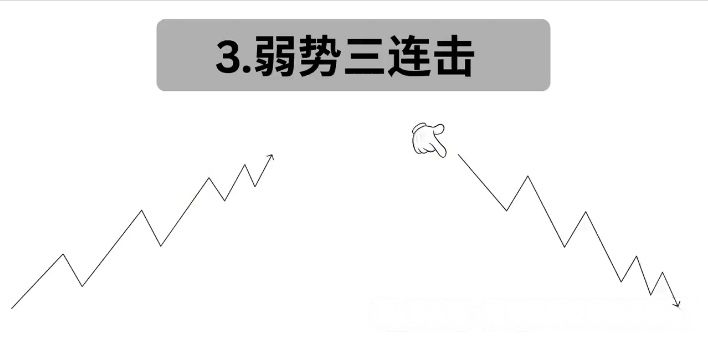
This signal appears specifically at the end of a trend or near key price levels; the core is 'trend momentum weakening'—the price is still making new highs/lows, but the magnitude has significantly decreased, indicating that the trend is about to reverse.
Divided into two situations:
Uptrend: the price is still making higher highs, but each rise is smaller than the previous one, indicating insufficient upward momentum;
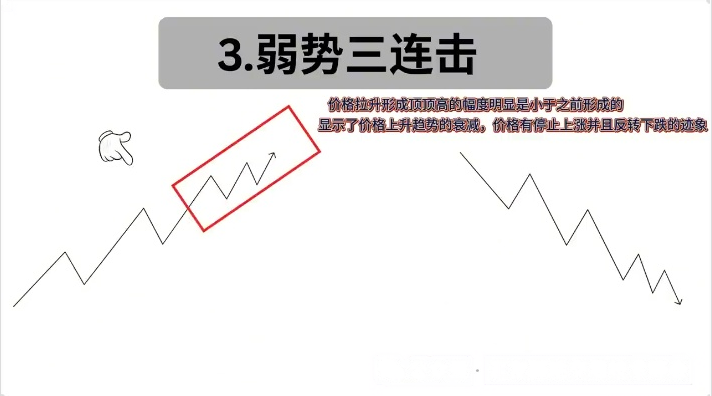
Downtrend: the price is still making lower lows, but each decline is smaller than the previous one, indicating that downward momentum is exhausted.
High win rate verification: combined with divergence signals
When the weak three consecutive hits occur alone, the win rate is not high enough; it must be combined with RSI divergence:
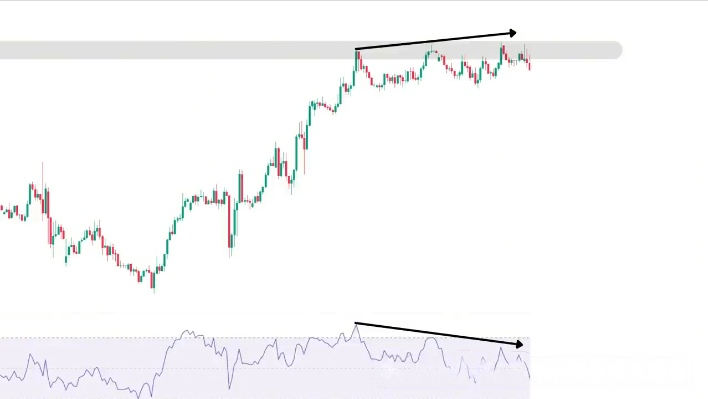
Uptrend + weak three consecutive hits + RSI top divergence (price makes a new high, RSI does not);
Downtrend + weak three consecutive hits + RSI bottom divergence (price makes new low, RSI does not).
Practical case: shorting opportunities on a reversal in an uptrend
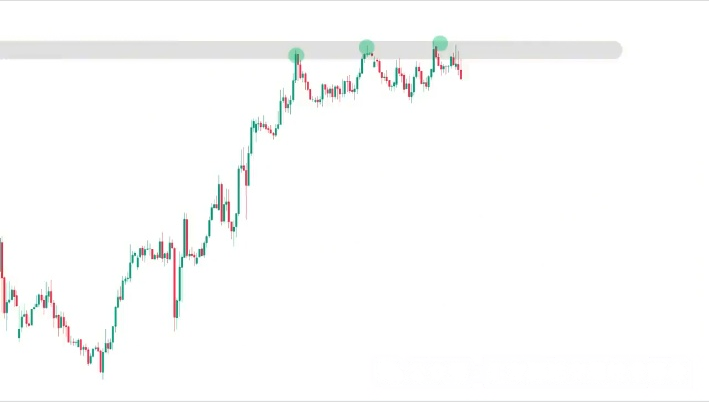
Look at this case: the price is in an uptrend (higher highs + higher lows), but after reaching a key price level, it forms weak three consecutive hits—each rise's magnitude is getting smaller, even nearly no increase, indicating that upward momentum is running out.
Signal verification: open RSI and find a top divergence (price makes a new high, RSI makes a lower high), further confirming that the trend is about to reverse;
Entry timing: wait for the price to form 'trend destruction' (which will be discussed later), confirm the trend reversal, and then short to avoid being swept away by residual trend waves.
Skill 4: Trend destruction structure
The 'ultimate signal' to judge the end of a trend
Trend destruction is the core technique for determining whether a trend has ended; whether you want to catch a reversal or confirm trend continuation, it is indispensable. The core logic is 'the core structure of the trend has been broken.'
Divided into two situations:
Destruction of the uptrend: originally it was 'higher highs + higher lows', but later the price stops making new highs and breaks below previous low points, forming a 'lower lows + lower highs' downward structure—indicating the end of the uptrend and the beginning of a decline;
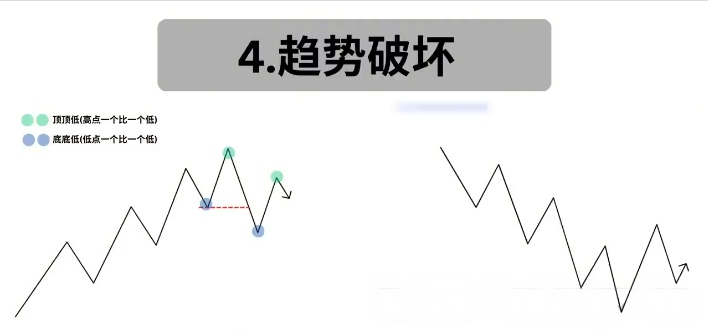
Destruction of the downtrend: originally it was 'lower highs + lower lows', but later the price stops making new lows and instead breaks above previous high points, forming a 'higher highs + higher lows' upward structure—indicating the end of the downtrend and the beginning of an uptrend.
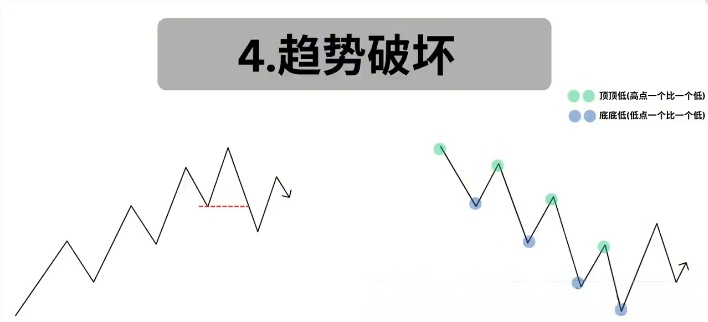
Practical usage: accurately grasp the reversal entry point
Trend destruction is not a single candlestick signal, but a process of 'structural transformation'—once confirmed, it means the trend has completely reversed; at this point, entering will have a high win rate and risk-reward ratio.
For example, in the previous weak three consecutive hits case, just having momentum decay is not enough; you must wait for the price to break below the previous low (uptrend destruction) to confirm the reversal. At this point, going short has low risk and high profit potential.
For example, in a downtrend, when the price breaks above the previous high (downtrend destruction), it can confirm a trend reversal, and you can enter long accordingly.
Summary:
The core of price action is 'multi-signal verification'
The four skills shared today, when used individually have a decent win rate, but when combined, the win rate can double—this is the core secret of professional traders: 'do not rely on a single signal, but verify from multiple dimensions.'
Remember these 3 core principles:
First look at the structure: use trend destruction and market structure to set the big direction;
Then find signals: use failure tests, weak three consecutive hits, and brewing breakouts to find specific entry points;
Finally, verify: use RSI divergence, trading volume, and key price levels to confirm the validity of the signals.
The essence of price action is to understand the direction of large funds through candlesticks and structures—large funds do not lie; their positioning, washing, and lifting will all be reflected in price movements. Master these four skills, and combine them with the risk management and mindset discussed earlier, and you will be able to accurately judge price trends and seize high-probability opportunities.
This is the trading experience that Yan An shares with everyone today. Many times, you lose many opportunities to make money because of your doubts; if you don’t dare to try boldly, to engage, to understand, how will you know the pros and cons? You can only know what to do next by taking the first step. A cup of warm tea and a piece of advice, I am both a teacher and a good friend to you.
Fate brings people together, and understanding separates them. I firmly believe that destiny will eventually bring those with connections together, while those who brush past each other are a matter of fate. The path of investment is very long; temporary gains and losses are only the tip of the iceberg. Remember that even the wisest can have their misjudgments, and even those who seem unlucky can have their luck; no matter how emotions fluctuate, time will not stop for you. Pick up the worries in your heart and stand up again to continue forward.
The secret skills have been provided to you all; whether you can become famous in the market depends on yourself.
These methods everyone must save, many times, if you feel they are useful, you can forward them to more cryptocurrency traders around you, follow me, and learn more practical knowledge in the cryptocurrency circle. After getting wet in the rain, I am willing to hold an umbrella for the new investors! Follow me, and let's walk together in the cryptocurrency journey!


