
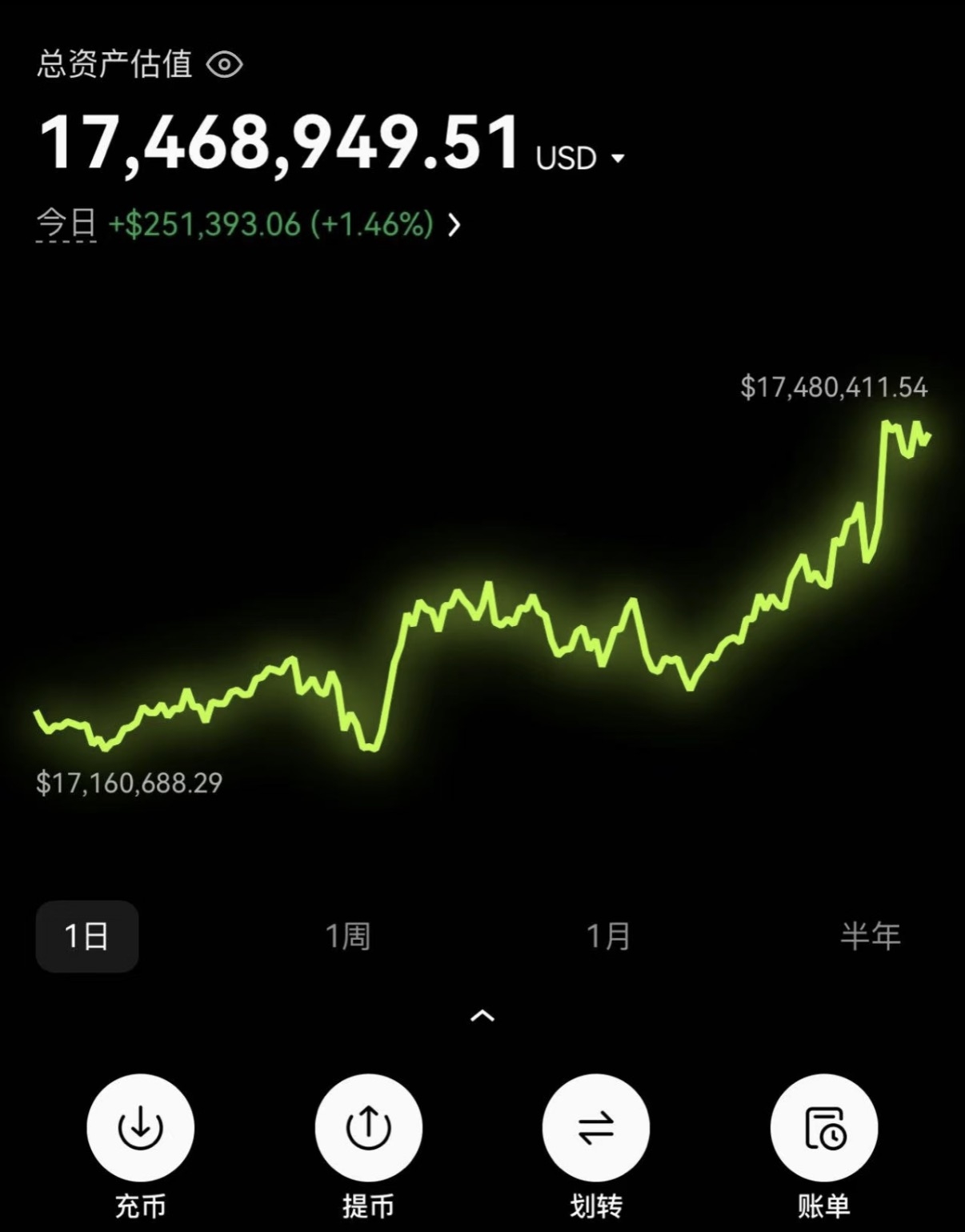
I have been trading cryptocurrencies for eleven years, making 80 million, but the biggest secret is: I spend most of my time 'not trading'. In this market that advocates 'working hard to get rich', 90% of people are heading towards poverty due to overexertion.
Today, I want to tell you how to conquer the market in the crazy cryptocurrency circle with 'laziness'.
If you expect to get rich immediately after reading this article, you can turn it off now. I don't have the 'wealth password'; I only have a set of 'survival rules' that allowed me to survive three bull and bear markets and accumulate 30 million in assets.
This is not a light read, but a 'health report' that will diagnose the most fatal lesions in your investment system.
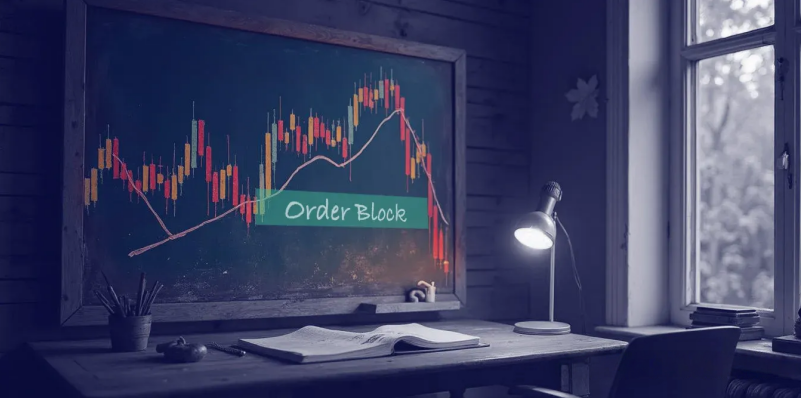
Among the various technical analysis methods I have encountered, I believe the order block (Order Block) is one of the most core and practical concepts in smart money concept (SMC).
My understanding of the order block is very simple: it is essentially a price area in the market where a large number of real buy and sell transactions have previously occurred. These places are often where large funds enter or exit the market, and once the price returns here, it is easy to react—either gaining support or encountering resistance.
When looking at charts, we are not looking for a 'magical K-line' but rather observing where there has been significant concentrated buying or selling in the past. These areas are the order blocks I focus on.
One advantage of order blocks is their versatility. Regardless of whether you are looking at minute-level short-term charts or daily/weekly long-term structures, they are equally applicable; whether you are trading stocks, futures, forex, or cryptocurrencies, the logic remains entirely consistent.
In actual trading, I rarely use the order block as a standalone tool. I prefer to combine it with trend lines, moving averages, or some momentum indicators to confirm direction, filter noise, and improve trading certainty.
Ultimately, the order block is not meant to predict how the market will move but to help us identify key positions, and then develop trading plans around these positions. This is why I consider it a set of biased execution and tactical tools, rather than a mystical signal.
The following are the general steps for using the order block trading method:
1. Find a price chart that clearly shows areas of buy or sell activity, usually represented by consecutive K-lines.
2. Identify the most important buy or sell activity areas, which are usually referred to as order blocks.
3. Determine whether the price is more likely to respect (reflect) the order block or break through it directly. This can be done by observing the price behavior near the order block.
4. If the price is more likely to respect the order block, consider going long or short near the block; stop-loss orders should be placed below or above the order block.
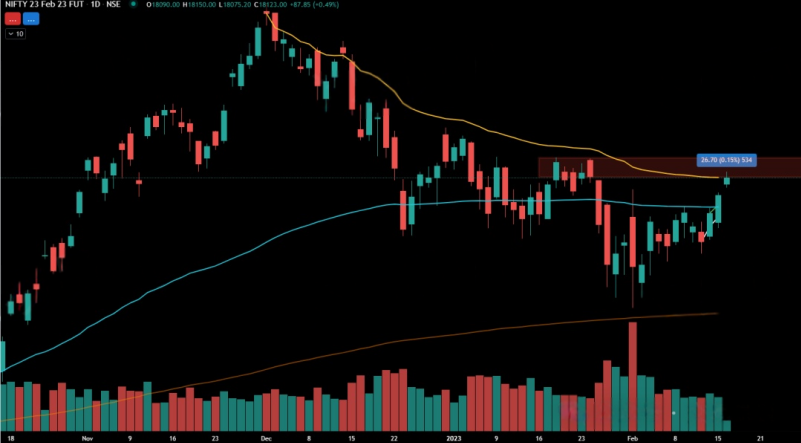
Here is an example of the Nifty 50 index.
This chart was taken during the trading session. Here, I combine the VWAP indicator with the order block. When the price reaches a resonant position (convergence area) between the order block and VWAP area, a potential trading opportunity is formed.
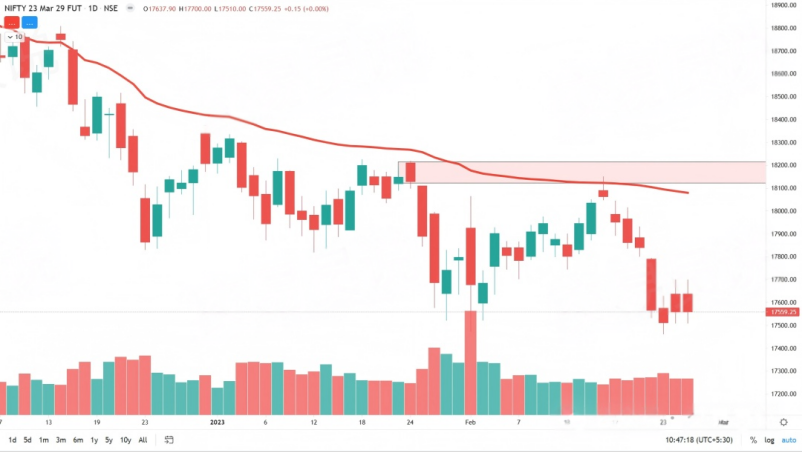
Now let's look at the chart below. On that day, the price changed from green to red (green in overseas markets represents an increase, red represents a decrease) and began to fall after testing the order block area.
The core concept of smart money trading methods
This concept is divided into three parts:
I. Smart Money Concept
✍ Supply and Demand
✍ Order Block
II. Smart Money Market Structure
✍ SD Flip (Support/Resistance Flip)
✍ CHoCH (Character Change)
✍ BOS (Break of Structure)
III. Smart Money Entry Technique
✍ Liquidity Hunting
✍ Inducement
Order block trading strategy system
What is an order block in trading?
Order blocks are the 'footprints' left by the market during strong movements. In trading, an order block (OB) refers to the last K-line in the opposite direction before a strong movement that causes market imbalance. Prices often retrace to these areas to test before triggering the next strong movement, continuing the original trend.
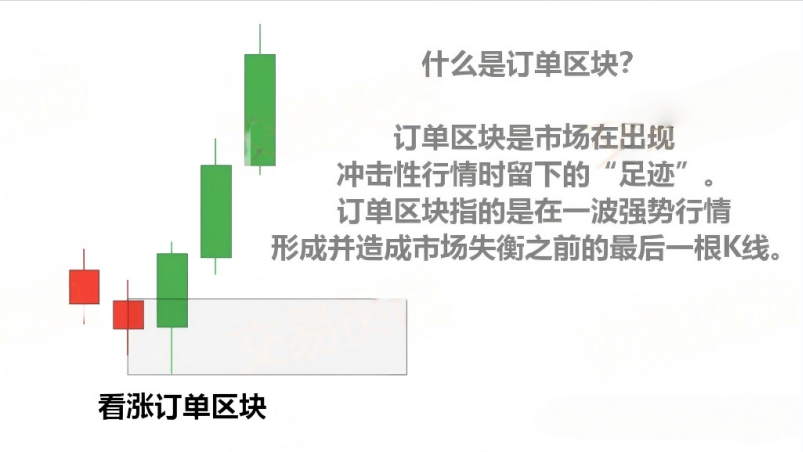
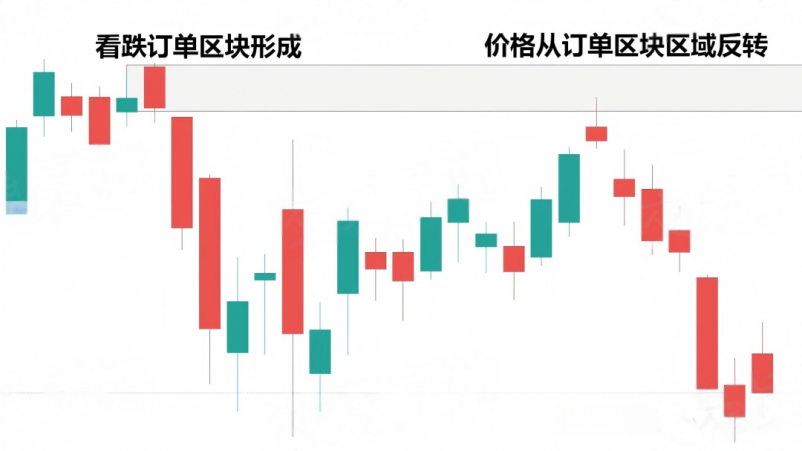
It can be understood that the market will not complete the trend all at once; smart money tends to 'buy back' and continue to push the market in the target direction.
Why do order block areas appear in our charts?
✔ After the bearish (short) order block area is formed, the market continues to decline, which just proves that smart money was positioning for sell trades when that area was formed (which is exactly the opposite logic of bullish (long) order block areas).
✔ Aggressive traders want to complete buy or sell orders immediately. In other words, they will use market orders to buy or sell immediately at the best price available in the current market.
✔ Due to the very large position size, your orders cannot be fully executed at the same price all at once. Positions will be executed in parts during rapid price fluctuations, but the execution speed remains fast, allowing you to complete the entire position entry. It is these aggressive market participants using market orders that drive prices to move quickly up or down.
✔ Therefore, the order block area can only be identified after the price rapidly exits that area. This indicates that at the source position of this strong movement, there was previously smart money's intention to buy or sell.
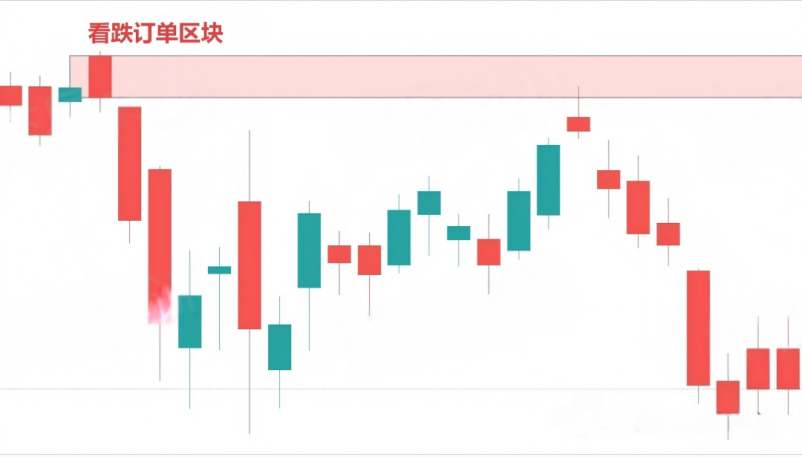
Why does the market return to untested order block areas?
1. Smart money positions are very large and cannot be fully executed all at once at the same time.
2. When the order block area is formed, smart money cannot complete all transactions. If they enter the market too quickly, prices will be pushed by themselves, forcing them to buy at higher levels and sell at lower levels. To solve this problem, smart money will lay out positions by preserving order blocks.
3. Smart money will place unfilled orders in the order block area, and when the market price retraces to that order block area, the previously unfulfilled initial trades will be executed. Subsequently, the market price will move again in the direction of the initial formation of the order block, allowing smart money to complete the remaining positions.
4. Therefore, the essential reason why the market returns to untested order block areas is that there are still unfilled orders in the order block.
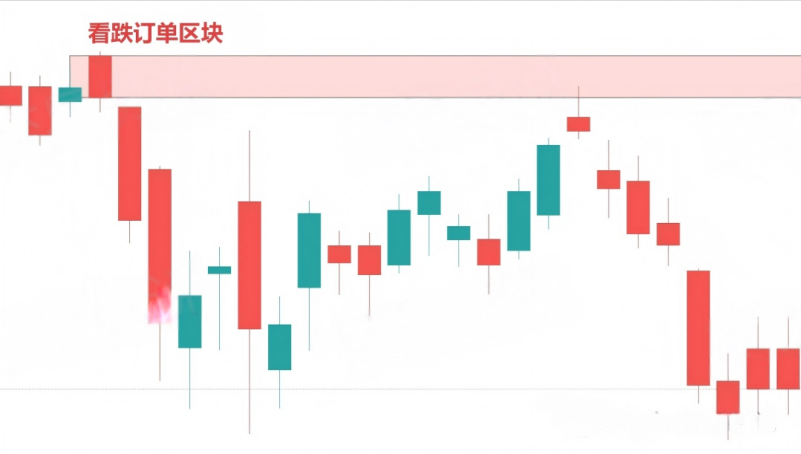
Criteria for determining effective order block area trading
1. An effective demand/supply area refers to a price that rapidly exits that area with wide K-lines, forming a significant price imbalance and simultaneously experiencing a market structure breakout (BOS) or character change (CHoCH). Therefore, when searching for an effective order block area, it is essential to study the following core elements.
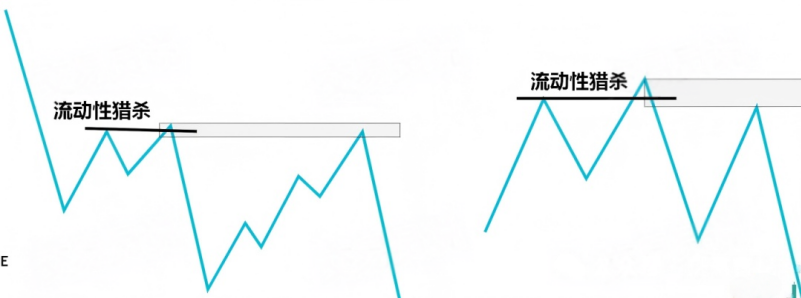
2. Liquidity hunting in order block areas: appears in the form of stop-loss hunting K-lines / false breakouts / K-line traps or psychological level (PSY).
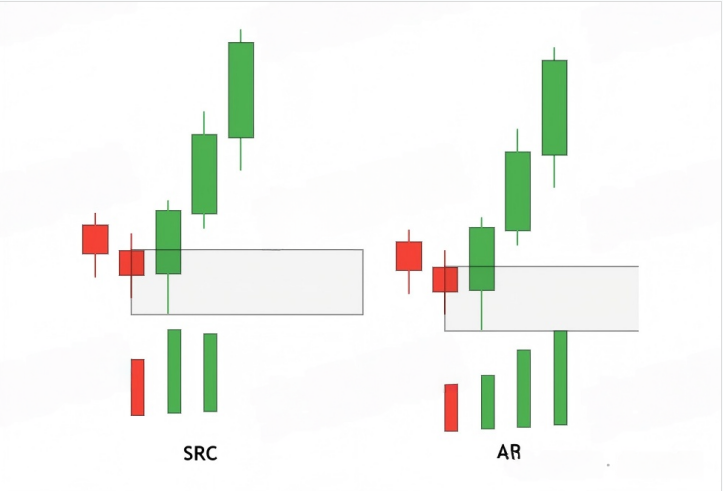
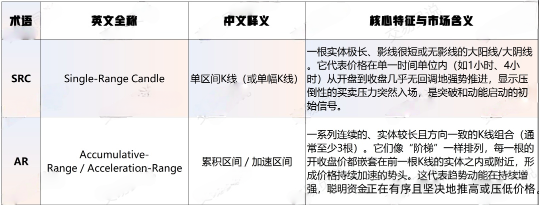
3. After the order block is formed, a trend of imbalance or a rapid market movement must occur within a short time. It must be driven by SRC / AR wide K-line, and the price acceleration must happen after the order block.
4. A confirmation of market structure must occur, either through a break of structure (BOS) or a character change (CHoCH), meeting at least one of the three market structure patterns.
5. Only use untested order block areas as entry criteria, prioritizing untested order block areas for trading.
To emphasize again, liquidity hunting behavior must occur within the order block area, such as stop-loss sweeps, false breakouts, or K-line traps for inducing longs/shorts. We have previously explained this concept in-depth in the SMC content.
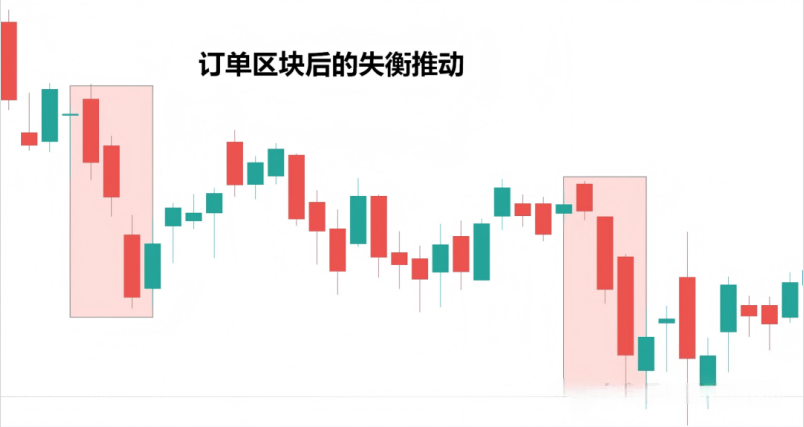
Imbalance trend after the order zone
After the order block, a price imbalance trend should appear. The so-called imbalance refers to a significant difference between the number of buy and sell orders for a particular security or asset. This imbalance occurs when there is a large buying or selling pressure in the market, driving prices to move quickly in one direction, and the momentum should increase.
1. Momentum should increase. This indicates there is price imbalance.
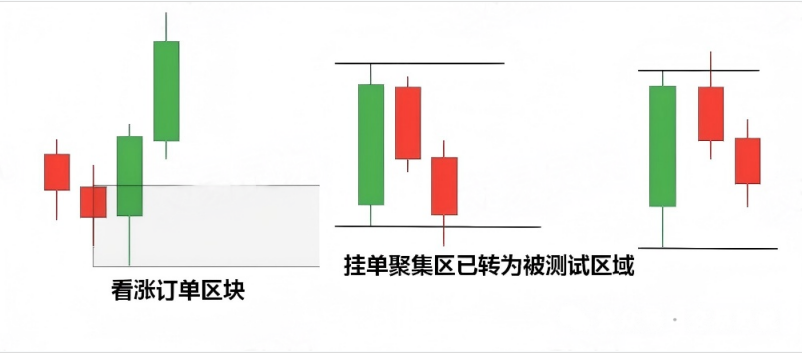
2. After the order block is formed, the next three K-lines should not retrace to that order block area, and in bullish order blocks, the low of the previous K-line should not be broken in the next three K-lines.
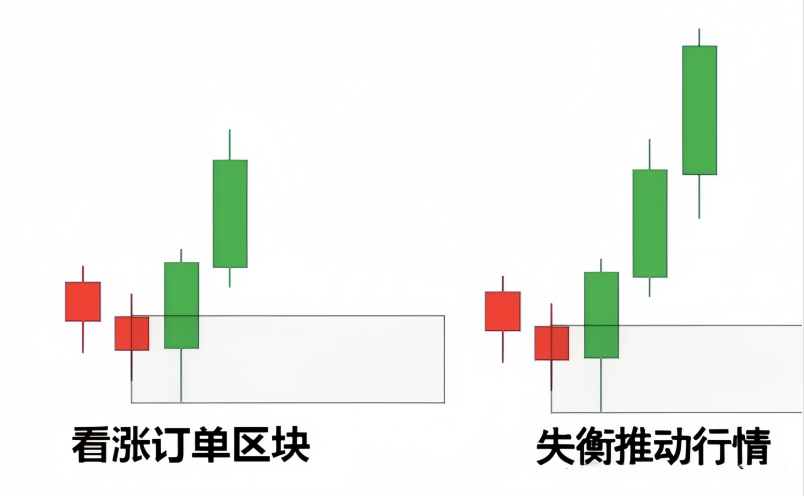
The first example above demonstrates a typical price imbalance structure, with three consecutive K-lines creating higher highs and higher lows. Next, observe the price 'balance' example below. After just two K-lines, the price forms a balanced structure without showing a significant one-sided imbalance push.
The following is an example of the NIFTY 50 index chart:
Volume in order block trading strategies
A higher transaction volume at a specific price level usually indicates stronger support or resistance at that position.
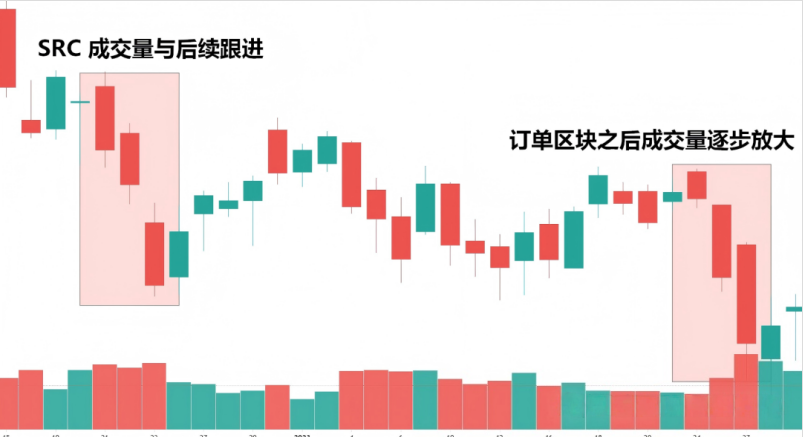
In order block trading, the following two forms of volume performance are considered valid order block signals:
1. Either a high-volume order block K-line with clear subsequent market movement;
2. Either after the order block K-line is formed, the subsequent transaction volume in the market gradually increases.
In the first example, the order block K-line shows high volume; while in the second example, the volume of the order block itself is low, but the subsequent volume increases. Both scenarios can be considered effective order blocks.
Below is the corresponding volume chart for the same NIFTY 50 index.
The movement triggered by the order block must break through market structure.
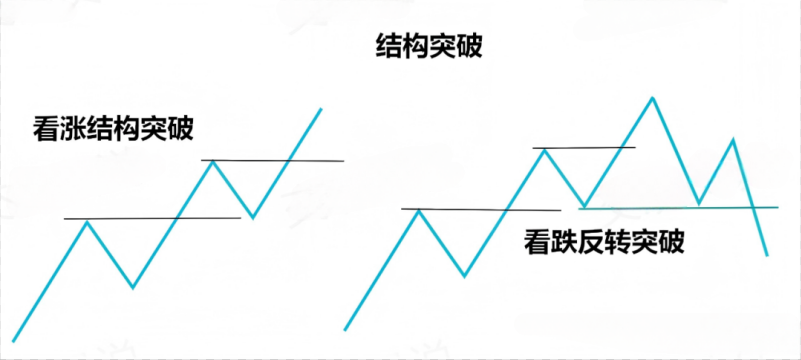
Before proceeding further, be sure to understand: what is a valid breakout, and what is an invalid breakout.
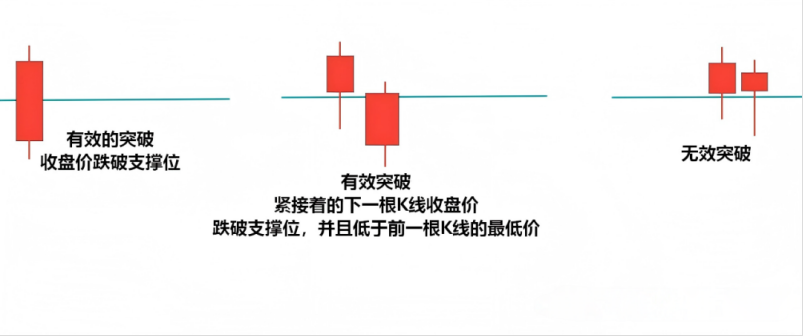
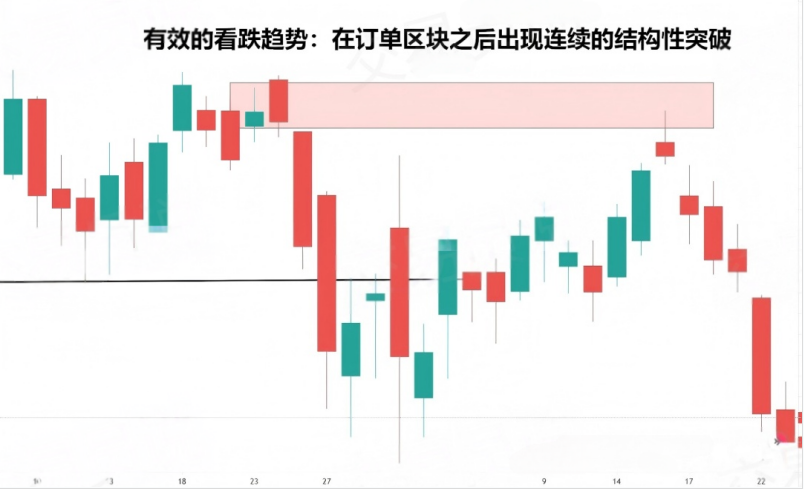
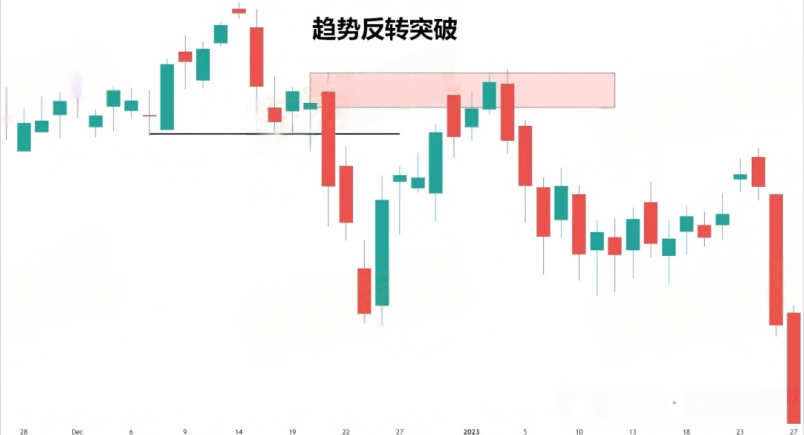
Use untested order blocks as entry criteria; prioritize only those order block (OB) areas that have not been retraced/tested.
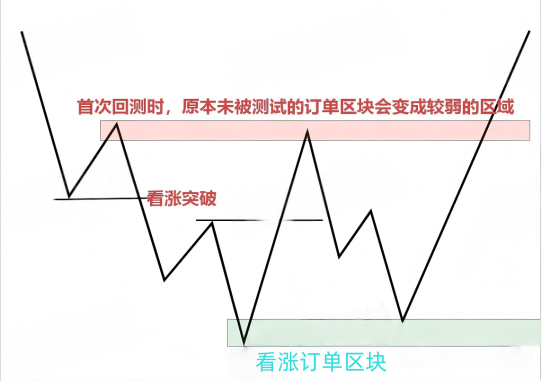
Next, we will focus on smart money market structure trading strategies.
In this article, we attempt to explain the order block trading strategy through examples, hoping you can gain something from it.
Understanding the structure and then entering with order blocks is the true way for smart money to unlock profits.
This is the trading experience that Yan An shared with everyone today. Many times, you lose many profitable opportunities due to your doubts. If you do not dare to try boldly, to touch, to understand, how will you know the pros and cons? You will only know how to proceed with the next step once you take the first step. A cup of warm tea, a piece of advice, I am both a teacher and a good friend who listens to you.
Fate brings us together, but understanding divides us. I firmly believe that destiny will bring us together, while parting is a matter of fate. The journey of investment is long; temporary gains and losses are just the tip of the iceberg. Remember, even the wisest will have their miscalculations, and the least wise may find unexpected gains. Regardless of emotions, time will not stop for you. Pick up your worries and stand up to move forward.
The martial arts secrets have been given to everyone; whether you can become famous in the world depends on yourself.
These methods should definitely be saved; feel free to share them with more people trading cryptocurrencies. Follow me to learn more about valuable insights in the cryptocurrency space. Having been through the rain, I am willing to hold an umbrella for the retail investors! Follow me, and let's walk together on the path of cryptocurrency!