
I once thought I was a fearless captain in the sea of cryptocurrency, until that '312 black swan' made me sink. A position of 12,000,000 was wiped out in half an hour, and the cold touch of the phone screen is still unforgettable.
But despair is often the catalyst for wisdom, suddenly realizing: the essence of a contract is a probability game. With the remaining 800,000 principal, combined with 'movement',
the 'hedging model', in February of this year, achieved an asset leap to 2,180,000 in 60 days, with a growth rate of 272900%!
Now, I will share this 'storm navigation system' for free - in the cryptocurrency world, learning to dance with risk is the true way to survive.
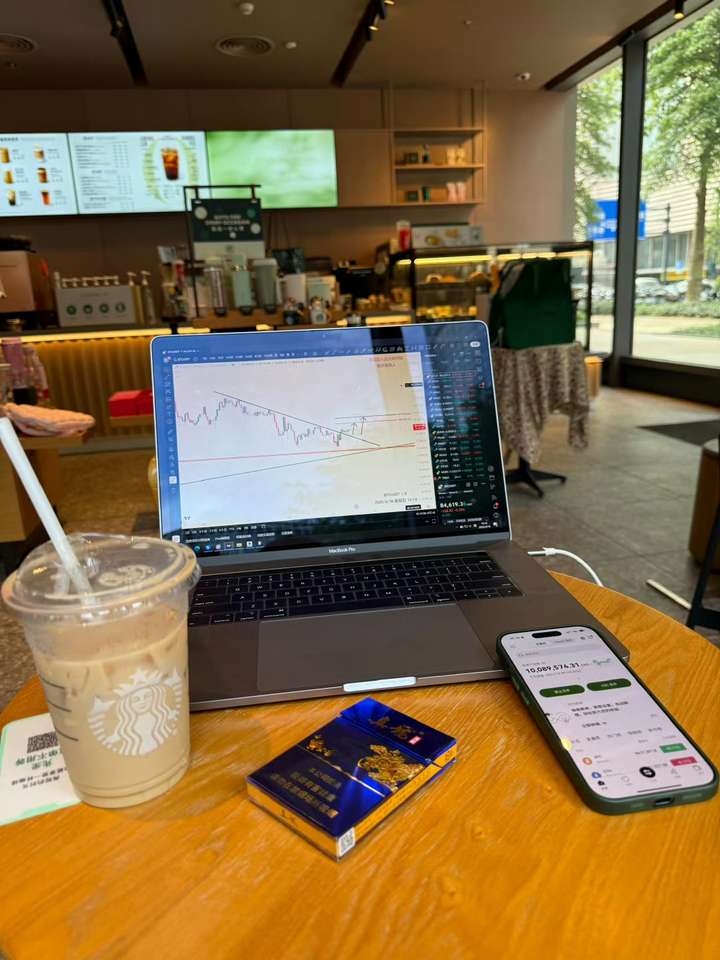
In the crypto world, true experts may not necessarily be highly skilled technically; I have always strictly adhered to the iron laws of the market:
1. If the market crashes but your coins don’t drop, don’t leave!
This indicates that there is major capital supporting the market. Coins that the operators hold on to usually have profits to be made, so just hold on.
2. Beginners should not do fancy moves while watching the market; just stick to two cycles:
For short-term trades, look at the 15-minute and 4-hour charts; if the price is above the line, hold; if it breaks below, exit.
For medium-term trading, look at daily charts; continue to hold as long as support holds, decisively stop loss if it breaks.
3. For short-term operations, change coins if there’s inactivity for three days.
If the price drops after buying, stop loss immediately if it exceeds 5%. Capital efficiency is more important than fantasy.#币圈资讯
4. Coins that have fallen to the bottom often mark the starting point of a rebound.
If there have been consecutive halving and multiple days of decline, don’t wait for a 'bottom signal'; just take action, as the rebound space is often significant.
5. When playing altcoins, only chase the leaders, and don’t fall for low-tier weak coins.
The fastest rising and strongest resisting must be the main projects; don't be afraid of high prices, just go for it!
6. Don't be obsessed with 'catching the bottom'; the real bottom is when the trend reverses.
Coins that are still falling do not have 'cheap' to speak of; going against the trend will only lead to being harvested. Following the trend increases your win rate.
7. Making money is not difficult; the challenge is to make money continuously.
Temporary profits may be luck; long-term stability relies on strategy. Having a system and risk control is what leads to longevity.
8. If you can’t understand it, stay in cash; don’t rush in blindly.
Being in cash is a strategy, not a concession. Preserving capital is more important than making a correct trade.
9. New coins rise quickly and fall hard.#币圈起伏落袋为安
In the early stages, price rises based on expectations but often lacks fundamental support. Once the hype fades and capital withdraws, the sell-off happens faster than anyone else.
10. All successful projects are backed by the power of consensus.
A group of people willing to resonate long-term for a certain vision is what supports the market value. Choosing the right consensus gives you the chance to transcend cycles.
Ten years in the crypto world is but a day in the human realm.
Those who really make money are not the ones who operate the most, but those who have superior cognition and the strongest discipline.
To survive, you must be slow, steady, and accurate. The road to truly making big money has never been glamorous but is always effective.
90% of small capital traders end up getting liquidated; the core reason is simple: they want to double their capital too quickly and treat trading as gambling. Today, I’m sharing 7 practical skills that helped me grow from small capital; no fluff, each one can be directly applied to help you safely and quickly grow your account.
First, let me clarify: I take day trading as an example, regardless of whether you are doing swing or short-term trading, you can adjust according to your own trading style—the core logic is the same; the key is execution.
Skill 1: Set reasonable profit targets.
Start with 1% in a single day, earning 10% a month is enough
Don’t think about 'doubling in a week' right from the start; unrealistic goals will only throw off your mindset. My advice is:
Initial goal: 1% profit per day, accumulating 10% per month;
Execution method: Break down the monthly target into 2-3 high-quality trades, without being greedy or forcing it.
Why is it 10%? Because this goal can be achieved as long as you strictly follow the strategy and manage risks; while a target of over 20% can easily lead you to engage in low-quality trades just to hit performance targets, ultimately resulting in losses.
Many traders are misled by others' 'huge profits' and start gambling in the market, chasing popular varieties and new coins, just to bet on big fluctuations. But true stable profits come from 'consistency'—there's no need to seek new opportunities, just repeat the same trading setups, wait for all signals to align before entering, and over the long term, profits will naturally remain stable.
Here’s a key rule: Once the daily target is achieved, stop trading immediately! Don't continue to place orders out of greed; many people end up giving back all their profits because they don't stop, even ending up with losses. Additionally, regardless of whether your account is 1000 or 100,000, the trading strategy, risk control rules, and profit targets must not change—develop good habits from small capital so that larger capital can withstand risks.
Skill 2:
The risk-reward ratio should be at least 2:1; a win rate of 40% can still be profitable.
Small capital must rely on a 'high risk-reward ratio' to survive and double, rather than getting caught up in win rate. What does it mean? It means that profits must be at least twice the losses—such as setting the stop loss at 50 and at least setting the take profit at 100.
The magic of this ratio lies in the fact that even with a win rate of only 34%, you can still be profitable. Even if you lose 6 and win 4 in 10 trades, you still end up making a profit [Calculation logic: 4 winning trades × 100 = 400, 6 losing trades × 50 = 300, net profit of 100].
I have seen too many small capital traders, in pursuit of 'number of winning trades', use a risk-reward ratio of 1:1 or even lower—earning 3 trades in a row, losing 1 trade wipes it all out, and their account keeps shrinking. A high risk-reward ratio can give you a higher margin for error, and you won't panic after a series of losses, nor will you collapse mentally due to one or two losing trades.
Remember: The core of trading is 'minimize losses and maximize profits', not 'winning every trade'. A high risk-reward ratio allows you to trade under less pressure, making it easier to make correct decisions.

Skill 3:
Stop trading immediately after three consecutive losses in a day.
This is the 'safety net' for small capital, and it must be engraved in your mind: if you lose 3 trades consecutively in one day, immediately close the software and stay away from the computer, and do not trade that day.
Small capital cannot withstand the damage of emotional trading; after consecutive losses, it’s easy to fall into 'revenge trading'—either increasing position size to try to recover quickly or placing random orders without looking at signals, resulting in more losses. Three losses is my bottom line; at this point, I stop trading—not as a concession but to protect capital and reset my mindset.
The market opens every day; there’s no need to rush to recover losses on the same day. Wait until the next day when your mindset is calm, then reanalyze the market, which may allow you to seize better opportunities. Remember: The primary task for small capital is 'survival', and only then comes profit.
Skill 4:
When the price reaches a 1:1 risk-reward ratio, move the stop-loss to the entry point.
This is the key technique for 'zero-risk positions' for small capital, maximizing profit protection. The specific approach is: when the price moves in the direction of profit, reaching a 1:1 risk-reward ratio (for example, stop loss of 50, profit of 50).
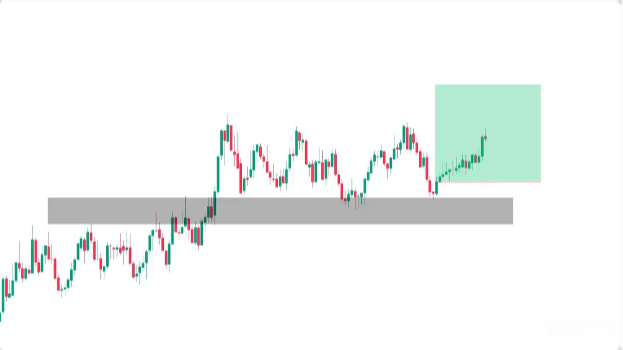
Move the stop-loss to the entry price—this way, the worst-case scenario for this trade is 'break-even exit', and you no longer have to worry about giving back your profits.
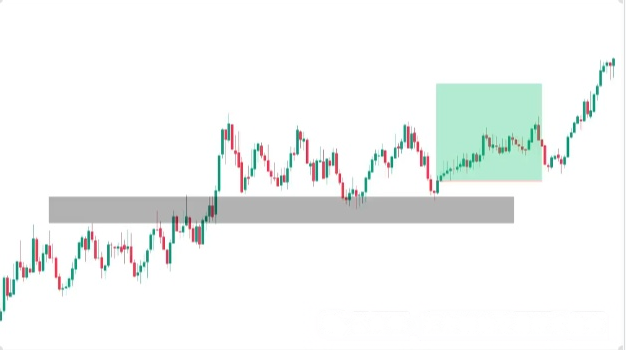
For small capital trading, 'controlling risk' is always more important than 'how much you earn'. Many people get liquidated because they focus only on profits and ignore risks—one big loss can wipe out all previous gains. Moving the stop-loss to the entry point is like insuring your trade: afterward, the profits are pure, and even if there's a reversal, you won't lose capital.
Here's a detail to note: Don't move the stop-loss too early! You must wait until the price reaches a 1:1 risk-reward ratio before moving it; otherwise, you risk getting swept out by short-term fluctuations and missing the subsequent big market movements.
Skill 5:
Test new markets/new strategies, halve your position size
Whether entering a new market (for example, switching from forex to cryptocurrency) or testing a new strategy, you must halve your position size—only after successfully profiting from 10 trades can you slowly return to normal position size.
New markets and new strategies, even if backtested effectively, need to be adjusted in live trading. If you are unfamiliar with its fluctuation patterns and signal effectiveness, you are likely to make basic mistakes. Halving the position can stabilize your mindset, and even if you incur losses, it won't affect the overall account, and you can summarize experiences from live trading and adjust in time.
Many traders, when testing new strategies, do not want to reduce their position size but want to make quick profits, resulting in significant losses due to unfamiliarity with the rules, ultimately abandoning a strategy that was originally effective. Remember: these 10 trades are not for profit but for 'accumulating experience'. Once you grasp the new market and new strategy, it won't be too late to increase your position size.
Skill 6:
Only do trend-following trades, capturing high-probability opportunities.
If small capital wants to improve win rates, it must trade in line with the overall trend—don’t think about 'catching the bottom and topping'; the probability of contrarian trading is too low, and small capital cannot withstand the losses from going against the trend.
For example, if the price is in an upward trend (higher highs, higher lows structure), it indicates that the amplitude and probability of rise far exceed those of decline, so at this time, only look for long opportunities; if it’s a downward trend, only short. Trend-following trading allows you to stand on the side of 'big capital', increasing the certainty of profits.
The goal for small capital is 'rapid doubling', but the premise is 'stability'—rather than taking risks with low-probability contrarian trades, it’s better to patiently wait for high-quality signals that align with the trend, even if it's only one trade a day, it's better than randomly making 10 trades.

Skill 7:
Establish a rule-based, systematic trading strategy.
The core of small capital doubling is 'consistent execution', and the key to achieving consistency is having a set of 'rule-based trading strategies'—allowing you to repeat the same actions in 100 or 1000 trades without being disturbed by emotions.
Your strategy must be clear:
How to determine the trend? (For example, higher highs/lower lows, position of moving averages);
How to draw key price levels? (Support and resistance levels, definitions and drawings of supply and demand zones);
What signals should trigger entry? (For example, bearish engulfing, breakout of the body);
How to set stop-loss and take-profit? (For example, stop-loss outside the key price level + ATR, take-profit according to a 2:1 risk-reward ratio).
With clear rules, you no longer have to guess price fluctuations or struggle with 'whether to enter'—just wait for the signals to align and execute mechanically; if they don't align, give it up. This can greatly reduce emotional interference, allowing trading performance to remain stable, and over the long term, small capital can naturally double.
Final summary: The core of small capital doubling
It's about 'not gambling, not being greedy, and executing steadily'
The biggest mistake small capital traders make is treating trading as a 'quick-rich tool', resulting in continuous losses. The real logic of doubling is:
Goals should be reasonable; don't be greedy;
The risk-reward ratio should be high, and the margin for error should be sufficient;
Risk control must be strict, don't be emotional;
Only pursue high probability, do not touch contrarian trades;
Strategies need to be rule-based, and execution must be consistent.
Trading is not about who makes money faster; it’s about who survives longer. During the small capital phase, the focus is on developing good habits and establishing a stable trading system. Once you can steadily earn 10% a month, the power of compounding will exceed your imagination—earning 10% on 1000 will become 3138 after one year; after two years, it will be 9849, nearly tenfold.
This is the trading experience that Yan An shares with everyone today. Often, you lose many profitable opportunities due to your doubts; if you don't dare to try boldly, to contact and understand, how can you know the pros and cons? You only know how to take the next step after taking the first step. A cup of warm tea and a word of advice, I am both a teacher and a talkative friend.
Meeting is fate; knowing is separation. I firmly believe that if it’s destined, we will meet even from a thousand miles away. If it’s not, we may just brush past each other by fate. The journey of investment is long; momentary gains and losses are just the tip of the iceberg. Remember that even the wisest will have a miscalculation, and even the foolish will have a stroke of luck; regardless of emotions, time will not pause for you. Pick up your worries and stand up to move forward.
The martial arts secret has been given to everyone; whether you can become famous in the world depends on yourself.
These methods everyone must save, share more if you find them useful, and feel free to forward them to more people trading coins around you. Follow me and learn more about the crypto world. Having been rained on, I am willing to hold an umbrella for the leeks! Follow me, and let's move forward together in the crypto world!