
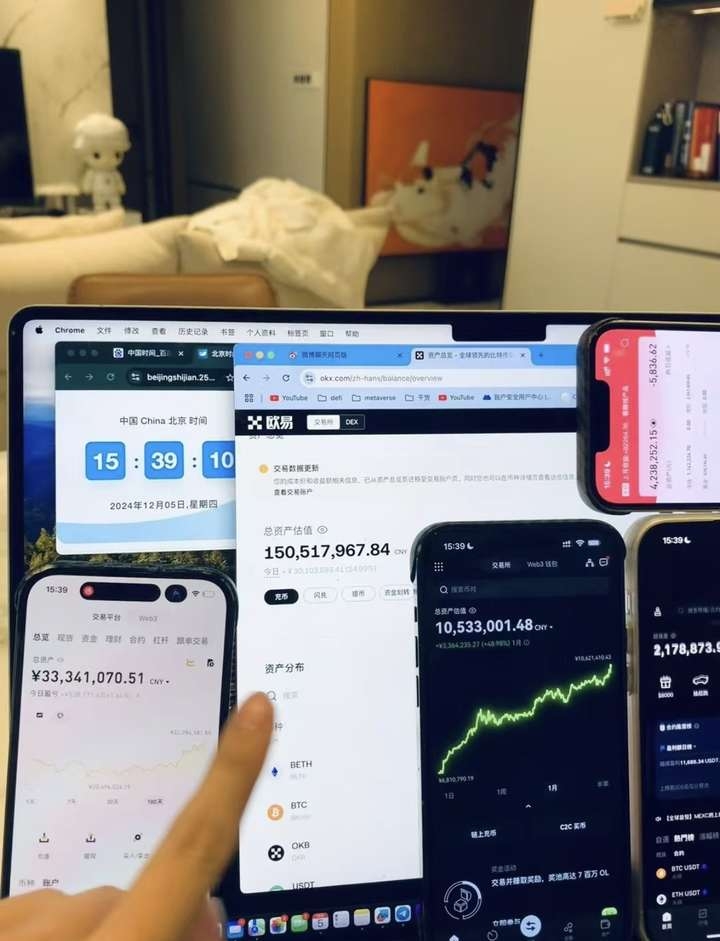
After struggling in the cryptocurrency world for eleven whole years, I have personally experienced three bull and bear transitions. From an initial capital of 300,000, I have now achieved financial freedom. It's not much, an 8-digit number, but for an ordinary family like mine, it is also quite comfortable!
So I am also very grateful for this circle in the cryptocurrency world. Initially, it was recommended by a friend. I tried it out at first and found it interesting, at least more interesting than the A-shares, because of the continuous trading 24 hours a day. I didn't do it systematically at the beginning because I didn't know anything. Later, I suffered significant losses, which is why I summarized my own trading system.
1. Do not average down on losing positions; add to winning positions.
2: Stay clear-headed during favorable periods, and know how to rest during unfavorable periods.
3: Block out external noise and establish your own trading system.
Today, I’m sharing some practical insights, these experiences are worth 80 million, and I hope they can help you!
Before discussing techniques, I strictly adhere to the following 8 ironclad rules:
1. When entering, do not only look at cryptocurrency candlestick trends, especially for short-term trades where you also need to look at 30-minute candlesticks, and the market must stabilize and resonate at this moment to enter.
For example, sometimes when you see candlesticks with long upper shadows, you feel there’s no opportunity, but the next day a big bullish candle or even a limit-up shows up; in fact, if you look at the 30-minute candlestick, you’ll see the wonders.
2. If the trend and order are incorrect, just looking once more is making a mistake. You must act according to the trend, and the order of simultaneous increases must not be disrupted.
3. If short-term trades are not in hot spots or potential hot spots, it’s better not to trade.
4. Give up all impulsive entries. Trade your plan, plan your trades.
5. Anyone's opinions or views are merely references; you must have your own careful consideration and serious analysis.
6. First, lock in the direction and then select coins. If the direction is correct, it’s twice the result with half the effort; if the direction is wrong, it’s the opposite.
7. Enter coins that are currently rising. Trying to guess the bottom is a big taboo; it always feels like a rebound is coming, and then there's an ultimate shakeout. Stock prices always move toward minor resistance levels, and entering coins that are currently rising means choosing a direction with less resistance.
8. After making big gains and losses, empty your positions and reevaluate the situation and yourself. Clarify the reasons for your big gains or losses, and only then act.
After so many years in cryptocurrency trading, I found that after making big gains and losses, leaving positions empty has a probability of being correct over 90%.

I’ve been in the trading market for eleven years, and today I’m sharing 5 core lessons I've learned from losing money and getting liquidated. I spent years slowly correcting these lessons, and I hope that after reading this, you won’t repeat my mistakes and can become a consistently profitable trader faster than I did.
Lesson 1:
Trading is a marathon; don't think about getting rich quickly.
When I first started trading, like many people, I was filled with thoughts of 'getting rich quickly' and 'becoming a millionaire in a short time'. But reality gave me a harsh slap: initially, I might earn some money by luck, but as the number of trades increases, not only would I give back all the profits, but when faced with consecutive losses, I would be flustered, ultimately losing all my hard-earned money and getting liquidated.
You must remember: trading is a difficult path to wealth; being able to gradually become wealthy is already good; never expect to get rich quickly.
Only 1% of traders in the market can earn far more than doctors, lawyers, or scientists, and still enjoy freedom of time and location. Do you really think that just by drawing a few lines on a chart or learning a strategy for a month, you can become part of that 1%?
Anyone can draw lines on a chart and analyze, but the vast majority cannot make money. Trading requires tremendous effort: persistently learning every day, continually backtesting and optimizing strategies, accumulating advantages bit by bit, and having extreme confidence in yourself—don’t switch strategies just because of a few losses, and don’t blindly listen to others' advice.
Trading is a zero-sum game; if someone profits, someone else loses. No one can help you profit. Only by trusting your decisions, taking responsibility for each trade, accepting mistakes, and correcting them in time can these details accumulate to defeat 95% of traders in the market.
Lesson 2:
Losses are not scary; what is scary is 'wrong losses'.
To survive long-term in trading, you must change your view on losses—consider them a normal cost of business, not a disaster.
Every trade has expenses, and trading is no different; loss is the cost you must pay to make money. Good traders learn from losses and avoid making the same mistakes again; poor traders are only crushed by losses or become disoriented due to losses.
More importantly, losses fall into two categories: 'correct losses' and 'wrong losses', which are worlds apart.
What is 'correct loss'?
You execute exactly according to the trading plan: signals match, stop-loss settings are reasonable, and position sizes are fine.
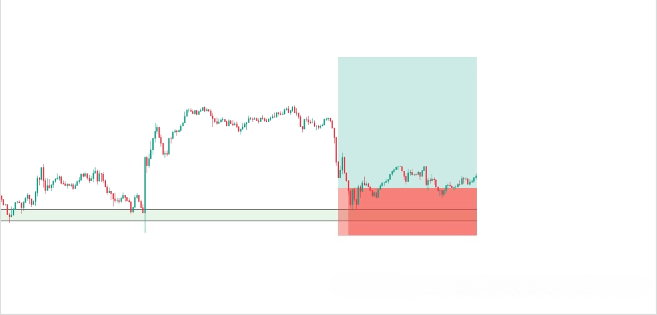
But due to unexpected news, market sentiment fluctuations, and other uncontrollable factors, prices trigger stop-loss.
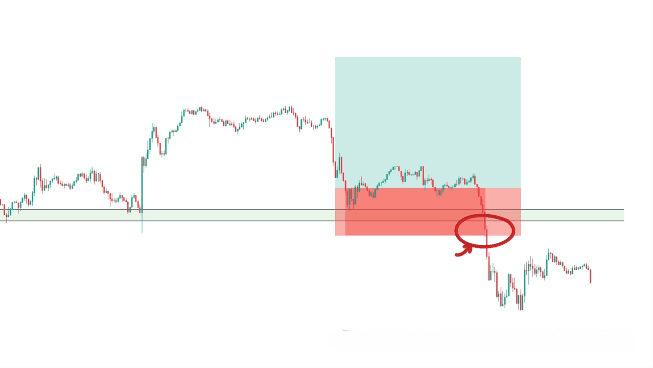
This loss is not your fault; it is the normal fluctuation of the market. Accept it, review it, and then let go and continue to the next trade.
What is 'wrong loss'?
Losses caused by emotional loss of control and not following the trading plan. For example, if the last trade lost, feeling unsatisfied and entering trades indiscriminately without considering any signals; or due to greed, arbitrarily increasing position sizes or moving stop-loss—these are the losses that should truly be avoided.
In my early years, I often made this mistake: after losing a trade, I rushed into revenge trading, resulting in even more losses. Later, I understood the reality of trading: even if you strictly follow the plan, there will still be losing trades. Accept 'correct losses' and eliminate 'wrong losses', and you’ve already won half the battle.
Lesson 3:
Focus is the core of trading—distraction = missed profits.
In this era, there are too many distractions: games, binge-watching shows, friends' invitations... But to succeed in trading, you must be more focused and harder working than others.
Wherever you spend your time, life will return that kind of reward to you. If you spend all your time on games and binge-watching shows, your trading skills will never improve; but if you use your time to learn trading and optimize strategies, with long-term persistence, your trading performance will definitely improve significantly.
The amount of profit in trading does not depend on how 'busy' you are, but on the quality of your decision-making. Only with a clear mind and focus can you make correct trading decisions.
Here’s a practical suggestion: during your fixed trading hours (like 4 hours every evening), you must be 100% focused. Silence your phone, turn off binge-watching apps, refuse last-minute invitations from friends, and put all your attention on chart analysis—once distracted, you might miss high-quality entry signals and even make mistakes due to carelessness.
In my early years, I missed a perfect trend because I was playing games with friends while trading. That trade should have made a lot of money, but due to distraction, it fell through. Since then, I absolutely do not engage in any unrelated activities while trading; that is my bottom line.
Lesson 4:
Want to master trading? Try teaching your knowledge to others.
Share a quick tip to master trading: teach others.
You may find it strange, but the fact is:
Reading can help you 'know' trading knowledge;
Writing can help you 'understand' trading knowledge;
Only when you can clearly teach knowledge to others can you be considered truly 'proficient'.
If you can’t explain the strategies and knowledge you’ve learned clearly, it indicates that you haven’t fully grasped them. The reason I can break down complex trading logic into content you can understand is that I have repeatedly pondered and organized it until I fully mastered it, and then shared it in simple language.
I also went through the novice stage: liquidation, losing large sums of money, making various basic mistakes—revenge trading, forced trading, chasing highs and selling lows; I’ve done them all. It is precisely because I have experienced these pitfalls that I know what beginners need and where they are likely to make mistakes, allowing me to share avoidance tips more accurately.
If you want to test whether you really understand trading, try explaining what you've learned to those around you. If you can't explain it clearly, that's where you need to improve; if you can explain it clearly, it means you've truly mastered it.
Lesson 5: 80% of trading is a psychological battle.
No matter how good the technique, if your mindset collapses, it’s useless.
I believe you have all heard: '80% of trading is psychology, and 20% is technique'. Yet, the vast majority of traders spend 100% of their time learning techniques while completely neglecting mindset and discipline.
They spend all day searching online for 'the best strategy', staring at the market, unable to resist placing orders at the slightest signal, resulting in all low-quality trades and increasing losses.
In fact, in the end, trading relies on discipline. If you lack self-discipline, no matter how good the strategy, it won't work—being soft when it's time to stop-loss, greedy when it's time to take profit, and impulsive when it's time to wait; these are all signs of a collapsed mindset.
Finally, here are 5 valuable pieces of advice I've earned with real money; make sure to remember them:
Always execute according to the trading plan; do not place orders based on feelings.
Focus on trade quality, not quantity—better to do nothing than to make low-quality trades;
Stop-loss is a lifeline; never trade without it, and don’t move stop-loss arbitrarily.
Reduce screen time to avoid 'analysis paralysis'—the more you see, the more likely you are to make impulsive trades;
Be patient, always wait for the price to reach your trading signal; don’t chase highs or sell lows.
Cultivating the right trading mindset is harder than learning techniques, but also more important. Once your mindset is right, combined with solid techniques, profit will naturally follow.
This is the trading experience that Yan An shared with everyone today. Many times, you lose a lot of money due to your doubts. If you're afraid to boldly try, to reach out, to understand, how will you know the pros and cons? You must take the first step to know what the next step should be. A warm cup of tea, a word of advice; I am both a teacher and a good friend you can talk to.
Meeting is fate, knowing is parting. I firmly believe that fate will eventually lead to meeting, while parting is destiny. The journey of investment is long, and short-term gains and losses are just the tip of the iceberg. Remember that even the wisest can make mistakes, and the foolish can sometimes gain; regardless of emotions, time will not pause for you. Shake off the burdens in your heart, stand up again, and continue forward.
The martial arts secrets have been given to you; whether you can become famous in the community depends on yourself.
These methods, everyone must save up; if you find them useful, feel free to share with more cryptocurrency traders around you. Follow me for more practical insights in the crypto world. Having been through the rain, I’m willing to hold an umbrella for you! Follow me, and let’s walk together on the road of cryptocurrency!
